
Sweden National Football Team Formation
 June 18, 2026


Starting Lineup
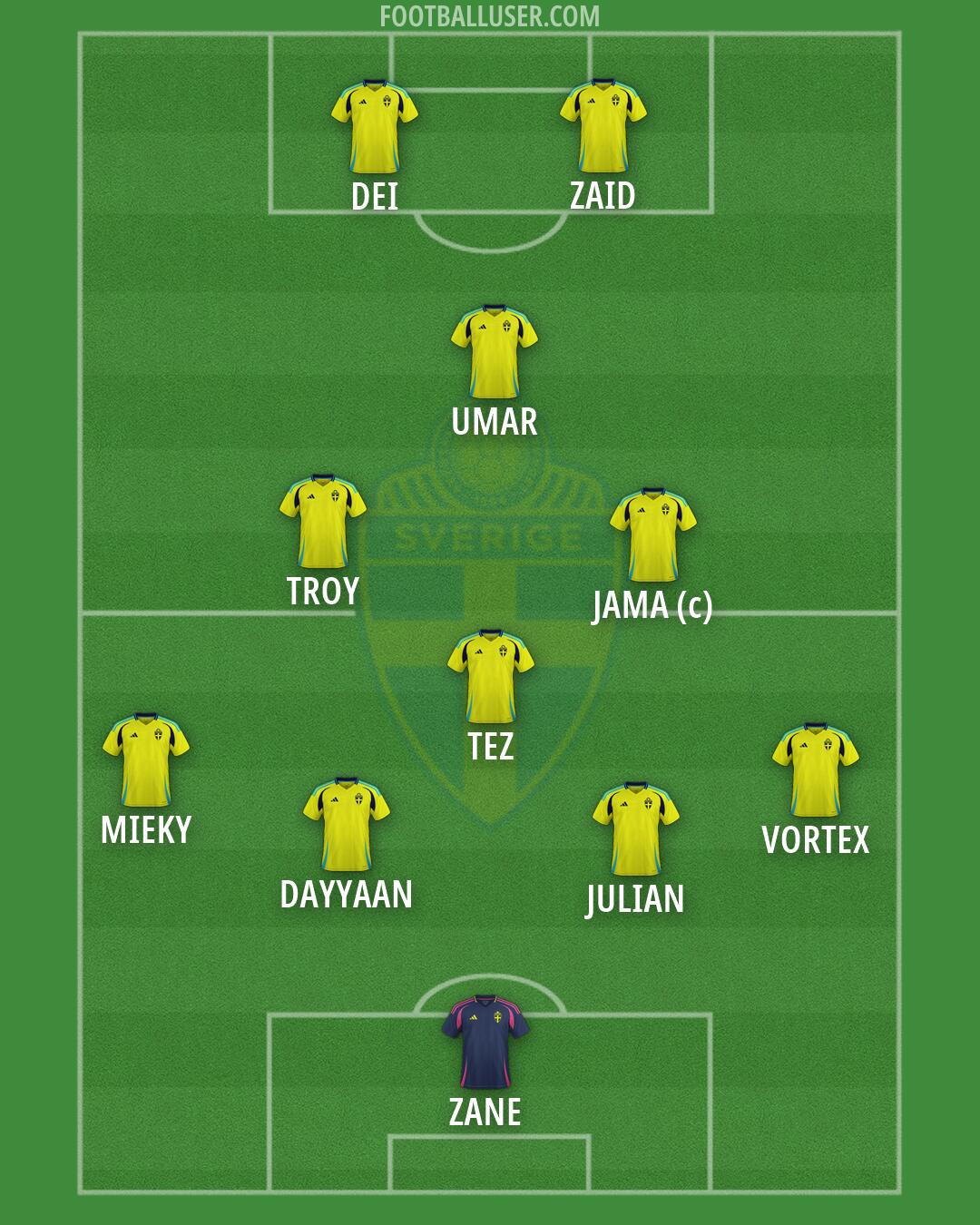
TEZ · JAMA (c) · MIEKY · ZAID · DEI · DAYYAAN · VORTEX · TROY · JULIAN · UMAR · ZANEFocusing on defensive solidity and direct play, Sweden utilizes a 5-3-2. This formation is built to sit deep and strike quickly on the break. The lineup prioritizes a compact defensive unit that can shift easily to cover the width of the pitch. It is a formation designed to frustrate opponents by limiting their time in the final third.
ZANE guards the goal, acting as the last line of defense. The back five consists of TEZ in the middle, with DAYYAAN and JULIAN acting as the wide centre-backs. These two are tasked to cover the channels and support the central defender. VORTEX and MIEKY act as attacking wing backs, meaning they must cover the entire flank. They push up to provide width in possession but must track back quickly to maintain the defensive block. This system ensures the team stays hard to beat in the central zones.
The midfield functions as a three-man block that links the defense to the front two. JAMA, the captain, occupies the right central role to shield the back line and win the second ball. TROY works alongside him on the left to drive forward and carry the ball into the attacking half. UMAR plays as the attacking ten, sitting in the hole to receive the ball on the half-turn and play through the lines. This midfield trio must work to squeeze the space and deny the opposition time on the ball.
In the final third, the team relies on a two-man strike partnership. DEI plays as a left striker to make runs in behind the defensive line, while ZAID operates on the right to hold up the ball and link play. The width comes from VORTEX and MIEKY as they overlap the midfield to stretch the defence. Such movement is designed to create situations where UMAR can slip through balls to the forwards or allow the wing backs to deliver crosses into the box.
One major strength of this 5-3-2 is the ability to maintain compactness when defending. With a narrow block, the team makes it very hard for opponents to play through the middle. Another advantage is the speed of transition, as the team can move from a low block to an attacking lineup in seconds. The ability of the wing backs to provide width also prevents the opposition from simply sitting deep.
This Sweden formation is a robust choice for teams that want to control the defensive area while staying dangerous on the counter. It is best suited for matches against high-possession sides that leave space behind their full backs.