
Portugal National Football Team Formation
 June 18, 2026


Starting Lineup
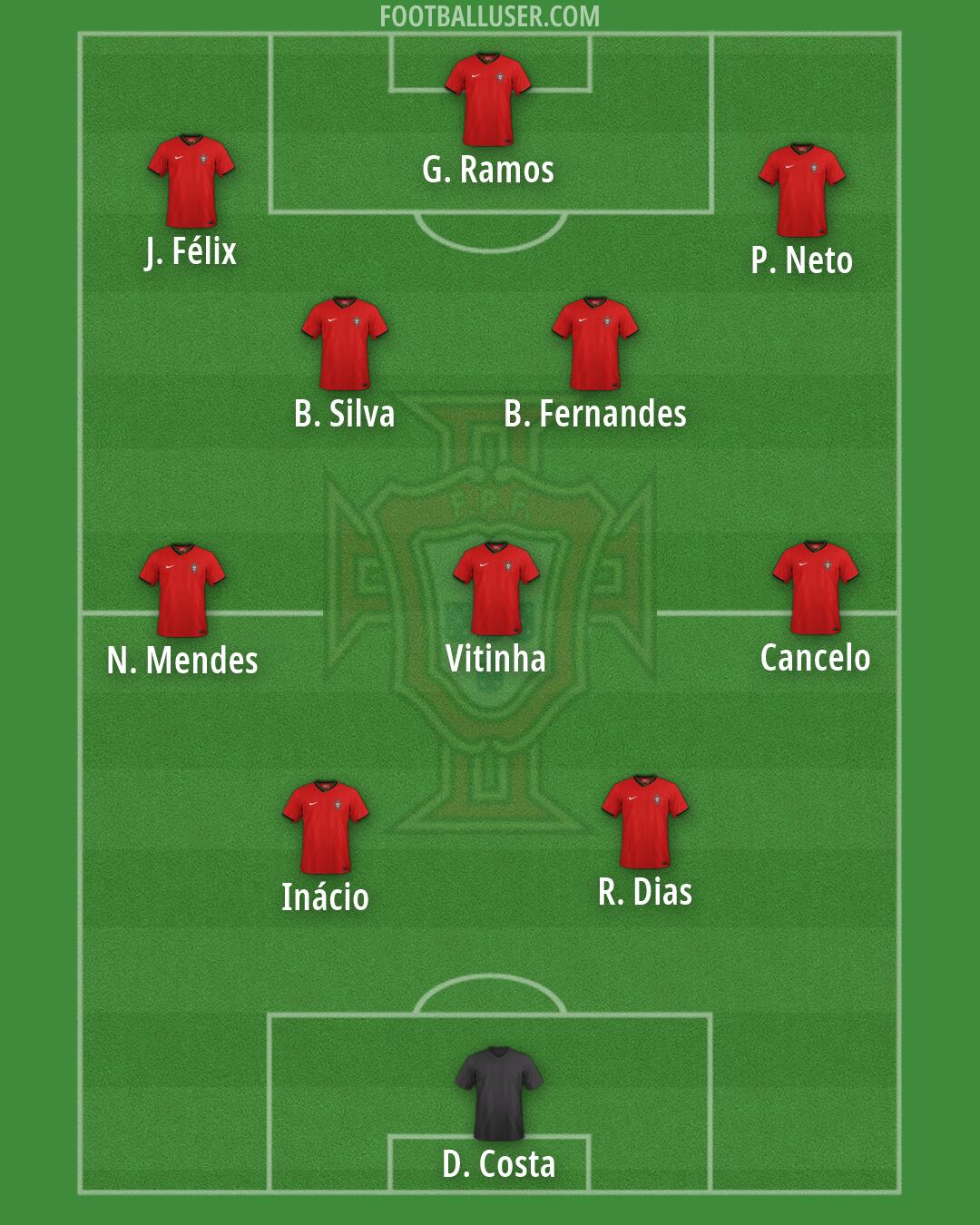
G. Ramos · P. Neto · J. Félix · B. Silva · B. Fernandes · Vitinha · N. Mendes · Cancelo · Inácio · R. Dias · D. CostaPortugal focuses on a defensive formation that prioritizes stability and quick transitions through a 5-2-3. This formation is built to sit in a mid block and wait for the right moment to strike. By staying compact, the team aims to frustrate opponents and use the width of the field once they win the ball back.
D. Costa guards the goal and directs the defensive unit. The back five functions as a zonal line where Vitinha, R. Dias, and Inácio form the central core. R. Dias uses his defensive reading and strength to win headers and clear the lines, while Inácio is able to play out from the back. Cancelo plays as an attacking wing back on the right to overlap the winger, and N. Mendes provides similar support on the left. This allows the team to defend narrow when out of possession.
The midfield works as a double pivot featuring B. Silva and B. Fernandes. B. Silva works to carry the ball forward and link the defensive unit to the attack. B. Fernandes looks to create from deep and find the forwards with his passing range. They have to press aggressively to win the ball high and prevent the opposition from playing through the center. Their movement helps to compress the midfield and deny the turn to the opponent's playmakers.
The attack features three forwards who play with high intensity. J. Félix and P. Neto act as inverted wingers who cut inside to create shooting lanes. G. Ramos operates as a pressing centre forward to harass the opposition back line and hold up the ball. The movement of the front three is designed to create runs in behind and exploit the space left by an advancing opponent. When the wing backs push up, they create overloads that help the attackers combine in tight spaces.
This lineup offers great defensive compactness, making it hard for teams to break the lines. The ability to shift between a five man defense and an attacking formation provides tactical flexibility. Furthermore, the speed of transition allows Portugal to hit opponents on the break at pace, using the passing of B. Fernandes to find the wingers quickly.
This 5-2-3 formation makes Portugal a difficult team to break down through the middle. It is best suited for games against ball dominant teams where the side can exploit space on the counter.