Arsenal Football Formation
 June 19, 2026


Starting Lineup
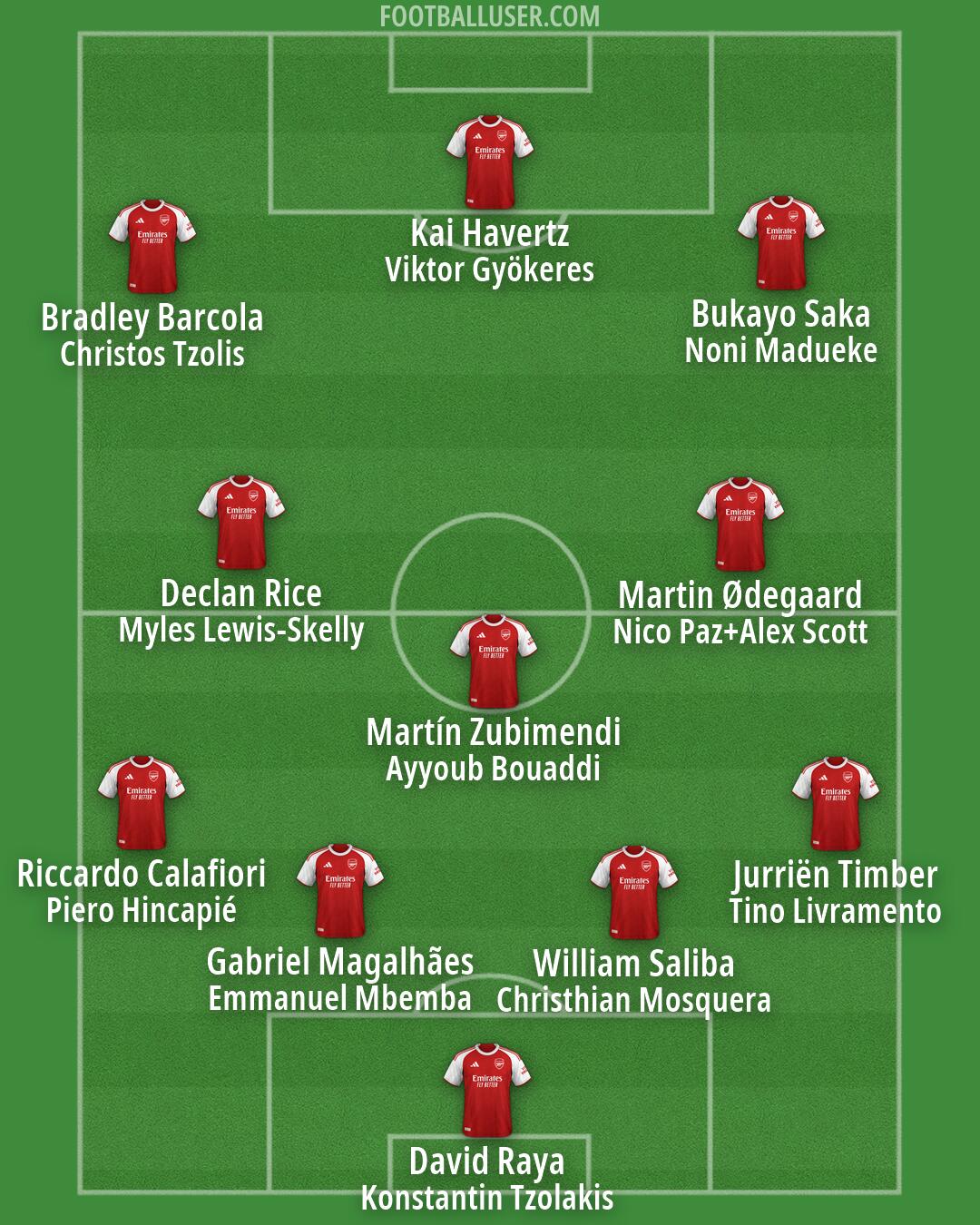
David Raya (Konstantin Tzolakis) · Riccardo Calafiori (Piero Hincapié) · Gabriel Magalhães (Emmanuel Mbemba) · William Saliba (Christhian Mosquera) · Jurriën Timber (Tino Livramento) · Martín Zubimendi (Ayyoub Bouaddi) · Declan Rice (Myles Lewis-Skelly) · Martin Ødegaard (Nico Paz+Alex Scott) · Bradley Barcola (Christos Tzolis) · Bukayo Saka (Noni Madueke) · Kai Havertz (Viktor Gyökeres)Arsenal seeks to dominate through heavy possession and a high press in this 4-3-3. The team focuses on controlling the ball to tire the opposition and maintain high pressure in the final third. This formation allows the squad to control the tempo of the game and use wide areas to stretch the opposition defense.
David Raya acts as the goalkeeper, playing out from the back to start attacks. The back line consists of a flat back four with Jurriën Timber playing as a right back and Riccardo Calafiori acting as the left back. William Saliba and Gabriel Magalhães form the central pair, with Saliba providing great recovery speed and Gabriel offering aerial strength. The defensive unit works to keep a high line, squeezing the space and pressing the opponent before they can turn.
The midfield operates as a three-man midfield with a single pivot. Martín Zubimendi sits in front of the defense to shield the back four and recycle possession. Declan Rice operates as an inverted eight, using his physical presence to win the second ball and carry the ball forward. Martin Ødegaard plays as the attacking playmaker, looking to find the feet of the striker or play through the lines with his elite passing range. This trio connects the defense to the attack by shifting the ball quickly across the pitch.
In the attacking phase, Arsenal uses three attackers across the front. Kai Havertz acts as a pressing centre-forward who often drops into the hole to link up play. Bukayo Saka plays as a winger on the right who likes to cut inside onto his left foot, while Bradley Barcola operates on the left as an inverted winger. The team looks to create wide overloads and use the wingers to isolate defenders in one on one situations. These attackers press from the front to force a long ball from the opposition.
This lineup provides significant tactical advantages through numerical superiority in the middle of the pitch. The ability to press high in coordinated waves forces many turnovers in dangerous areas. Arsenal also benefits from the speed of transition when they win the ball back high up the pitch, allowing Saka and Barcola to attack the space behind the defense immediately.
This 4-3-3 formation is built for high-intensity games where controlling the ball is the priority. It is most effective against teams that sit deep and struggle to handle pressure in their own half.