Chelsea Football Formation
 June 24, 2026


Starting Lineup
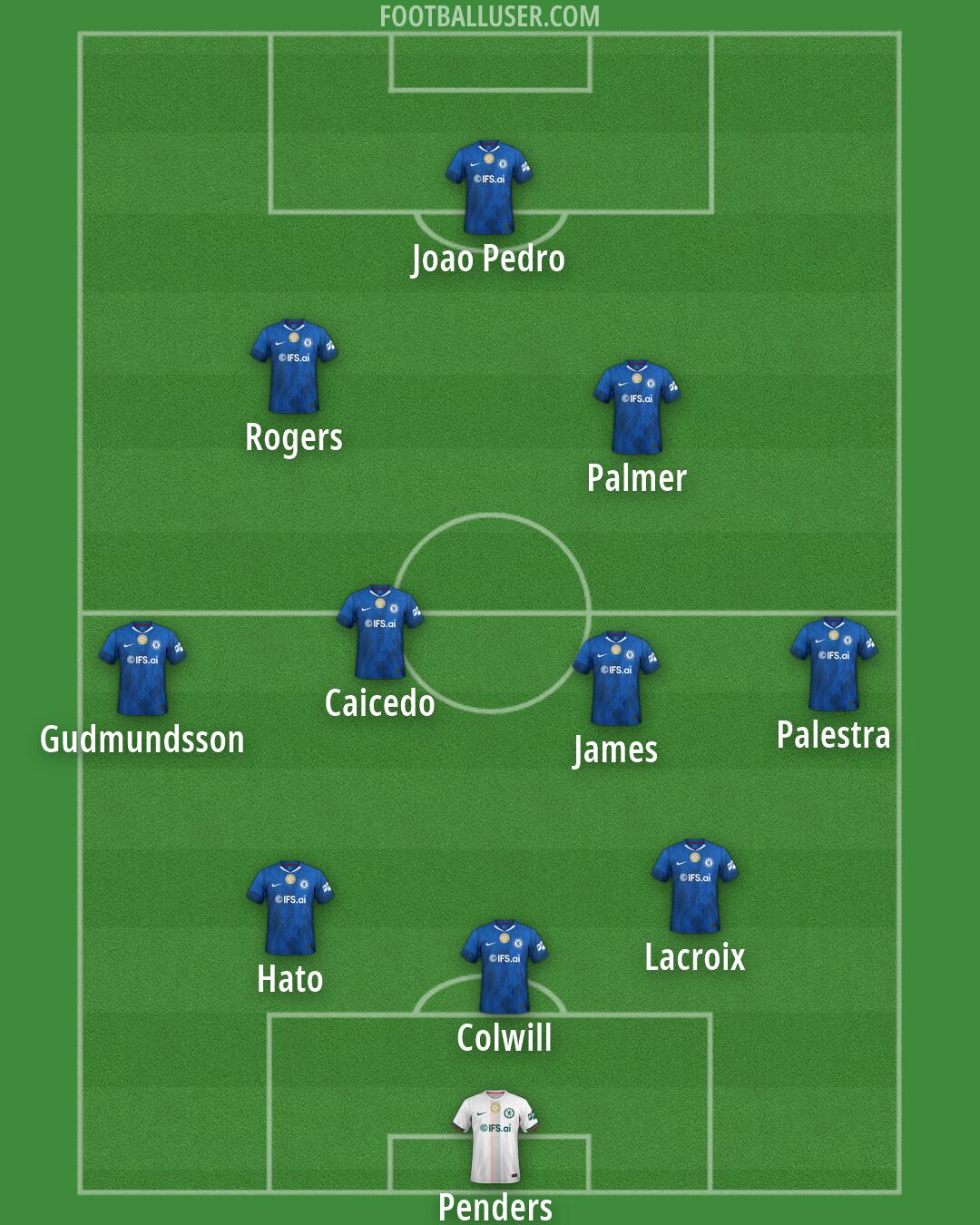
Palestra · Lacroix · Colwill · Hato · Gudmundsson · Penders · James · Caicedo · Joao Pedro · Palmer · RogersChelsea aims to control games through high pressing and rapid transitions using a 3-4-3 formation. This lineup focuses on squeezing the pitch to win the ball back high up the pitch and using wide players to stretch the defence. The goal is to create constant pressure on the opposition while staying ready to break quickly once possession is regained.
Penders starts between the posts to oversee the defensive unit. The back line operates as a back three with Colwill, Hato, and Lacroix. Colwill acts as a ball playing defender who can play short from the back to build play. Hato provides cover and can step up to intercept passes, while Lacroix is dominant in the air and helps to defend zonally. This unit holds a high line to keep the team compact when they press.
The midfield works as a central block to control the middle of the pitch. Caicedo sits in the midfield to shield the defence and intercept play. James operates as a carrier who can drive forward with the ball to link the lines. Gudmundsson plays on the left to provide width and help the press, while Palestra works on the right to balance the midfield. Together, they work to win the second ball and recycle possession to maintain control.
In the final third, Chelsea utilizes three attackers to pin the last defender. Joao Pedro leads the line as a pressing centre-forward who works to find the feet of the striker and hold up the ball. Rogers plays on the left as an inverted winger who wants to cut inside to create chances. Palmer operates on the right, looking to isolate a one-on-one wide or find space between the lines. This front three makes constant runs in behind to exploit gaps.
The tactical advantages of this Chelsea formation include the ability to press high in coordinated waves to force a long ball from the opponent. By using three central defenders and two central midfielders, the team keeps a compact shape that is hard to break through centrally. The wide players also allow for wide overloads when the wingers and midfielders combine to create numerical superiority in the half spaces.
This formation is built to dominate possession and win the ball back high up the pitch. It is best suited for games against teams that struggle to play out from the back under intense pressure.