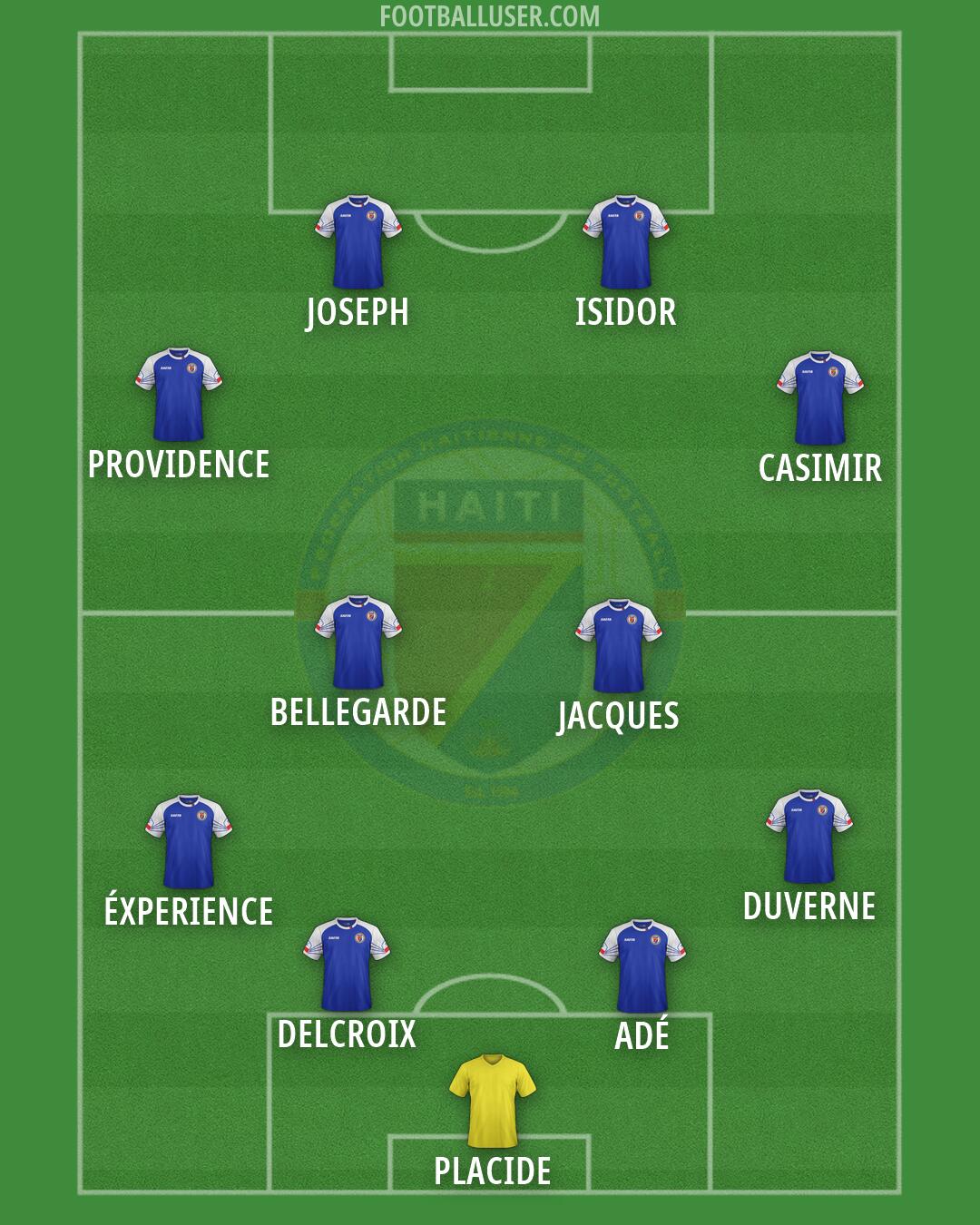

Haiti National Football Team Formation
 June 24, 2026


Starting Lineup
DUVERNE · ADÉ · DELCROIX · ÉXPERIENCE · CASIMIR · JACQUES · BELLEGARDE · PROVIDENCE · ISIDOR · JOSEPH · PLACIDEHaiti relies on a heavy verticality and high intensity to overwhelm opponents, utilizing a 4-2-4 formation. This lineup is built to push the opposition back and create constant pressure in the final third. By spreading the pitch wide, Haiti aims to force errors and break quickly through a frontline that stays high up the pitch.
PLACIDE guards the goal while the back four maintains a relatively high line to squeeze the space. DUVERNE operates as a right back who can push up to support the attack, while ÉXPERIENCE occupies the left back position to provide width. In the heart of the defense, ADÉ and DELCROIX act as the central pair, with ADÉ working to cover space and DELCROIX focusing on winning the header during defensive transitions. This defensive unit works to defend zonally and prevent the opposition from playing through the lines.
The midfield consists of a double pivot tasked with controlling the center of the pitch. BELLEGARDE and JACQUES form this pair, working to win the second ball and protect the defensive line. BELLEGARDE often drops deep to receive the ball and help play short from the back, while JACQUES uses his mobility to press aggressively and win it back high up the pitch. They act as the vital link, carrying the ball forward to connect the defense to the four attackers.
In the attacking phase, Haiti uses two forwards in a partnership up front with ISIDOR and JOSEPH leading the line. This duo works to pin the last defender and provide a central presence, often looking to find the feet of the striker or run in behind. On the flanks, CASIMIR and PROVIDENCE act as wide wingers who hug the touchline to stretch the defence. They look to isolate a one-on-one wide or deliver early crosses into the box to find the two central strikers.
One major tactical advantage for Haiti is the ability to create wide overloads when the full backs push high to support the wingers. The team also benefits from the speed of transition, as the double pivot can quickly release the front four to attack a disorganized defense. This high volume of attackers makes it very difficult for opponents to defend against quick, direct play.
This 4-2-4 formation is designed for a high-risk, high-reward style of play that targets teams sitting in a mid-block. It is best suited for matches where Haiti can use their pace to hit in behind on the transition and dominate the attacking third.