Man City Football Formation
 June 25, 2026


Starting Lineup
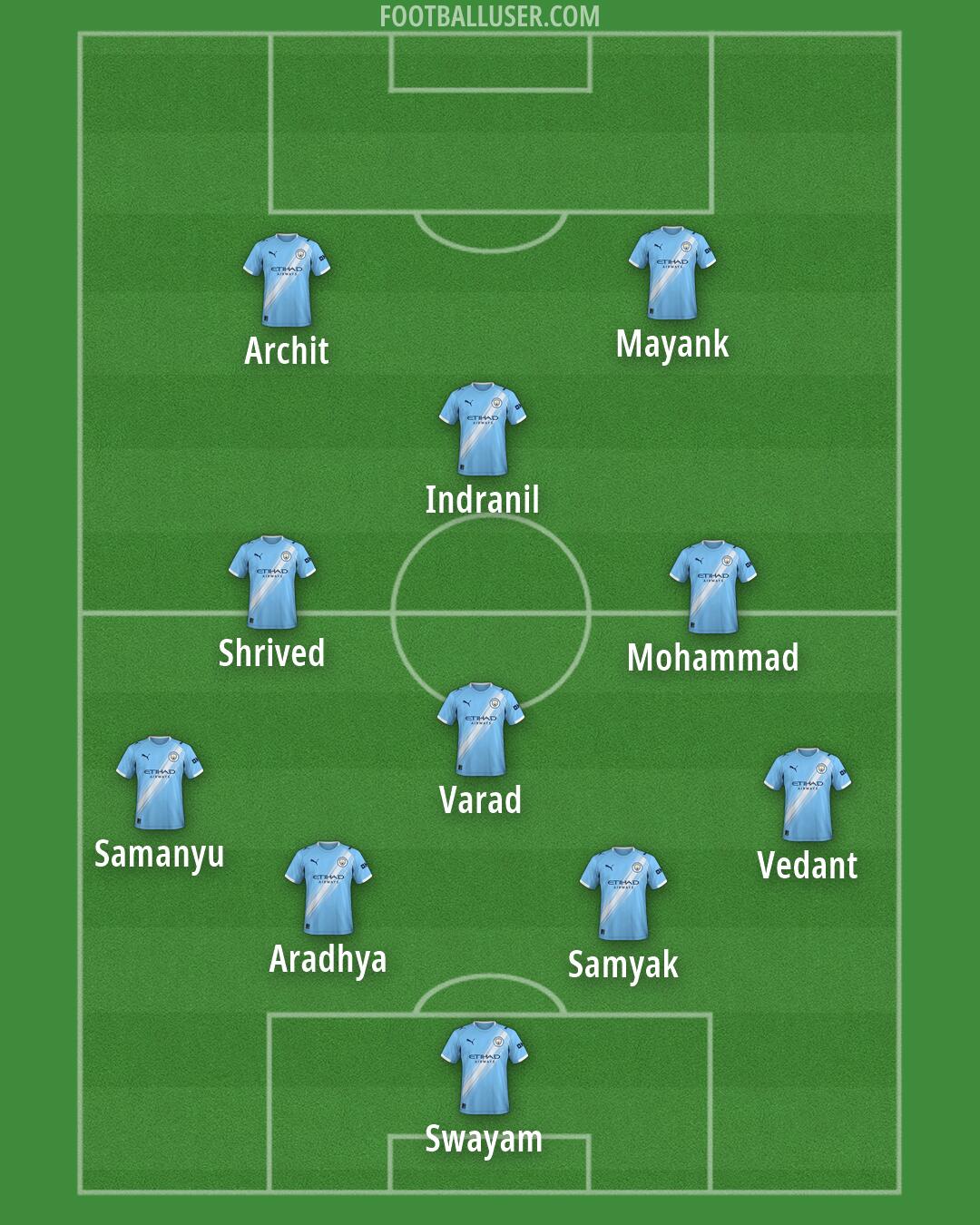
Swayam · Varad · Samyak · Aradhya · Vedant · Samanyu · Mohammad · Shrived · Indranil · Mayank · ArchitMan City relies on a defensive identity to control matches. This 5-3-2 formation is built to sit deep and strike with speed. The team focuses on being hard to beat and relies on quick transitions to catch the opposition.
Swayam stays between the posts to command the area. The defensive unit functions as a back five with Varad acting as the central defender to hold the line. Samyak and Aradhya play as the wide centre-backs to cover the space behind the wing backs. Vedant and Samanyu act as attacking wing backs who push up the pitch to provide width. This defensive unit works together to defend zonally and squeeze the space.
In the middle of the pitch, the team employs a three-man midfield. Shrived and Mohammad play as a deep-lying pairing to shield the defence and win the second ball. They work to recycle possession and connect the defensive line to the attack. Indranil plays as an attacking ten behind the strikers to find the feet of the forwards and play through the lines. This allows the team to move the ball from the back to the front effectively.
The attacking side uses two forwards in a partnership. Archit and Mayank work together to lead the press from the front. Archit acts as a pressing centre-forward to force long balls, while Mayank looks to receive on the half-turn and run in behind. The wing backs Vedant and Samanyu push high to overlap the midfielders, which helps to stretch the defence. This formation creates chances through cutbacks and quick combinations in the final third.
A major strength of this Man City lineup is the compactness when defending. The back five makes it very difficult for opponents to find space between the lines. Another advantage is the ability to create wide overloads when the wing backs join the attack. This forces the opposition to defend much wider and leaves gaps in the middle for Indranil to exploit.
This formation is a strong choice for teams looking to absorb pressure and counter at pace. It works best against dominant sides that struggle to deal with quick transitions.