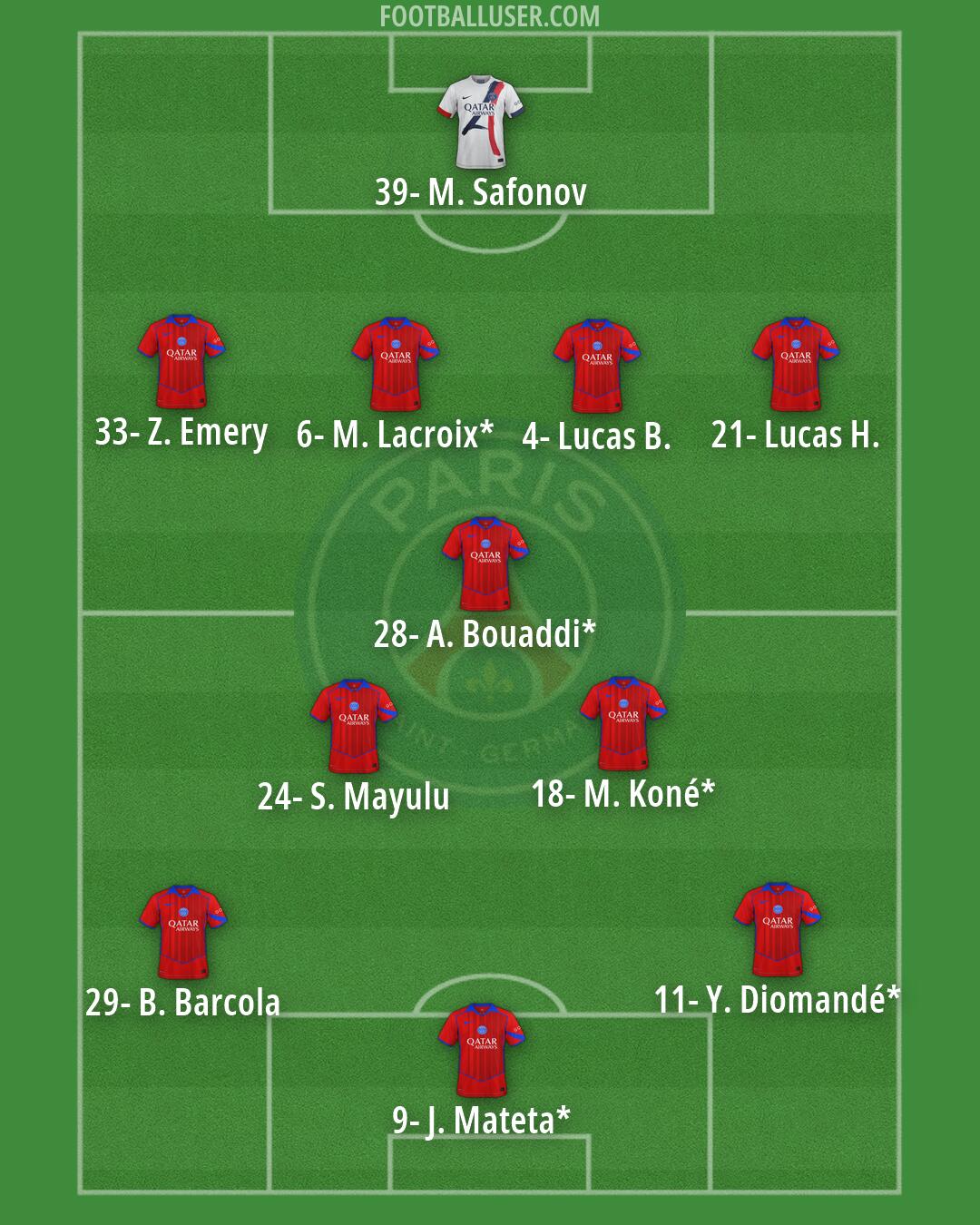

PSG Football Formation
 June 27, 2026


Starting Lineup
39- M. Safonov33- Z. Emery
6- M. Lacroix*
21- Lucas H.
4- Lucas B.
28- A. Bouaddi*
24- S. Mayulu
18- M. Koné*
29- B. Barcola
11- Y. Diomandé*
9- J. Mateta*
PSG focuses on high pressing and quick transitions through a 4-3-3 formation. This lineup aims to win the ball back high up the pitch and use the speed of the attackers to break the lines. The team looks to control the tempo by moving the ball quickly through the thirds to catch the opposition before they can settle.
M. Safonov acts as the last line of defense in goal. The back four operates as a flat defensive line that can step up to set the offside trap. Z. Emery plays as the right back, looking to overlap the winger, while Lucas H. provides balance at left back. In the center, M. Lacroix and Lucas B. work together to defend zonally, with Lacroix often acting as a ball playing defender to initiate play. The unit stays compact to prevent any through balls from getting behind them.
The midfield consists of a single pivot with two more advanced players. A. Bouaddi sits in front of the defense to shield the back four and intercept passes. To his right, M. Koné works to carry the ball forward and drive into space, while S. Mayulu operates on the left side to link the defense and the attack. This three man midfield is tasked with pressing in a mid-block to force the opponent into mistakes. Bouaddi helps recycle possession to ensure the team keeps control during build up.
Up front, PSG utilizes a front three to stretch the defence. J. Mateta acts as the central striker, working to hold up the ball and fight for second balls. On the wings, B. Barcola and Y. Diomandé provide width by hugging the touchline, but they often cut inside to create goal scoring chances. The movement of these players creates space for late runs into the box from the midfield. They press from the front to force a long ball from the opposition.
One major strength of this PSG formation is the ability to press high in coordinated waves, which puts immediate pressure on the opposition goalkeeper and defenders. The team also benefits from wide overloads when the full backs push forward to join the attackers. This creates many one on one situations for players like Barcola and Diomandé to exploit. The speed of transition allows the team to move from a defensive block to a dangerous attack in seconds.
This 4-3-3 formation is built for teams that want to dominate through aggressive pressing and rapid forward movement. It is best suited for games against opponents that struggle to play out from the back under pressure.