
Croatia National Football Team Formation
 June 30, 2026


Starting Lineup
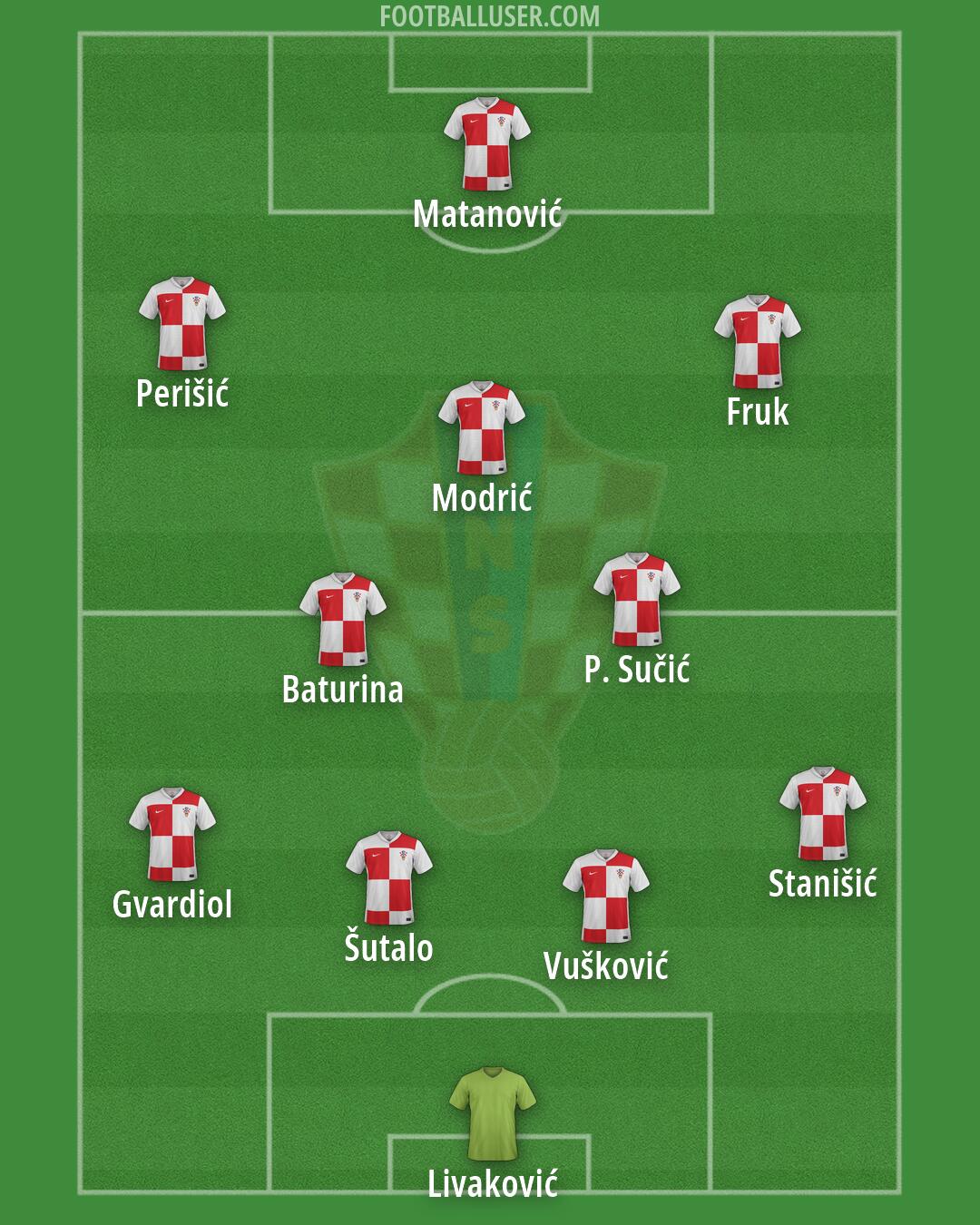
Livaković · Matanović · Šutalo · Vušković · Stanišić · Gvardiol · Baturina · P. Sučić · Fruk · Perišić · ModrićCroatia seeks to control the tempo of the game through a compact and hard to beat 4-5-1 formation. This lineup is built to dominate the middle of the pitch and use quick transitions to exploit gaps in the opponent. The team looks to maintain a mid-block and win the ball back in central areas to start attacks.
Livaković guards the goal and organizes the defensive unit. The back four functions as a zonal line with Stanišić and Gvardiol as the wide defenders. Gvardiol is a ball playing defender who can step up to help progress the ball. In the center, Vušković and Šutalo provide a strong presence. Vušković is dominant in the air and provides cover, while Šutalo works to play out from the back. This unit works to squeeze the space and set the offside trap to deny runs in behind.
The midfield relies on a double pivot of Baturina and P. Sučić to shield the defense. They work to deny the pivot of the opposition and win the second ball. Modrić operates in the center to connect the defensive and attacking lines. He uses his passing range and vision to recycle possession and switch play. Perišić and Fruk play in the half spaces to provide support and width. This midfield group aims to compress the midfield and trigger a press when the ball is played toward the flanks.
Matanović leads the attack as a lone striker. He must hold up the ball and lay it off to bring teammates into play. Perišić and Fruk push high to act as wide attackers, with Perišić often looking to cut inside to create numbers in central areas. The team attacks in combinations and looks to hit in behind on the transition. Matanović must work to pin the last defender, creating space for Modrić to arrive late into the box or for the wide players to whip it in.
A primary strength for Croatia is the numerical superiority they create in the center of the pitch. Having five players in that zone makes it difficult for opponents to find passing lanes. The team also benefits from the ability to switch play rapidly to catch the opposition out of position. The speed of transition allows the players to move from a defensive block to an attacking stance very quickly.
This 4-5-1 formation is built on central density and controlled transitions. It is best suited for matches against teams that prefer to hold possession, allowing the team to sit deep and strike on the break.