Custom Team Football Formation
 July 3, 2026


Starting Lineup
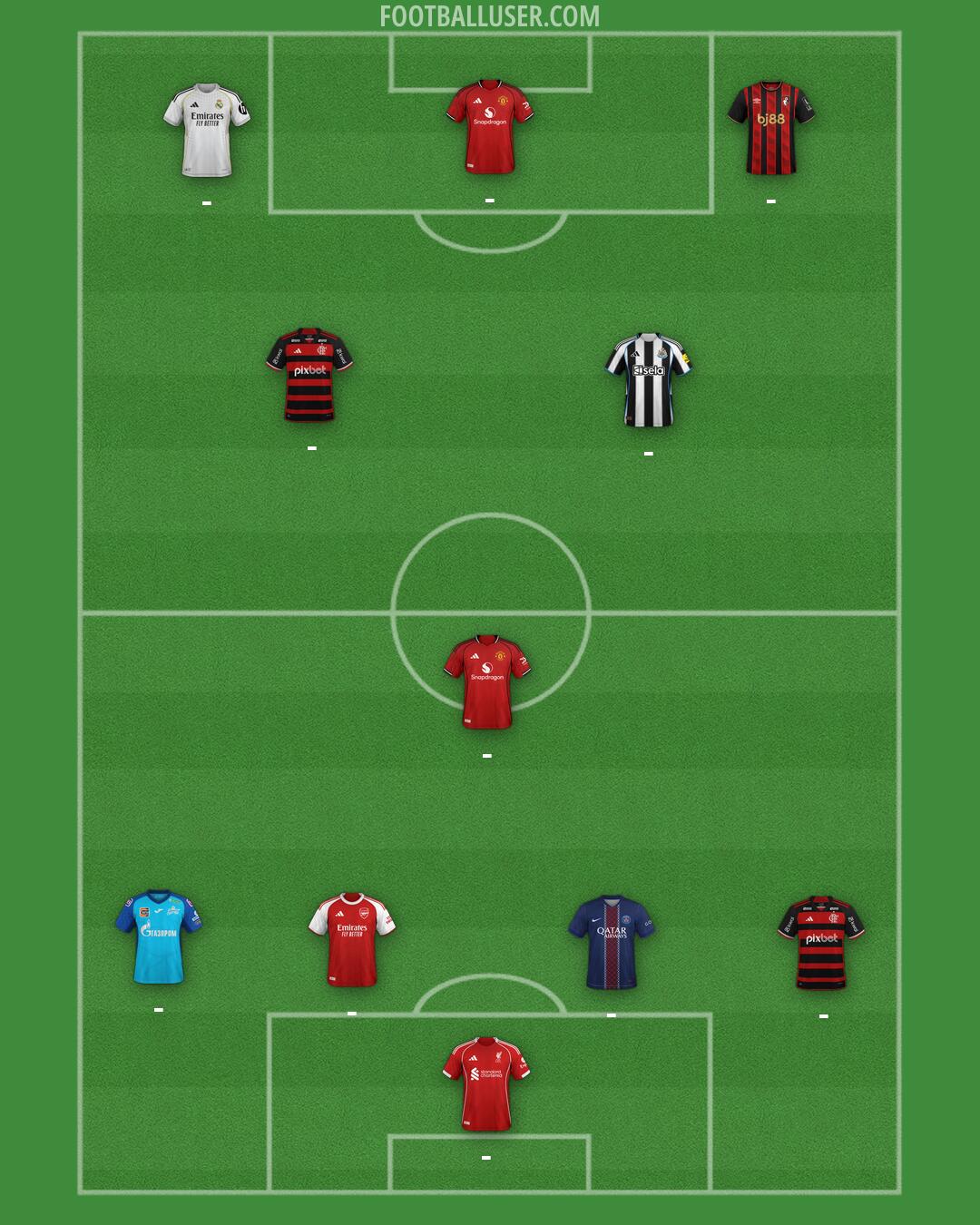
- (Liverpool) · - (Man Utd) · - (Bournemouth) · - (Newcastle) · - (Arsenal) · - (Man Utd) · - (Flamengo) · - (Flamengo) · - (Real Madrid) · - (Zenit) · - (PSG)A focus on defensive solidity and quick transitions defines this team, which operates in a 5-2-3 formation. This lineup is built to sit in a mid-block and wait for the moment to break quickly when the opposition loses possession. By using a wide attacking front, the team seeks to exploit spaces behind the opponent's full backs.
The goalkeeper sits behind a deep defensive line to manage long balls. The back five consists of a central trio and two wide wing backs. The central defender acts as the anchor, while the left and right centre backs provide cover and step up to intercept passes. The right wing back and left wing back are tasked with providing width, often pushing high to support the attack but must track back to form a five man line when defending. This unit stays compact to deny the turn to any oncoming runners.
In the middle of the pitch, the team utilizes a double pivot. The two central midfielders are responsible for protecting the back three and recycling possession to keep the tempo controlled. One midfielder often sits deeper to deny the pivot of the opposition, while the other looks to carry the ball forward and connect the defensive unit to the attacking line. These two players must work hard to win the second ball and squeeze the space when the team pushes up the pitch.
The attacking front line employs three attackers across the pitch, using wide wingers who hug the touchline to stretch the defence. The left winger and right winger look to cut inside to create numbers in the box, while the striker acts as a focal point to hold up the ball and allow others to join the play. This front three is expected to press from the front, forcing the opposition to play long balls. The goal is to use the width to create one on one situations for the wingers or to find the feet of the striker in tight spaces.
This formation offers clear tactical advantages, such as the ability to create wide overloads when the wing backs overlap the winger. The defensive stability provided by the back five makes it difficult for opponents to find space between the lines. Additionally, the team can transition at pace, moving from a compact defensive block to a wide attacking lineup in seconds.
The 5-2-3 formation prioritizes defensive security while maintaining a threat on the break. It is best suited for facing teams that dominate possession and leave space behind their defensive line.