Custom Team Football Formation
 July 5, 2026


Starting Lineup
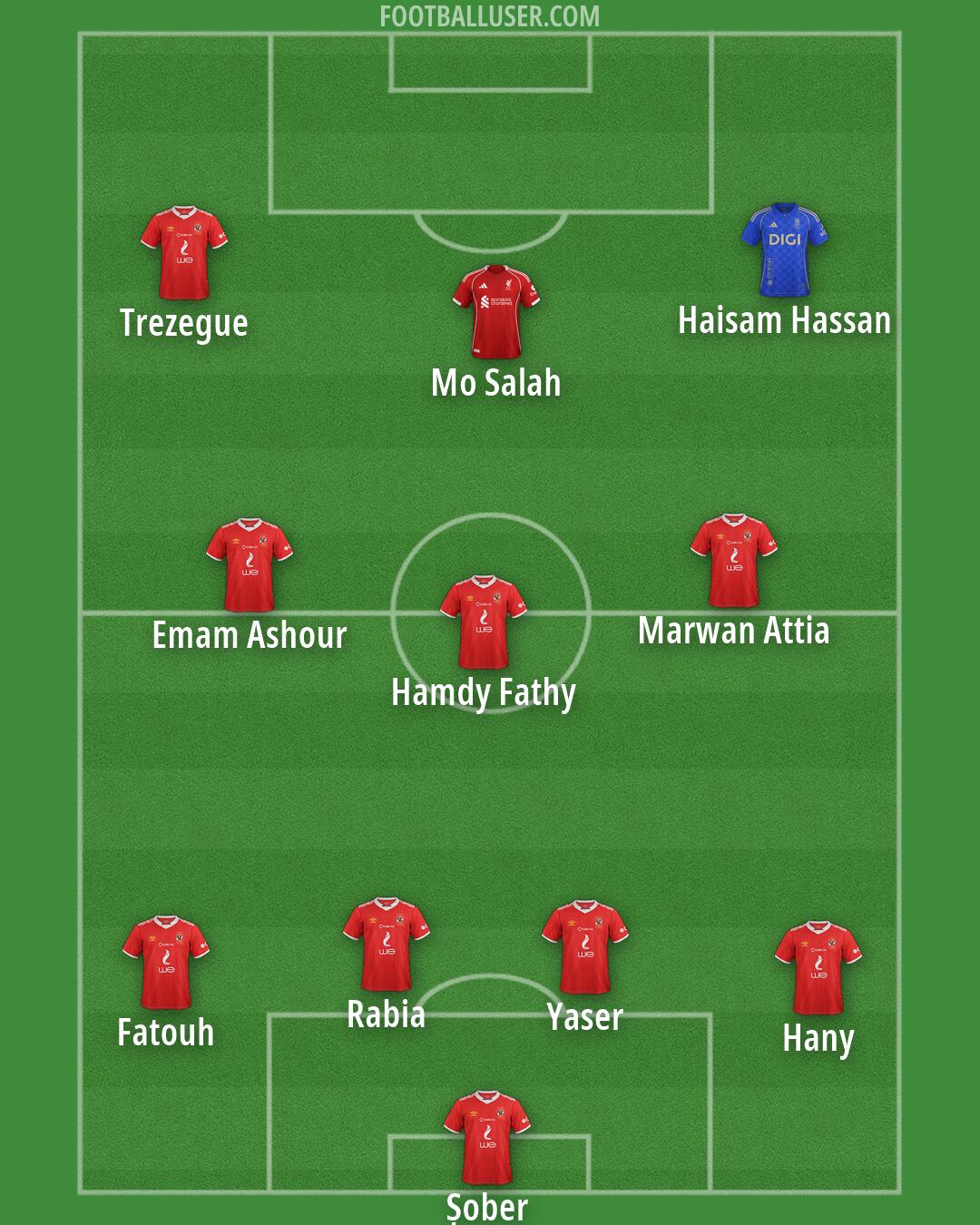
Șober (Al-Ahly) · Mo Salah (Liverpool) · Haisam Hassan (Real Oviedo) · Trezegue (Al-Ahly) · Hany (Al-Ahly) · Fatouh (Al-Ahly) · Rabia (Al-Ahly) · Yaser (Al-Ahly) · Emam Ashour (Al-Ahly) · Hamdy Fathy (Al-Ahly) · Marwan Attia (Al-Ahly)A heavy focus on defensive solidity and quick transitions defines this side, which operates in a 5-4-1 formation. This lineup is built to sit deep and deny space in the middle, inviting pressure before looking to hit opponents in behind. The team aims to stay compact and use the width of the pitch only when moving from a defensive block into an attacking phase.
Haisam Hassan guards the goal, acting as the final line of defense. Ahead of him, a back five provides a dense defensive wall. Hamdy Fathy anchors the middle of the line, while Emam Ashour and Mo Salah occupy the side positions in the back three. Trezegue and Marwan Attia act as wing backs, tasked with providing width and tracking back to defend the flanks. This unit is designed to defend zonally, ensuring the team remains narrow and difficult to break down through the center.
The midfield functions as a flat four to protect the back five. Rabia and Yaser operate in the central area, tasked with winning the second ball and shielding the defense. Fatouh and Hany sit on the left and right channels to provide coverage against opposing wingers. This midfield group works to compress the space between the lines, making it hard for the opponent to play through the thirds. When the ball is won, they look to quickly find the wide players or the striker to start a break.
In the attacking phase, the team relies on a lone striker, Șober, who must hold up the ball and wait for support. There are no natural wingers in the attacking line, so Trezegue and Marwan Attia must push high to provide the width needed to stretch the defense. The attack is primarily built on long balls or quick vertical passes to find Șober, who tries to link up play with the advancing midfielders. This setup forces the opposition to stay deep, as any loss of possession could lead to a rapid counter at pace.
One major advantage of this formation is the ability to maintain compactness when defending. By keeping the lines close together, the team makes it very difficult for opponents to find passing lanes between the units. Another strength is the potential for wide overloads when the wing backs push up to support the midfield. This creates a situation where the team can transition from a narrow block to a wide attacking force in seconds.
This formation is built for a low block game where defensive discipline is the priority. It is best suited for facing teams that dominate possession and rely on heavy attacking numbers.