United States National Soccer Team Formation
 July 14, 2026


Starting Lineup
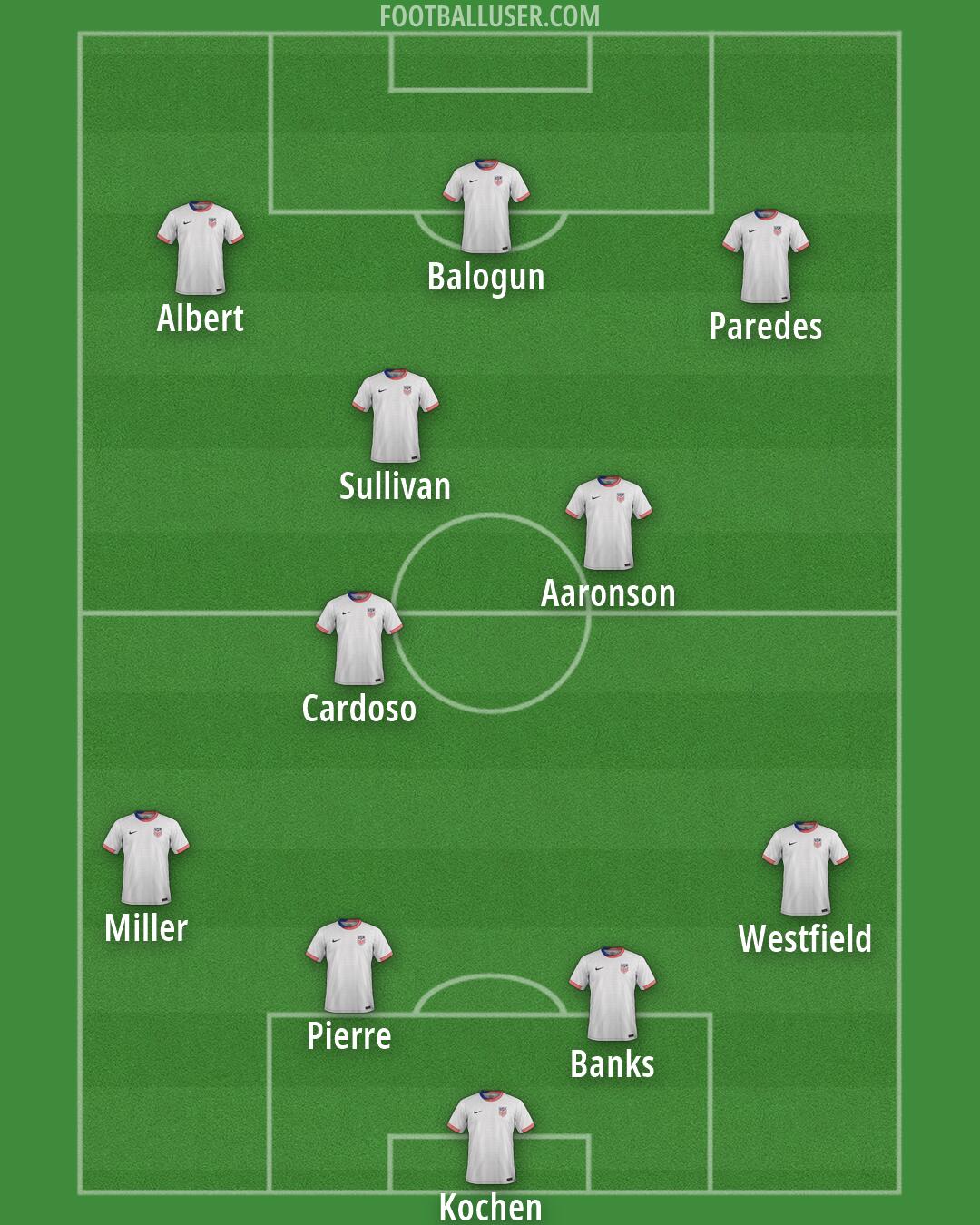
Balogun · Albert · Paredes · Sullivan · Aaronson · Cardoso · Miller · Pierre · Banks · Westfield · KochenUnited States plays with a high press and direct intention using a 4-3-3 formation. This lineup aims to win the ball high up the pitch to catch opponents in transition. The team looks to use vertical passing to move quickly from the defensive third into the attacking third.
Kochen operates between the posts to organize the back line. The defense sits as a flat back four with Westfield and Miller acting as full backs. Westfield tends to overlap to provide width while Miller covers the space left behind. In the center, Banks and Pierre work as a central pairing. Banks provides aerial strength and physical presence, while Pierre acts as a ball playing defender to play out from the back. The defensive unit works to stay compact and squeeze the space between the lines.
A three man midfield controls the center of the pitch. Cardoso sits as a single pivot to shield the defense and win the second ball. Ahead of him, Aaronson plays as a carrier to drive forward with the ball and connect the lines. Sullivan operates as an attacking ten behind the striker, looking to find pockets of space between the opposition midfield and defense. This midfield group works to recycle possession and transition quickly once the ball is won.
The attack relies on three forwards to stretch the opposition. Balogun leads the line as a pressing centre forward, looking to hold up the ball and link play. Albert and Paredes act as inverted wingers who cut inside to create goal scoring opportunities. Albert looks to use his dribbling style to beat his marker, while Paredes pulls wide to deliver crosses. The front three work to pin the last defender and create runs in behind.
United States gains a tactical advantage through their ability to press in coordinated waves. By using the front three to trigger a press, they can force a long ball from the opponent. Another strength is the ability to create wide overloads when Miller or Westfield push forward to support the wingers. This creates mismatches in the wide areas.
This 4-3-3 formation is built to dominate games through high intensity and verticality. It is best suited for matches against teams that struggle to play out from the back under pressure.