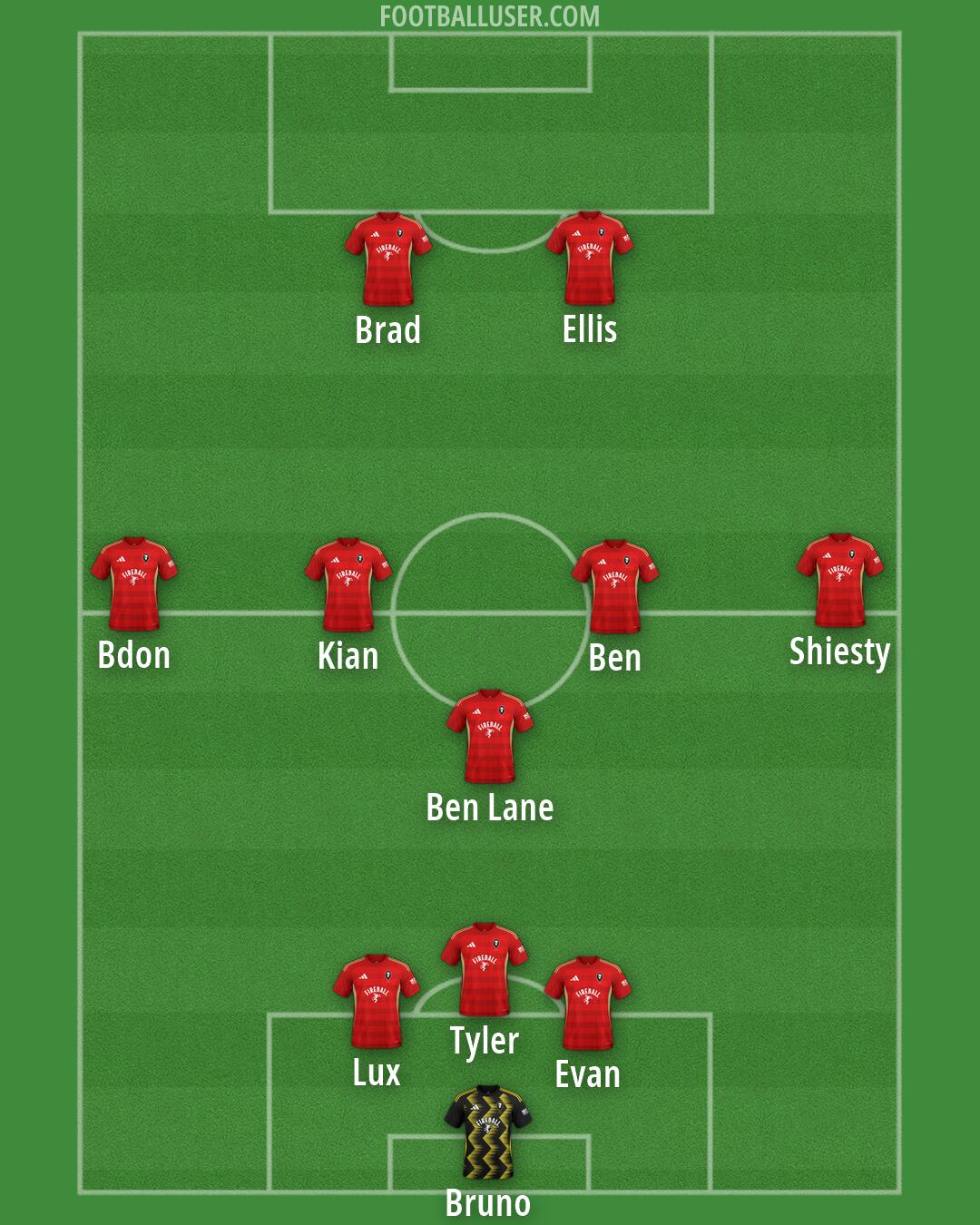
Salford Football Formation
 Today, July 17, 2026
 L0rigin


Starting Lineup
Bruno · Tyler · Lux · Evan · Ben Lane · Ben · Kian · Bdon · Shiesty · Brad · EllisSalford aims to control the tempo of the match through a compact and vertical style of play in a 3-5-2. This formation is built to win the second ball and transition quickly once the ball is recovered. The Salford lineup relies on heavy work rates to squeeze the space between the lines and maintain control in the middle of the pitch.
Bruno starts in goal to organize the defensive unit. The back line uses a back three consisting of Tyler, Lux, and Evan. Tyler acts as the central figure to command the area, while Lux and Evan provide cover on either side. These defenders often step up to intercept passes and protect the space behind the midfield. They maintain a disciplined line to ensure the opposition cannot easily play through the lines.
The midfield works as a five man unit to dominate the center. Ben Lane sits as a single pivot to shield the defense and recycle possession. Beside him, Ben and Kian act as the two central engines to drive forward with the ball and connect the defensive and attacking lines. Bdon and Shiesty operate as wide midfielders who provide width and help the team transition from a mid-block to an attacking stance. This group is tasked to press aggressively to win the ball high up the pitch.
In the attacking phase, the team utilizes two forwards in a partnership. Brad and Ellis lead the front line to press the opposition back line. They look to combine in tight spaces and make runs in behind to catch the defense off guard. While Brad works to hold up the ball, Ellis looks to arrive late into the box. The wingers, Bdon and Shiesty, push high to create wide overloads and deliver crosses into the box for the two strikers.
A major tactical advantage for Salford is the ability to create numerical superiority in midfield. By using five players in the middle, they can often outnumber the opposition and win the ball back quickly. Another strength is the speed of transition, as the team can move from a defensive block to an attacking wave in seconds. This makes them very dangerous when they hit in behind on the transition.
This formation provides a solid platform for teams that want to dominate the central areas of the pitch. It is best suited for matches where the opponent plays with a narrow midfield and can be stretched by wide movements.