
Poland National Football Team Formation
 July 17, 2026


Starting Lineup
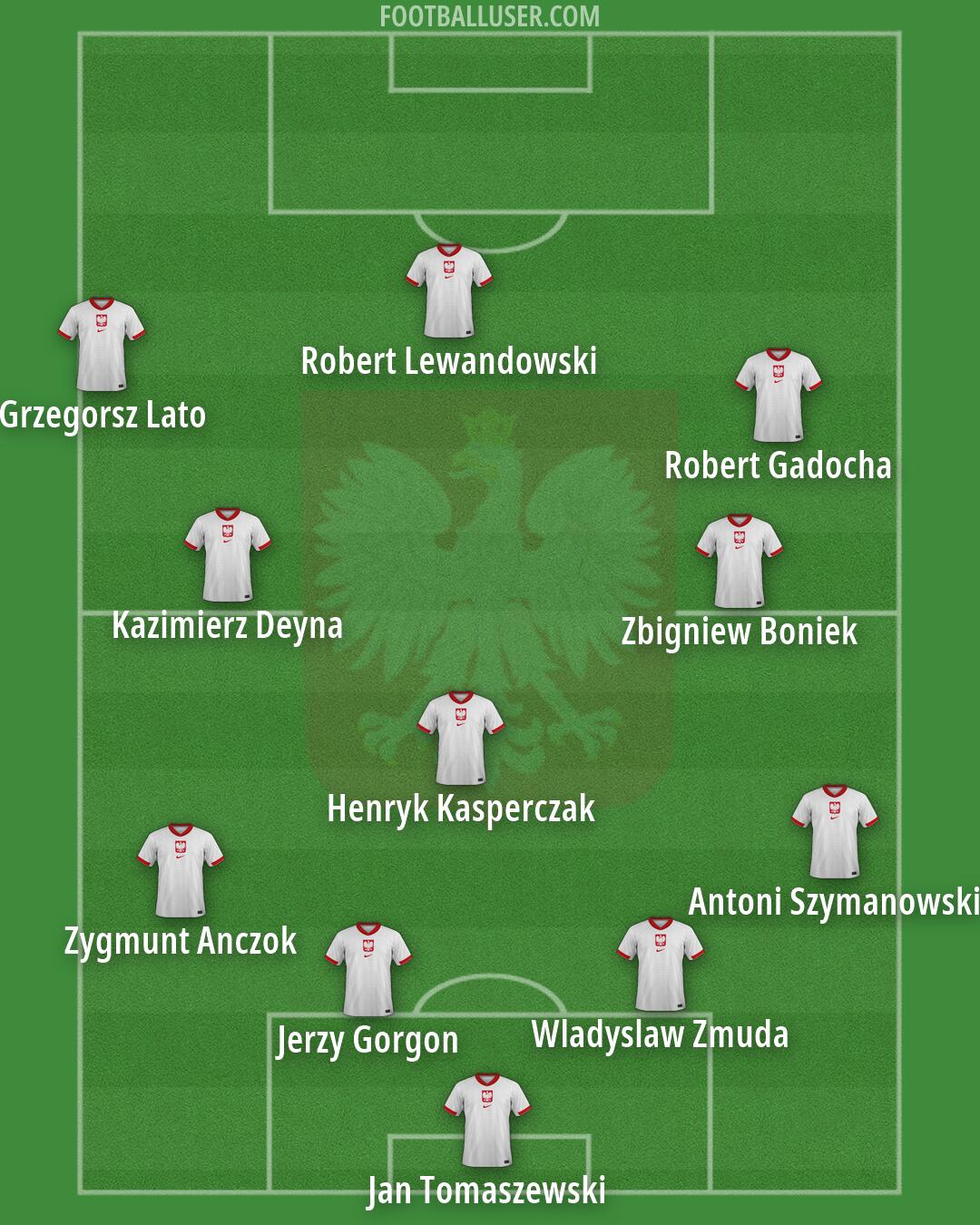
Jan Tomaszewski · Antoni Szymanowski · Wladyslaw Zmuda · Jerzy Gorgon · Zygmunt Anczok · Henryk Kasperczak · Zbigniew Boniek · Kazimierz Deyna · Grzegorsz Lato · Robert Lewandowski · Robert GadochaPoland looks to play a direct and vertical game using a 5-2-3 formation. This lineup is built to exploit transitions and use high width to stretch the opposition. The team wants to win the ball and immediately find the forwards to catch the defense out of position.
Jan Tomaszewski plays between the posts to command the area. The defensive unit works as a back three with Henryk Kasperczak sitting in the center to organize the line. Wladyslaw Zmuda and Jerzy Gorgon act as the wide centre-backs to cover the spaces left by the wing backs. Antoni Szymanowski and Zygmunt Anczok operate as attacking wing backs to provide width and push high up the pitch. This group functions by staying compact and ensuring they do not leave gaps behind when the wing backs move forward.
The midfield relies on a two man unit to control the center of the pitch. Kazimierz Deyna works as a playmaker who looks to receive on the half-turn and play through the lines. Zbigniew Boniek plays alongside him to drive forward with the ball and press aggressively to win the ball high up the pitch. These two must connect the defensive unit to the front three by recycling possession or playing long balls to the wingers.
Poland uses three attackers to pin the last defender and create chaos. Robert Lewandowski acts as the central striker to hold up the ball and fight for headers. Grzegorsz Lato and Robert Gadocha play as wide wingers who want to cut inside and create goalscoring chances. The forwards press from the front to force a long ball from the opposition. This movement creates opportunities for runs in behind or cutbacks from the byline.
One major advantage for Poland is the wide overload created when Antoni Szymanowski and Zygmunt Anczok push up to join the wingers. This forces the opposition to defend a lot of space. Another strength is the ability to hit in behind on the transition using the speed of the front three. The formation allows the team to sit deep and defend zonally before breaking quickly once the ball is won.
This 5-2-3 formation provides a strong defensive base while maintaining a threat in the final third. It is best suited for matches where the team needs to defend a lead against a team that dominates possession.