Chelsea Football Formation
 July 18, 2026
 Rebuild Master


Starting Lineup
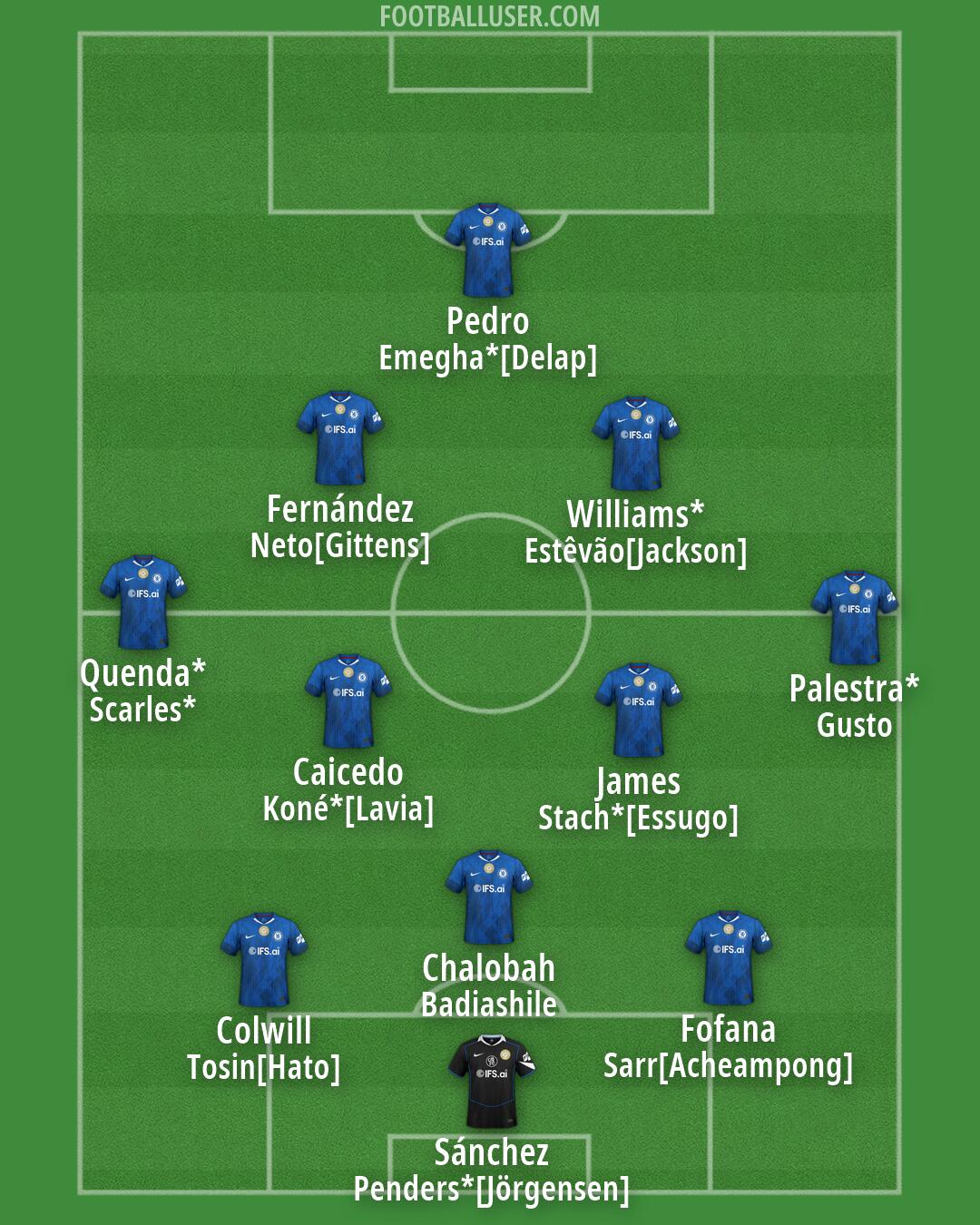
Sánchez (Penders*[Jörgensen]) · Colwill (Tosin[Hato]) · Chalobah (Badiashile) · Fofana (Sarr[Acheampong]) · Quenda* (Scarles*) · Caicedo (Koné*[Lavia]) · James (Stach*[Essugo]) · Palestra* (Gusto) · Fernández (Neto[Gittens]) · Williams* (Estêvão[Jackson]) · Pedro (Emegha*[Delap])Chelsea focuses on a high press and quick transitions through a 3-4-3 formation. This lineup is built to win the ball high up the pitch and use the width of the field to stretch the opposition. The team aims to control the game by squeezing the space in the middle and allowing the wide players to exploit the flanks.
Sánchez operates between the posts to manage the defensive line. The back three consists of Chalobah in the center, with Fofana and Colwill acting as the wide centre-backs. Chalobah acts as the central anchor, while Fofana and Colwill are tasked to cover the space behind the midfield and step up to intercept passes. This defensive unit functions to maintain a high line, forcing opponents to play long balls.
The midfield operates as a four man unit that relies on heavy work rates. Caicedo acts as the central engine, pressing aggressively to win the ball high up the pitch and shielding the back three. James plays in the right channel, looking to carry the ball forward and link with the attackers. On the left, Quenda provides width and covers the flank, while Palestra stays wide on the right to ensure the team can switch play quickly. This midfield block works to compress the center and drive the team into the attacking third.
In the final third, Chelsea uses three attackers to pin the last defender. Pedro plays as the lone striker, tasked to hold up the ball and find the feet of his teammates. Fernández operates on the left wing, looking to cut inside and create chances, while Williams stays wide on the right to provide service. The attack is designed to create runs in behind and use combinations in tight spaces to break the line. The front three also work to press the opposition back line to prevent them from playing out from the back.
This 3-4-3 formation offers several tactical advantages. The team can create wide overloads when James and Palestra push up to support the wingers. Chelsea also gains numerical superiority in the half spaces, allowing them to win the second ball frequently. The ability to press in coordinated waves makes it difficult for opponents to build play through the middle.
The Chelsea lineup is built to dominate games through aggressive pressing and wide play. It is best suited for facing teams that struggle to play under pressure and leave space behind their defensive line.