Chelsea Football Formation
 July 21, 2026


Starting Lineup
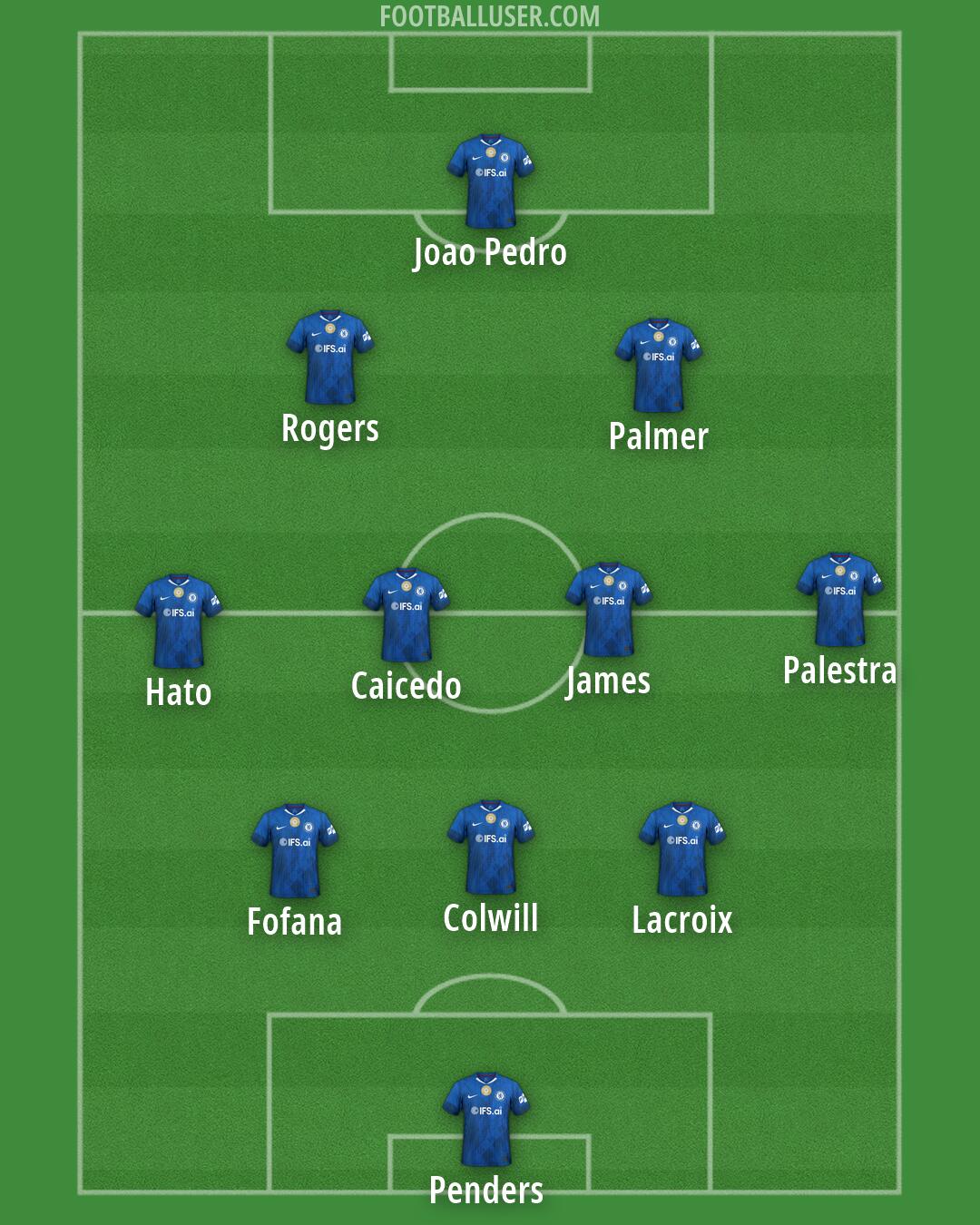
Penders · Lacroix · Colwill · Fofana · Palestra · James · Caicedo · Hato · Palmer · Rogers · Joao PedroChelsea plays a high press system through a 3-4-3 formation. This lineup seeks to win the ball high up the pitch and move quickly through the thirds to punish opponents. The team relies on heavy pressure and verticality to create chances.
Penders starts between the posts to command the area. The back three consists of Colwill, Fofana, and Lacroix. Colwill acts as the central defender to organize the line, while Fofana and Lacroix provide width to the defensive unit. Fofana and Lacroix can step up to intercept passes or cover space when the team presses high. The unit works to stay compact and force the opposition into mistakes near the touchlines.
The midfield operates as a four man block to control the center of the pitch. Caicedo acts as the primary shield for the defense, working to break the line of the opposition and win the second ball. James plays as a central midfielder to carry the ball forward and drive into the half spaces. Hato and Palestra act as wide midfielders who provide the width for Chelsea. Hato and Palestra are tasked to press aggressively to win the ball high and help the defensive unit when the team sits deep.
The attacking front line features three players looking to stretch the defense. Joao Pedro leads the line as a pressing centre-forward to force long balls from the opposition. Rogers plays on the left as an inverted winger to cut inside and create space. On the right, Palmer operates as an inverted winger with a high level of creativity to find the feet of the striker or slide through balls. This front three works to pin the last defender and create runs in behind.
Chelsea finds tactical advantages by using wide overloads. When Hato and Palestra push up, they create extra numbers to overwhelm the opposition wings. The formation also offers great speed of transition, allowing Palmer and Rogers to attack the space immediately after Caicedo wins possession. This allows the team to hit in behind on the transition before the opponent can get organized.
This 3-4-3 formation is built for a team that wants to dominate through aggressive pressing. It is best suited for matches against opponents who struggle to play out from the back under pressure.