
Germany National Football Team Formation
 July 22, 2026


Starting Lineup
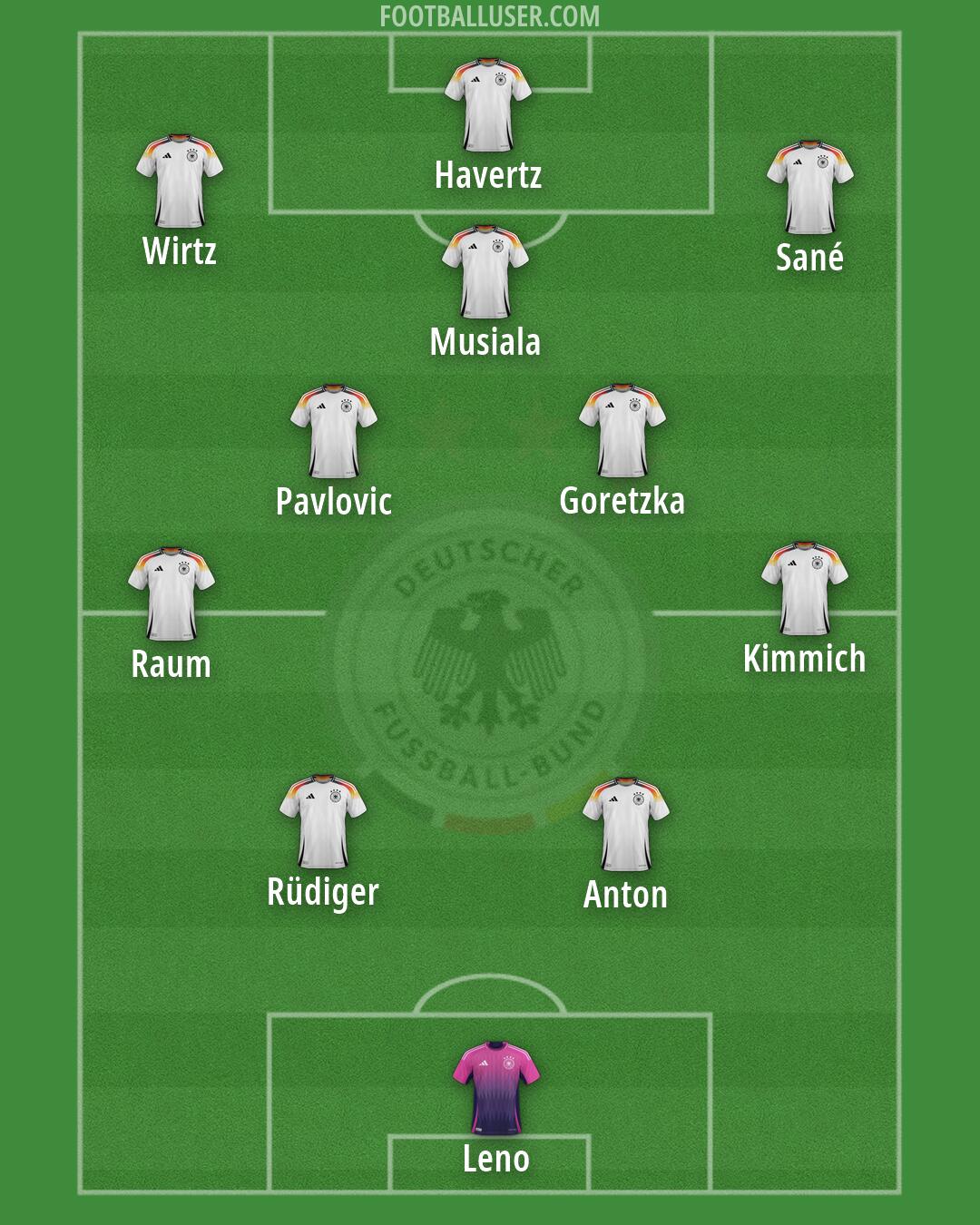
Raum · Kimmich · Rüdiger · Anton · Havertz · Wirtz · Musiala · Sané · Goretzka · Pavlovic · LenoGermany relies on a heavy high press and rapid transitions within a 2-5-3 formation. This lineup is built to dominate the central areas and squeeze the space as high up the pitch as possible. By using a thin defensive line, the team aims to win the ball back immediately and strike before the opposition can settle.
Leno guards the goal and acts as the last line of defense. Ahead of him, Anton and Rüdiger form a two man central defensive unit. Rüdiger provides aerial strength and physical presence to win the second ball, while Anton must step up to intercept passes and cover the space behind the midfield. This duo operates in a high line, requiring them to manage the space between themselves and the midfield to avoid being caught by long balls.
The midfield functions as the engine room with a five man block that controls the center of the pitch. Kimmich acts as the deep lying playmaker, dropping deep to receive from the defenders and recycle possession. Raum and Pavlovic occupy the left and central roles to press aggressively and win the ball high up the pitch. Goretzka drives forward with the ball to connect the lines, while Musiala operates in the hole behind the striker to create through balls and find the feet of the attackers.
In the attacking third, Germany uses three attackers to stretch the defense. Havertz plays as a pressing centre forward to pin the last defender and make runs in behind. Wirtz and Sané act as inverted wingers who cut inside to create overloads in the half spaces. This movement creates space for the midfielders to arrive late into the box. The team looks to attack in combinations, using quick passing to split the defense with a through ball.
A major advantage of this Germany lineup is the numerical superiority in midfield, which allows them to control the tempo of the game. The coordination of the five midfielders makes it very difficult for opponents to progress through the thirds. Additionally, the team uses the speed of transition to hit opponents on the break once the high press triggers.
This high risk formation is designed for teams that want to dictate play through overwhelming central pressure. It is best suited for matches where the opponent struggles to play out from the back under intense pressure.