
Milan Football Formation
 July 23, 2026


Starting Lineup
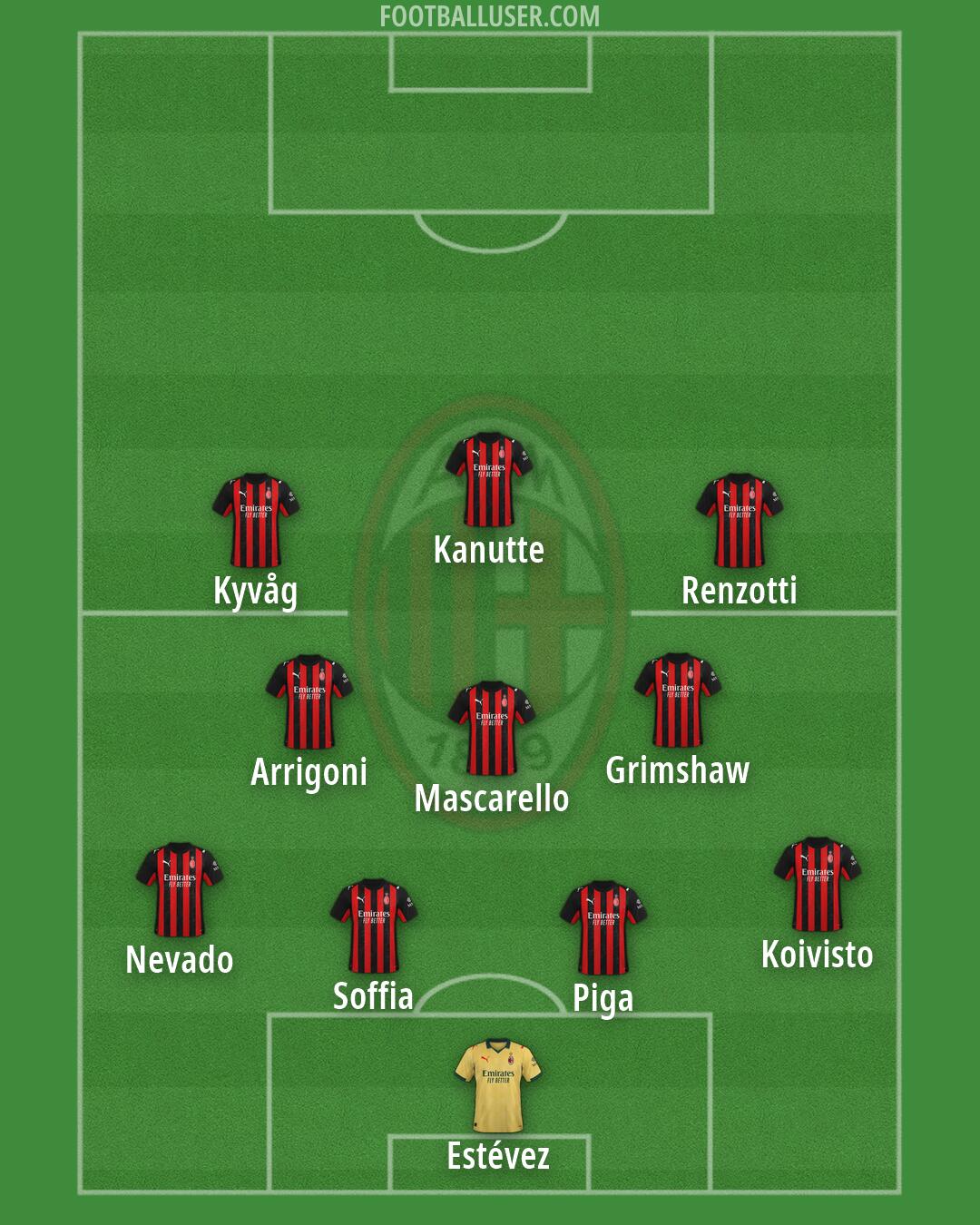
Estévez · Koivisto · Soffia · Piga · Nevado · Arrigoni · Mascarello · Grimshaw · Kanutte · Kyvåg · RenzottiMilan focuses on a high press and rapid verticality using a 4-3-3 formation. This lineup is built to win the ball high up the pitch and immediately look to exploit gaps in the opposition defensive line. By playing with high intensity, the team aims to force mistakes and transition quickly from defense to attack.
Estévez stands between the posts to command the area and sweep behind a high line if necessary. The back four operates with a high line to keep the team compact. Piga and Soffia act as the central defenders, with Piga providing physical presence and Soffia covering space to intercept long balls. On the flanks, Koivisto and Nevado provide width, with Koivisto looking to overlap the winger while Nevado stays more disciplined to defend against wide attacks. The unit works to squeeze the space between the lines and keep the opponent pinned back.
The midfield consists of a three-man midfield with a carrier to bridge the lines. Arrigoni operates as a left central midfielder who looks to press aggressively to win the ball high. Beside him, Grimshaw drives forward with the ball to carry it through the middle. Mascarello acts as the central anchor to shield the defense and recycle possession when the team needs to settle. This trio connects the defensive unit to the front three by playing through the lines and ensuring the team maintains control of the center of the pitch.
In the attacking third, Milan uses three attackers across the front to stretch the defense. Kanutte operates as a pressing centre-forward to disrupt the opposition build up. Kyvåg and Renzotti act as inverted wingers who cut inside to create central overloads. This movement creates space for Nevado and Koivisto to push up the flanks. The forwards look to play one-two combinations to find pockets of space and hit in behind on the transition.
One major strength of this Milan lineup is the ability to press high in coordinated waves, forcing the opponent into mistakes. The team also benefits from wide overloads when the full backs join the attack, creating numerical superiority in the final third. This pressure makes it difficult for opponents to play out from the back effectively.
This 4-3-3 formation relies on high intensity and quick transitions to dominate games. It is best suited for facing teams that struggle to play out from a high press.