
Marseille Football Formation
 July 24, 2026


Starting Lineup
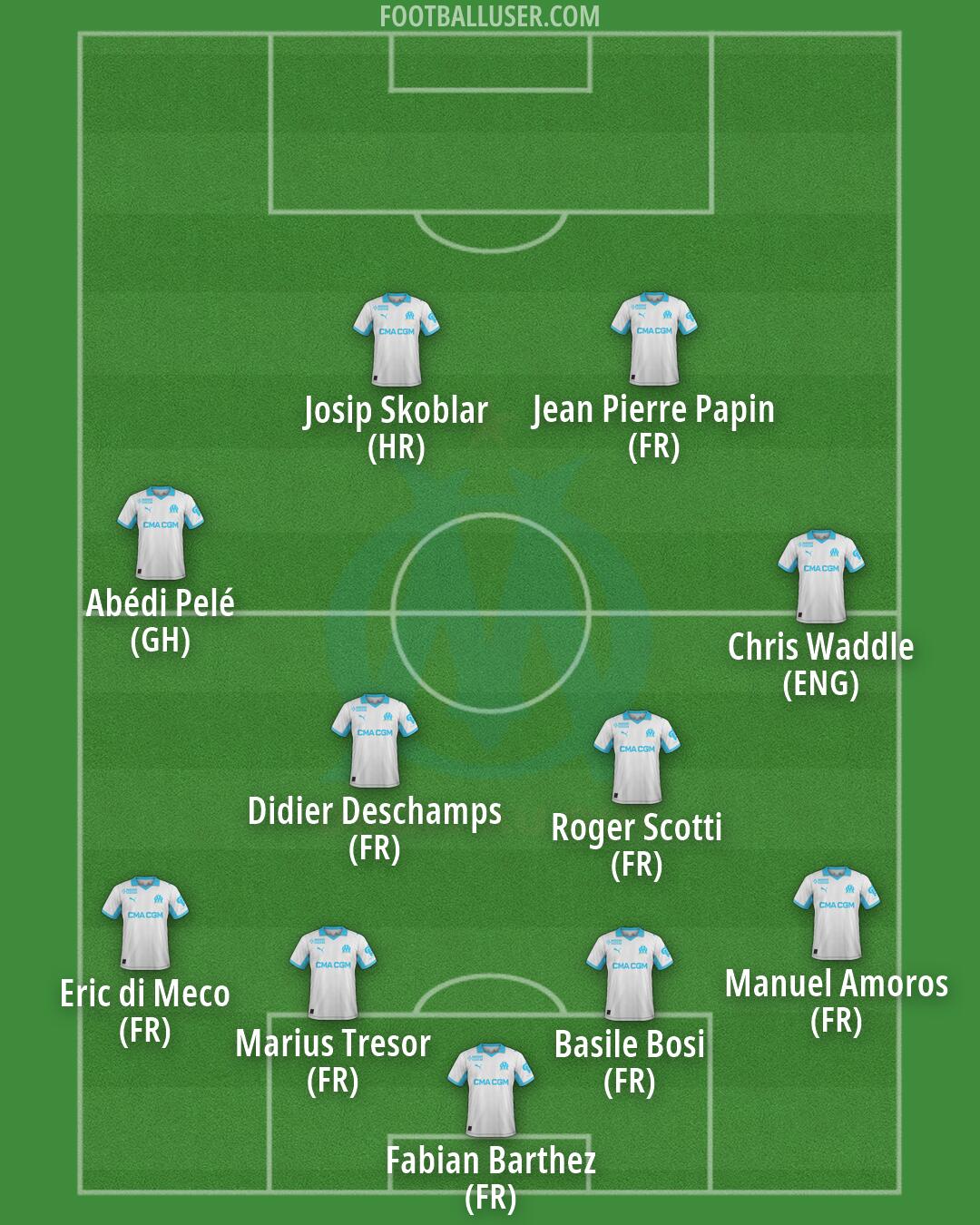
Fabian Barthez (🇫🇷) · Manuel Amoros (🇫🇷) · Basile Bosi (🇫🇷) · Marius Tresor (🇫🇷) · Eric di Meco (🇫🇷) · Didier Deschamps (🇫🇷) · Roger Scotti (🇫🇷) · Abédi Pelé (🇬🇭) · Josip Skoblar (🇭🇷) · Jean Pierre Papin (🇫🇷) · Chris Waddle (🏴)Marseille focuses on a direct and physical way of playing through a 4-4-2. This formation is built to win the second ball and use the pace of the wide players to attack. The lineup relies on hard work in the middle to support a very dangerous strike partnership.
Fabian Barthez sits between the posts to command the area. The back line operates as a flat back four to maintain a compact shape when the opposition has the ball. Manuel Amoros works as a right back to provide width while Eric di Meco covers the left side. In the center, Basile Bosi and Marius Tresor act as the primary defenders, with Bosi providing aerial strength and Tresor looking to cover space. The defensive unit works together to squeeze the space and force the opposition into wide areas.
The midfield works with a double pivot to control the center of the pitch. Didier Deschamps, the captain, sits in the deep midfield to shield the defense and recycle possession. Beside him, Roger Scotti provides grit to win the ball back and protect the back line. In the advanced midfield roles, Abédi Pelé and Chris Waddle play as two tens who operate in the half spaces. Abédi Pelé uses his dribbling style to carry the ball forward, while Waddle looks to create chances with his passing range. This group connects the defense to the attackers by breaking the line with vertical passes.
Marseille uses two forwards in a partnership to stretch the defense. Jean Pierre Papin plays as a clinical striker who looks to arrive late into the box, while Josip Skoblar acts as a powerful presence to hold up the ball. The wide players, Abédi Pelé and Chris Waddle, often cut inside to create overloads in central areas. This setup allows for quick transitions where the team can hit in behind on the transition. The forwards press from the front to force a long ball and allow the midfield to regain control.
This lineup offers significant strength through numerical superiority in the central areas during certain phases of play. The ability to win the second ball in midfield allows Marseille to stay on the front foot. Wide overloads are also common when the full backs push up to support the wingers.
This 4-4-2 formation provides a solid platform for high intensity pressing and quick counter attacks. It is best suited for games against teams that leave space behind their defensive line.