Chelsea Football Formation
 July 25, 2026
 ixtiandr


Starting Lineup
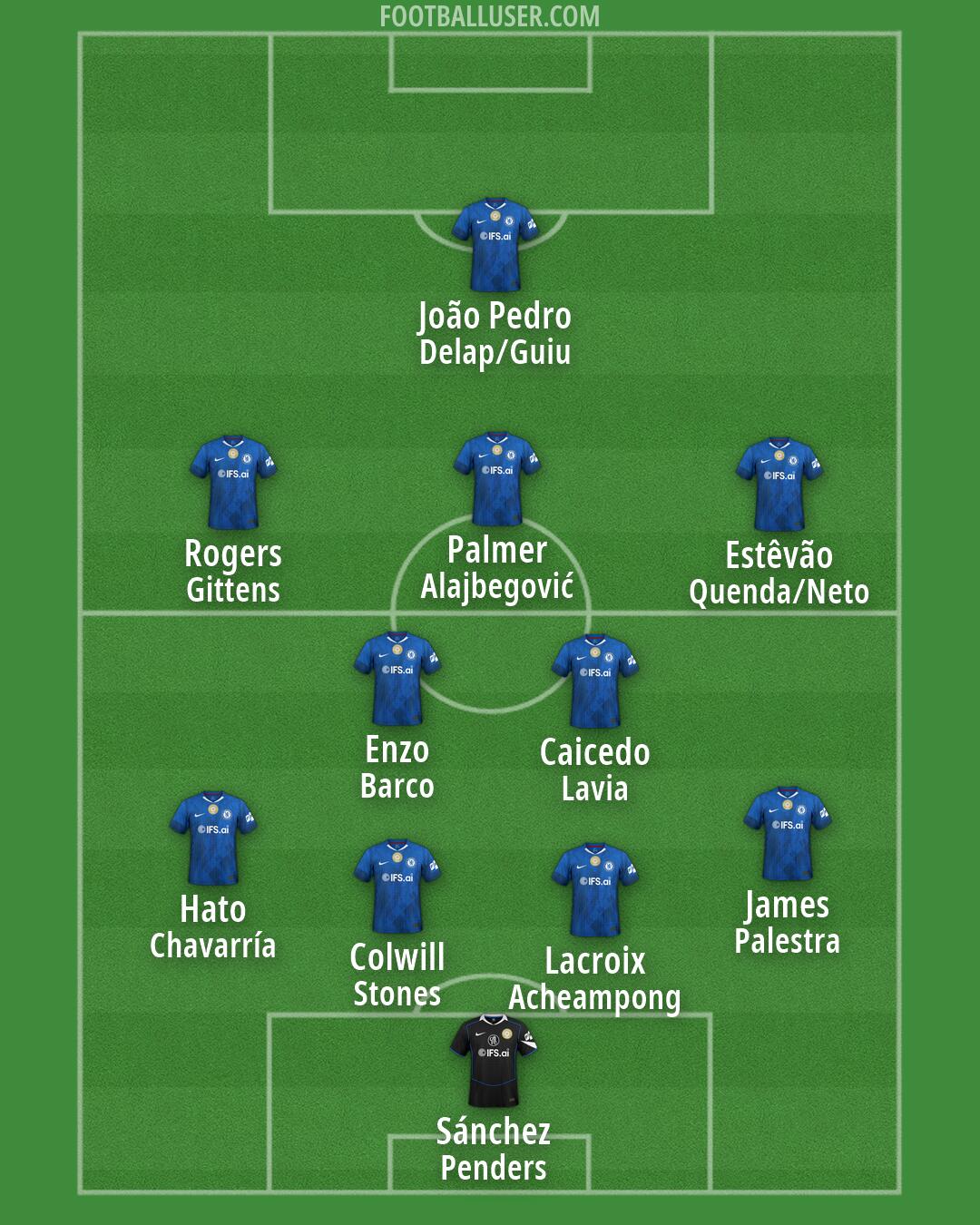
Sánchez (Penders) · James (Palestra) · Lacroix (Acheampong) · Colwill (Stones) · Caicedo (Lavia) · Enzo (Barco) · Estêvão (Quenda/Neto) · Hato (Chavarría) · Palmer (Alajbegović) · Rogers (Gittens) · João Pedro (Delap/Guiu)Chelsea looks to win the ball back high up the pitch and strike quickly using a 4-5-1 formation. This lineup relies on a high press to disrupt the opponent and create chances in transition. The goal is to control the middle of the park while remaining ready to hit in behind on the transition.
Sánchez acts as the last line of defense in goal. The back four operates with a high line to squeeze the space between the units. Lacroix acts as a ball playing defender to help play out from the back, while Colwill covers the space behind him. James pushes up as an attacking full back to provide width, whereas Hato defends the left side and can overlap to support the midfield.
A three man midfield with a carrier and two deep anchors provides the engine for Chelsea. Enzo and Caicedo form a double pivot to protect the center and win the second ball. Palmer plays in the half spaces to link the midfield and attack, often finding pockets of space to receive on the half turn. Estêvão and Rogers operate in the central midfield areas to drive forward with the ball and provide support to the front line.
The attacking play revolves around a lone striker, João Pedro, who acts as a focal point to hold up the ball. He works to pin the last defender and create space for the runners arriving late into the box. The midfielders like Palmer and Estêvão look to move into the gaps left by the defense. When the team wins the ball, they look to spread wide and use the pace of the players to break the lines quickly.
This formation offers the advantage of compactness when defending in a mid-block to deny the turn to opposing attackers. Chelsea can create numerical superiority in midfield when the five players squeeze the central zone. The ability to transition from a defensive block to an attacking wave allows them to catch opponents out of position.
The 4-5-1 formation is built to suffocate the middle of the pitch and exploit gaps during quick transitions. It is best suited for matches against teams that struggle to play out from the back under heavy pressure.