
Honvéd Football Formation
 July 28, 2026


Starting Lineup
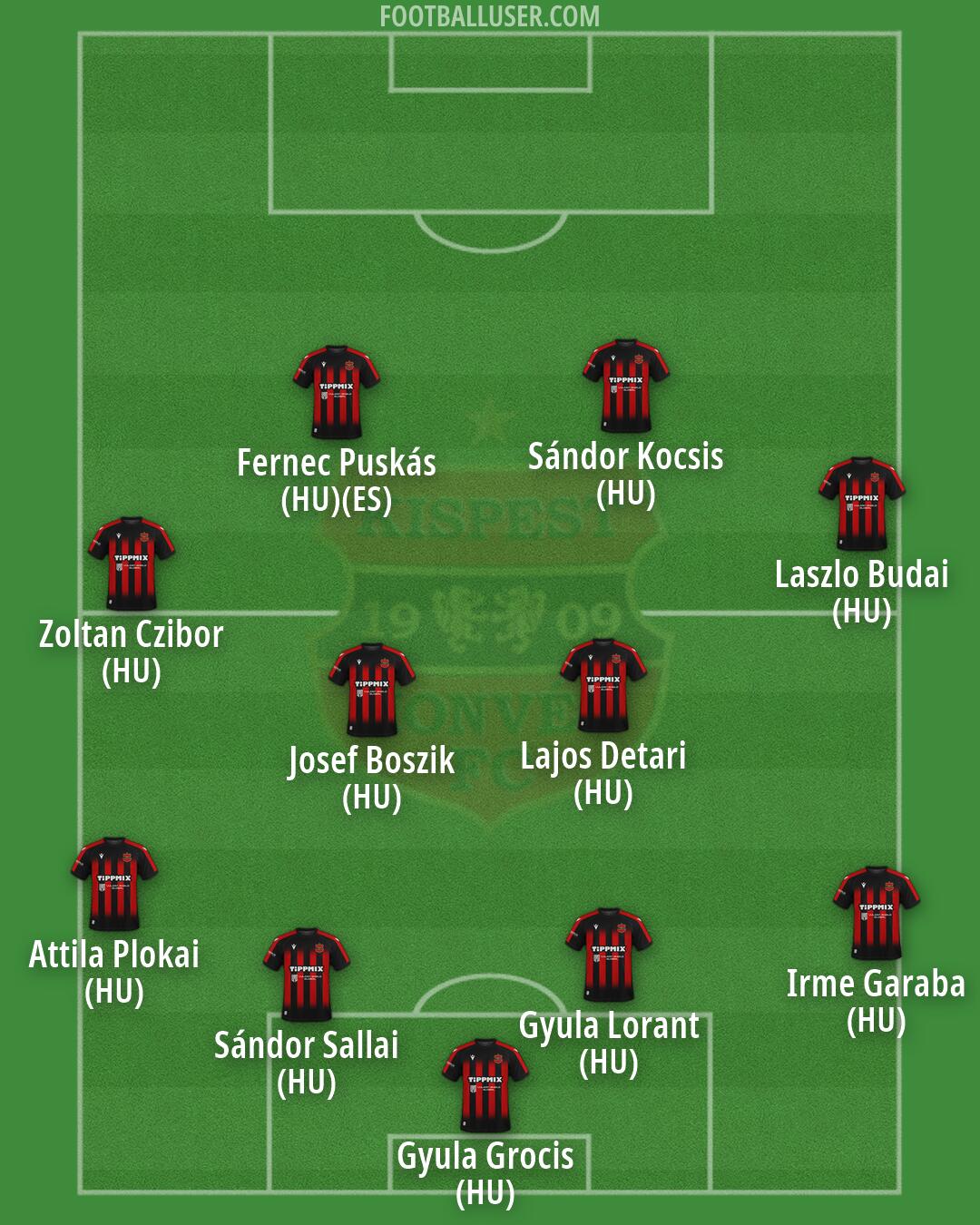
Gyula Grocis (🇭🇺) · Gyula Lorant (🇭🇺) · Irme Garaba (🇭🇺) · Sándor Sallai (🇭🇺) · Attila Plokai (🇭🇺) · Josef Boszik (🇭🇺) · Lajos Detari (🇭🇺) · Laszlo Budai (🇭🇺) · Zoltan Czibor (🇭🇺) · Fernec Puskás (🇭🇺🇪🇸) · Sándor Kocsis (🇭🇺)Honvéd aims to play a high tempo, direct game through a 4-2-4 formation. This lineup is built to overwhelm the opposition with verticality and constant pressure in the final third. The primary goal is to use the width and the number of attackers to stretch the opposition defense and create scoring chances through rapid transitions.
Gyula Grocis stands between the posts to command the area. The defensive unit operates as a flat back four with Attila Plokai and Irme Garaba providing width as full backs. Sándor Sallai and Gyula Lorant act as the central defenders, tasked with winning the second ball and clearing the lines when under pressure. They must hold the line and cover the space behind them to prevent through balls from getting through.
A double pivot in midfield serves as the engine for Honvéd. Josef Boszik and Lajos Detari work to protect the back four while trying to carry the ball forward into the attacking half. These two must connect the defense to the front four, often dropping deep to help build play from the back. They are required to win the ball back quickly and find the feet of the attackers to maintain momentum.
The attacking unit is extremely potent with four players pushed high. Fernec Puskás and Sándor Kocsis operate as a central partnership, with Puskás using his famous left foot and clinical finishing to attack the near post. Zoltan Czibor and Laszlo Budai act as wide attackers, looking to cut inside or deliver crosses to the strikers. This group seeks to pin the last defender and make runs in behind to exploit any gaps in the opposition line.
Honvéd possesses several tactical advantages with this heavy attacking setup. The team can achieve numerical superiority in the attacking third, often leaving the opposition defenders outnumbered. The ability to hit in behind on the transition allows the front four to punish opponents who commit too many men forward. Furthermore, the two central strikers can combine in tight spaces to create chaos.
This 4-2-4 formation is designed for high scoring games and aggressive offensive intent. It is best suited for matches where Honvéd needs to break down a deep defensive block or exploit a slow opposition defense.