Chelsea Football Formation
 Today, August 4, 2026


Starting Lineup
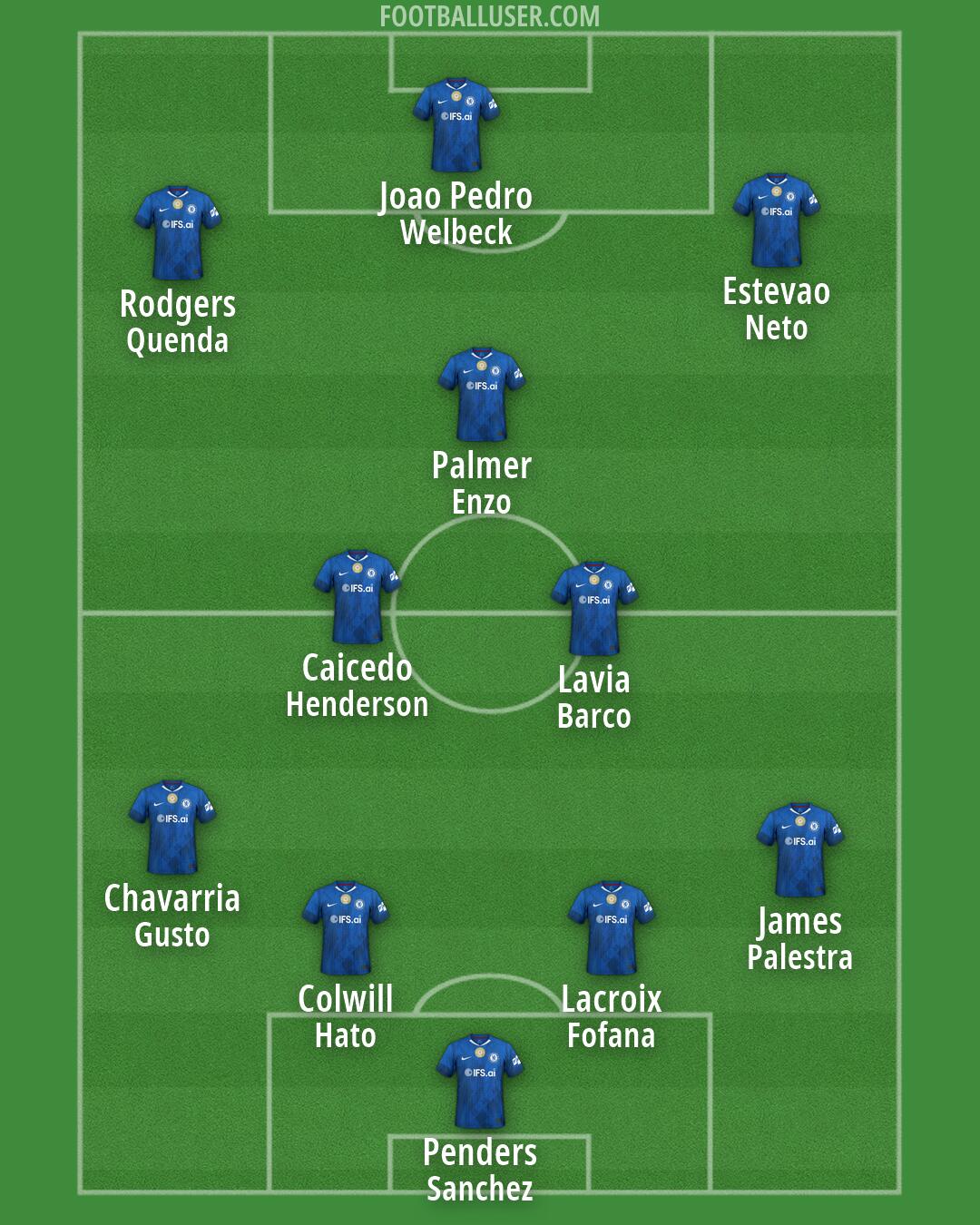
Colwill (Hato) · Lacroix (Fofana) · James (Palestra) · Chavarria (Gusto) · Lavia (Barco) · Caicedo (Henderson) · Palmer (Enzo) · Rodgers (Quenda) · Estevao (Neto) · Joao Pedro (Welbeck) · Penders (Sanchez)Chelsea focuses on a high press and rapid transitions in a 4-3-3. This formation is built to win the ball high up the pitch and use vertical passing to catch the opposition out of position. The goal is to use the intensity of the front line to squeeze the space and create chances through quick movement.
Penders operates between the posts to command the area. The back line functions as a flat back four that can step up to set the offside trap. Lacroix acts as a ball playing defender to start attacks, while Colwill provides cover and reads the game to intercept passes. James pushes forward as an attacking full back to provide width, while Chavarria stays more disciplined to balance the side. The defensive unit must stay compact to deny the turn to opposition attackers.
The midfield consists of a three man midfield with a carrier and two central players. Caicedo presses aggressively to win the ball high and provides energy in the middle. Lavia works to shield the defence and recycle possession to maintain control. Palmer plays as an attacking ten behind the striker, operating in the half spaces to create chances and find the feet of the striker. This trio links the defence to the attack by moving the ball through the thirds with purpose.
Chelsea utilizes three attackers across the front to stretch the defence. Joao Pedro plays as a pressing centre forward, holding up the ball and making runs in behind. Estevao acts as an inverted winger on the right to cut inside and threaten the goal. Rodgers stays wide as a winger to pull wide and deliver crosses. The front line works to pin the last defender and create space for Palmer to arrive late into the box or slide through balls to the runners.
This formation offers significant advantages in terms of high pressing and transition speed. The presence of Palmer allows Chelsea to find numbers in advanced areas, while the energy of Caicedo and Lavia helps to win the second ball. The team can create wide overloads when James and Estevao move into the same vertical lane. These movements force the opposition to defend in tight spaces and prevent them from building from the back easily.
Chelsea relies on high intensity to disrupt the rhythm of the opponent. This 4-3-3 is best suited for games where the team can exploit space behind a high defensive line.