
Milan Football Formation
 August 9, 2026


Starting Lineup
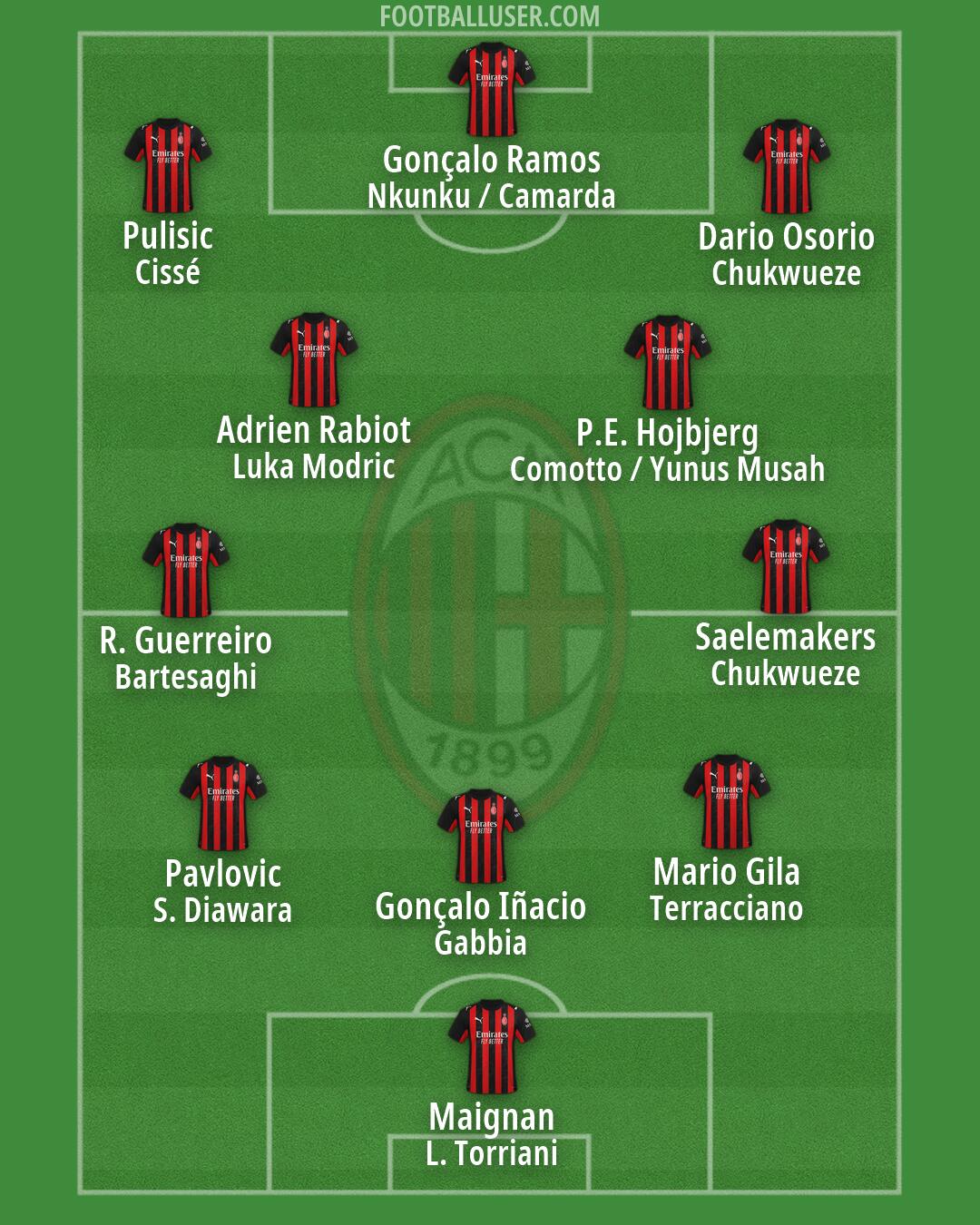
Saelemakers (Chukwueze) · Mario Gila (Terracciano) · Maignan (L. Torriani) · Gonçalo Iñacio (Gabbia) · Pavlovic (S. Diawara) · R. Guerreiro (Bartesaghi) · Adrien Rabiot (Luka Modric) · P.E. Hojbjerg (Comotto / Yunus Musah) · Gonçalo Ramos (Nkunku / Camarda) · Pulisic (Cissé) · Dario Osorio (Chukwueze)Milan relies on a high press and rapid verticality to overwhelm opponents in a 3-4-3 formation. This lineup is built to win the ball high up the pitch and strike quickly before the opposition can settle. By using a compact central core and aggressive wide players, the team seeks to dominate transitions and control the tempo through directness.
Mike Maignan plays behind a back three that works to squeeze the space in the final third. Mario Gila acts as the right centre-back, while Pavlovic occupies the left centre-back slot to provide physical presence. Gonçalo Iñacio completes the trio, capable of playing out from the back to start attacks. The defensive unit stays high to trigger a press, with the defenders ready to step up and catch opponents offside or intercept long balls.
The midfield functions as a box with a central pairing and two advanced operators. R. Guerreiro and Saelemakers form a double pivot to shield the defence and recycle possession. They look to win the second ball and provide a base for the more advanced players. P.E. Hojbjerg and Adrien Rabiot operate as two tens in the half-spaces, looking to carry the ball forward and link the midfield to the attack. These players press aggressively to win it back high up the pitch and connect the lines.
Milan uses three attackers to stretch the defence and pin the last defender. Pulisic operates as an inverted winger on the left, looking to cut inside and find space in the box. On the right, Dario Osorio stays wide to provide width and deliver crosses. Gonçalo Ramos leads the line as a pressing centre-forward, using his movement to pull defenders out of position and create runs in behind. The front three work in combinations to create chances through quick one-twos and cutbacks.
One major advantage for Milan is the ability to press high in coordinated waves, making it difficult for opponents to play out from the back. The formation also offers numerical superiority in the central areas through the box midfield. This allows the team to control the middle of the pitch and quickly transition into attack once the ball is recovered. The width provided by the wingers also helps to stretch the defence and create isolated one on one situations.
This formation creates a heavy offensive presence that is perfect for suffocating teams that try to build slowly. Milan is best suited for matches where they can use their intensity to break teams down through high pressure and quick vertical play.