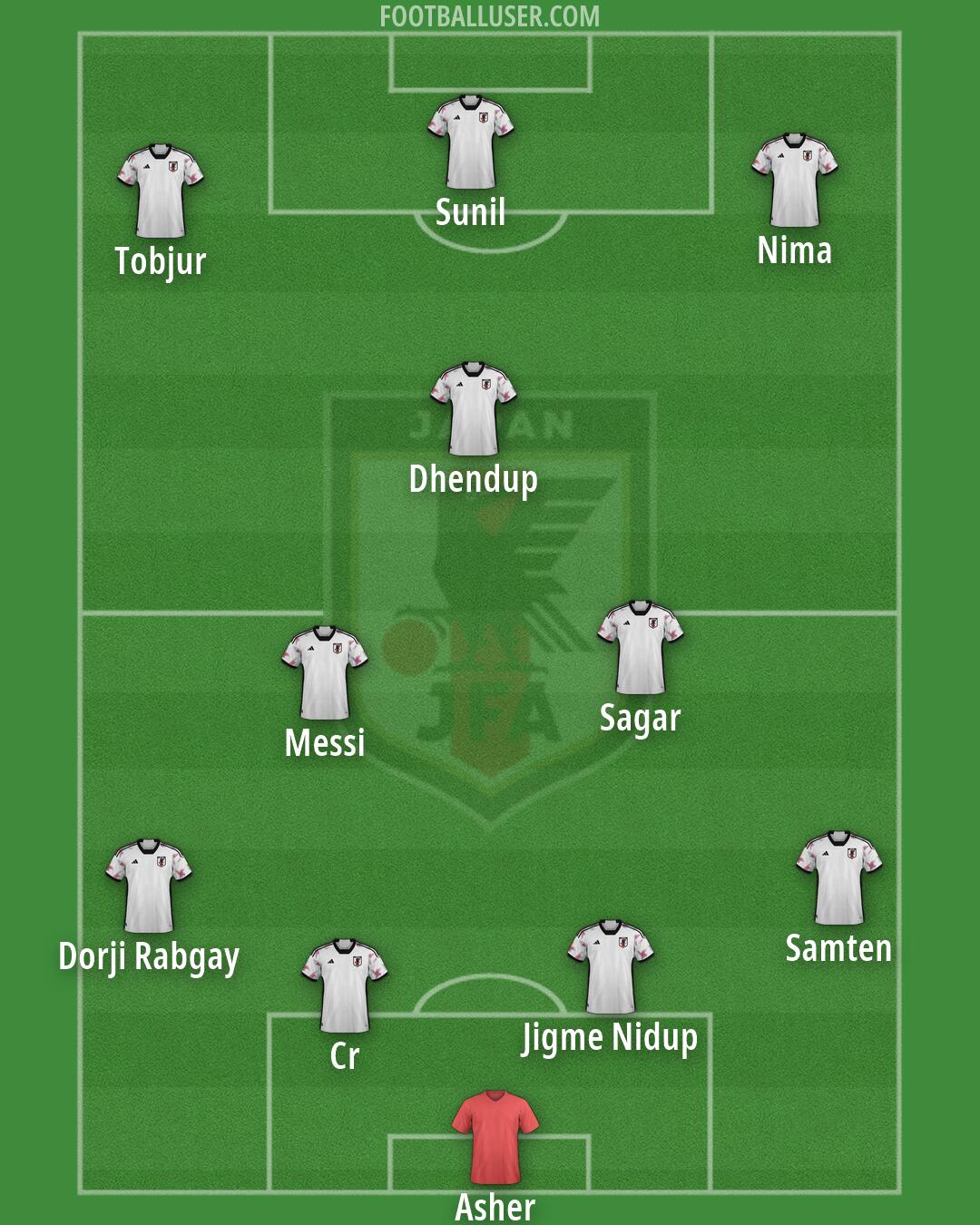

Japan National Football Team Formation
 August 13, 2026


Starting Lineup
Asher · Jigme Nidup · Cr · Samten · Dorji Rabgay · Messi · Sagar · Dhendup · Sunil · Nima · TobjurJapan focuses on a high press and quick transitions through a 4-3-3 formation. This lineup seeks to win the ball high up the pitch to catch the opposition out of position. By keeping the lines close together, the team looks to play through the thirds and create chances rapidly.
Asher sits between the posts to command the area. The back four operates with a high line to squeeze the space in the middle. Jigme Nidup acts as a ball playing defender, while Cr provides cover to sweep behind the line. Samten and Dorji Rabgay play as attacking full backs, looking to overlap the wingers and spread wide to stretch the defence.
The midfield works as a three man midfield with a carrier and a creative presence. Sagar and Messi connect the defensive and attacking lines, with Sagar driving forward with the ball to break the line. Dhendup plays as an attacking ten behind the striker, finding pockets of space to play through the lines. This unit works to win it back high up the pitch and recycle possession when the initial press is bypassed.
Up front, the attack uses three attackers across the front. Sunil operates as a pressing centre-forward to pin the last defender and harass the opposition build up. Tobjur and Nima act as inverted wingers who cut inside to create central overloads. This movement allows the wingers to find the feet of the striker or pull wide to create space for late runs into the box from Dhendup.
Japan gains a tactical advantage through wide overloads when Samten and Dorji Rabgay push high. The team also benefits from the ability to press high in coordinated waves, using the front three to trigger a press. This creates immediate chances to counter at pace if the ball is won in the final third.
This 4-3-3 formation relies on intense pressing and quick vertical movement. It is best suited for matches against teams that struggle to play out from the back under pressure.