
Austria National Football Team Formation
 August 15, 2026


Starting Lineup
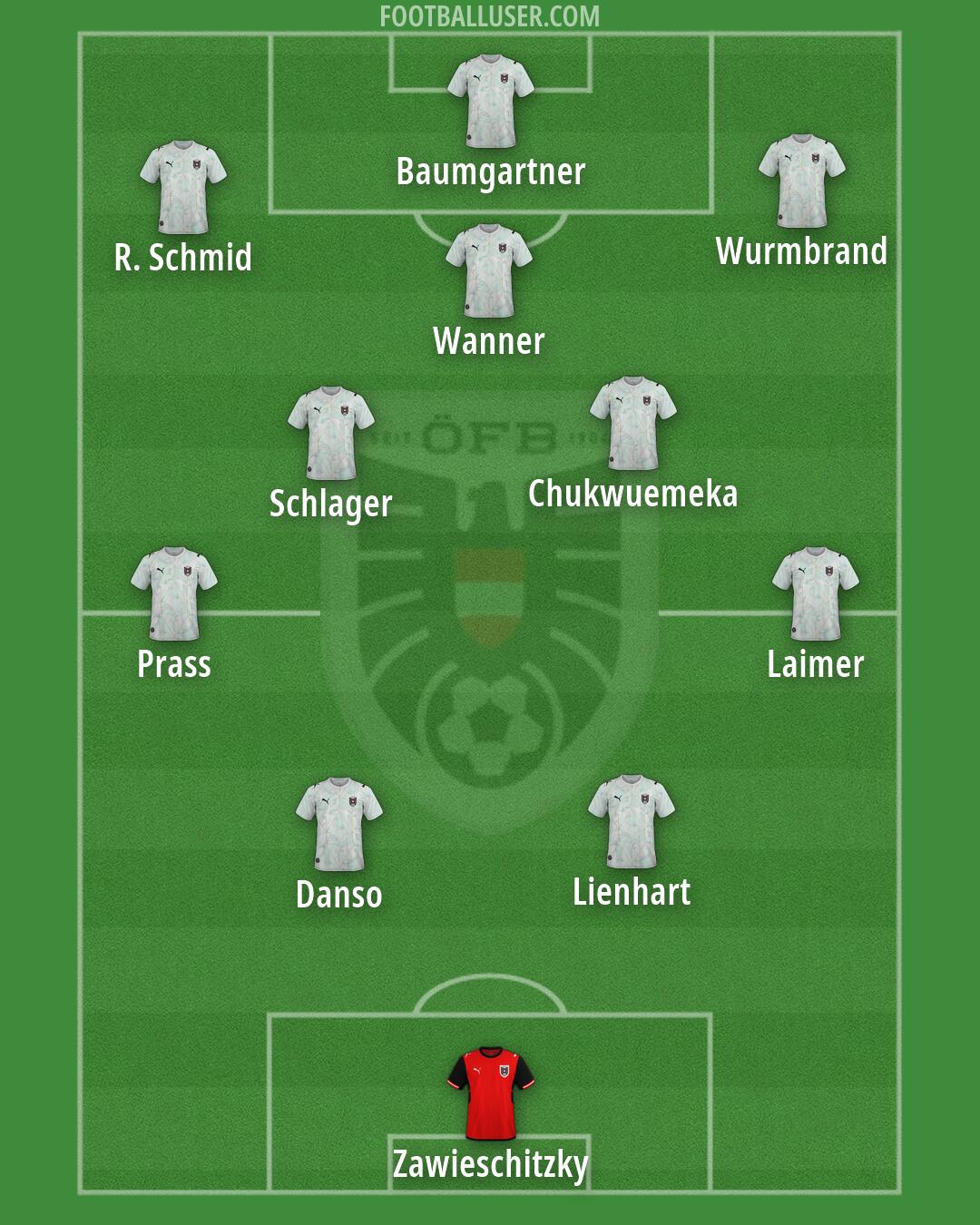
Wanner · Chukwuemeka · Wurmbrand · R. Schmid · Schlager · Baumgartner · Laimer · Prass · Danso · Lienhart · ZawieschitzkyAustria focuses on a heavy high press and rapid vertical transitions using a 2-5-3 formation. This lineup is built to dominate the center of the pitch and win the ball high up the pitch to catch opponents out of position. By crowding the middle, the team seeks to disrupt the buildup of the opposition and immediately move the ball forward.
Zawieschitzky operates between the posts as the lone man in goal. The defensive unit relies on a narrow back two consisting of Danso and Lienhart. Danso acts as a dominant force in the air while Lienhart plays as a ball playing defender to start attacks. Because of the small number of defenders, the unit must hold a high line and squeeze the space to prevent long balls from bypassing the midfield.
The midfield is extremely crowded, functioning as a five man block to control the game. Laimer and Prass form a double pivot to shield the defense and intercept passes. Schlager and Chukwuemeka occupy the half spaces to connect the defensive and attacking lines, while Wanner plays as an attacking ten behind the striker. Laimer uses his high pressing intensity to hunt for the ball, and Wanner looks to find the feet of the striker or play through the lines to create chances.
Austria uses three attackers to stretch the opposition defense. Baumgartner acts as a pressing centre forward to force errors from the back line. On the flanks, R. Schmid operates as an inverted winger who looks to cut inside, while Wurmbrand stays wide to provide width and cross on the run. The team attacks in combinations, using the density in midfield to create third man runs and sudden bursts of pace into the channels.
A major strength of this formation is the numerical superiority in midfield, which allows Austria to recycle possession easily or win it back quickly. The coordination of the five midfielders allows for effective pressing in waves, making it very difficult for opponents to play out from the back. This setup also creates opportunities to isolate wide players in one on one situations once the ball is moved quickly to the flanks.
The 2-5-3 formation creates a relentless attacking presence that prioritizes ball recovery in the final third. This lineup is best suited for games where the opponent struggles to play under pressure and lacks the speed to exploit the space behind the high defensive line.