
Real Madrid Football Formation
 Today, August 15, 2026


Starting Lineup
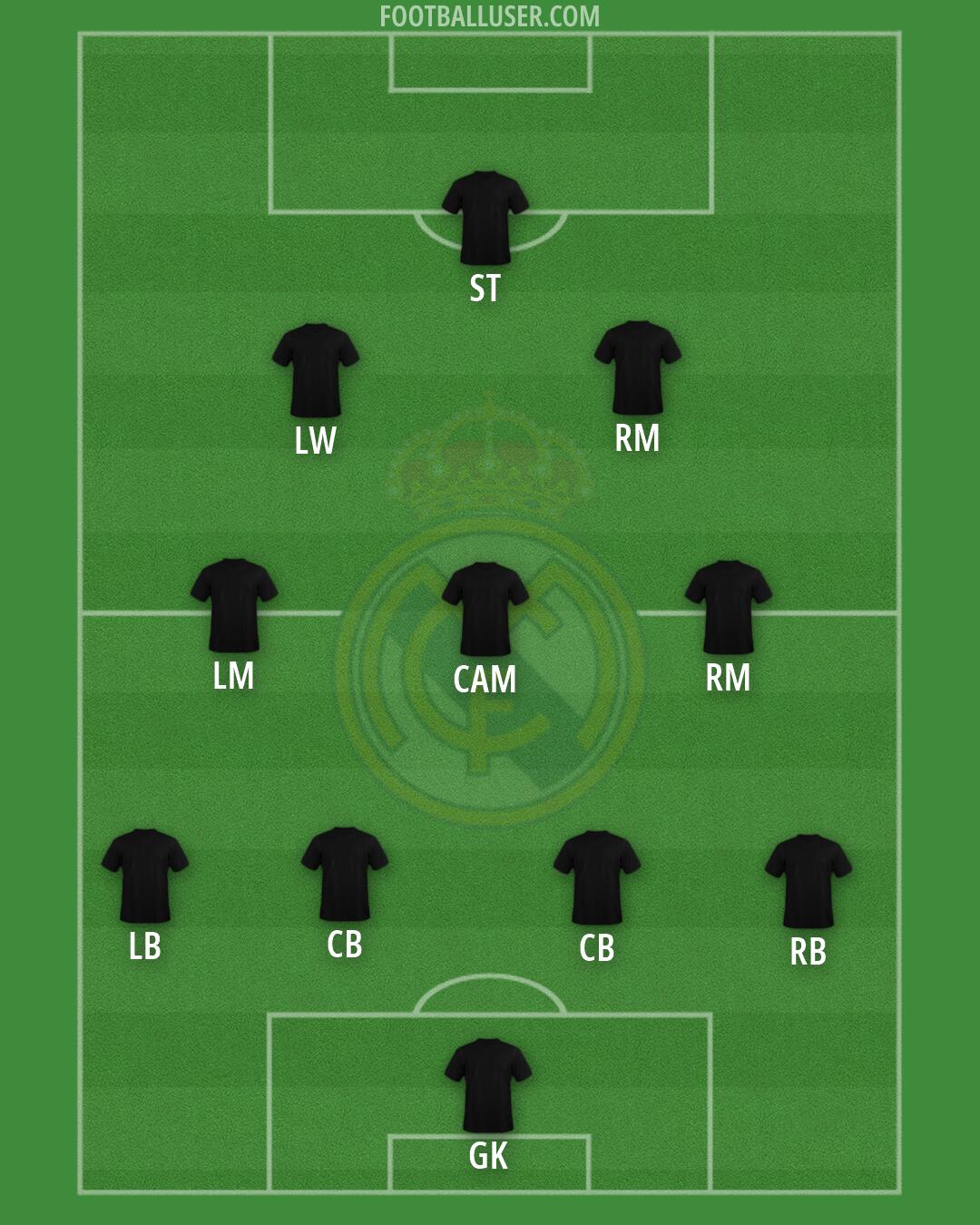
GK · LB · CB · CB · RB · LM · CAM · RM · LW · RM · STReal Madrid focuses on a high press and verticality through a 4-3-3. This formation is built to control the tempo and quickly break the lines when they win the ball back high up the pitch. By using a wide attacking front, the team seeks to stretch the defence and create space for runners to exploit in transition.
The goalkeeper starts the build up by playing short from the back. In front of them, the back four operates as a flat defensive line. The RCB and LCB act as ball playing centre backs to help progress through the thirds, while the RB and LB provide width. These full backs often push high to overlap the winger, leaving the centre backs to cover the space behind. The unit works to squeeze the space between the lines and set the offside trap when the opposition tries to play long.
The midfield functions as a three man midfield with a carrier to drive the play forward. The CM operates as a central engine, connecting the defensive and attacking lines by dropping between the centre backs to receive. The RCM and LCM occupy the half spaces to provide passing options and press aggressively in a mid block. This trio is responsible for recycling possession and ensuring the team maintains control while preventing the opponent from playing through the middle.
Real Madrid utilizes three attackers across the front to pin the last defender. The LW and RW act as inverted wingers who cut inside to create goal scoring chances, often leaving space for the LB and RB to exploit. The ST operates as a pressing centre forward, working to disrupt the opponent and find the feet of the striker to hold up the ball. This front line relies on combinations and quick movement to hit in behind on the transition.
This lineup offers significant advantages in terms of wide overloads. By having the LB and RB push up alongside the LW and RW, Real Madrid creates numerical superiority in the final third. The ability to press high in coordinated waves also forces a long ball from the opposition, which the central defenders are ready to win the second ball.
This 4-3-3 formation creates a heavy attacking presence that is difficult to track. It is best suited for games where the team wants to dominate possession and punish opponents on the break.