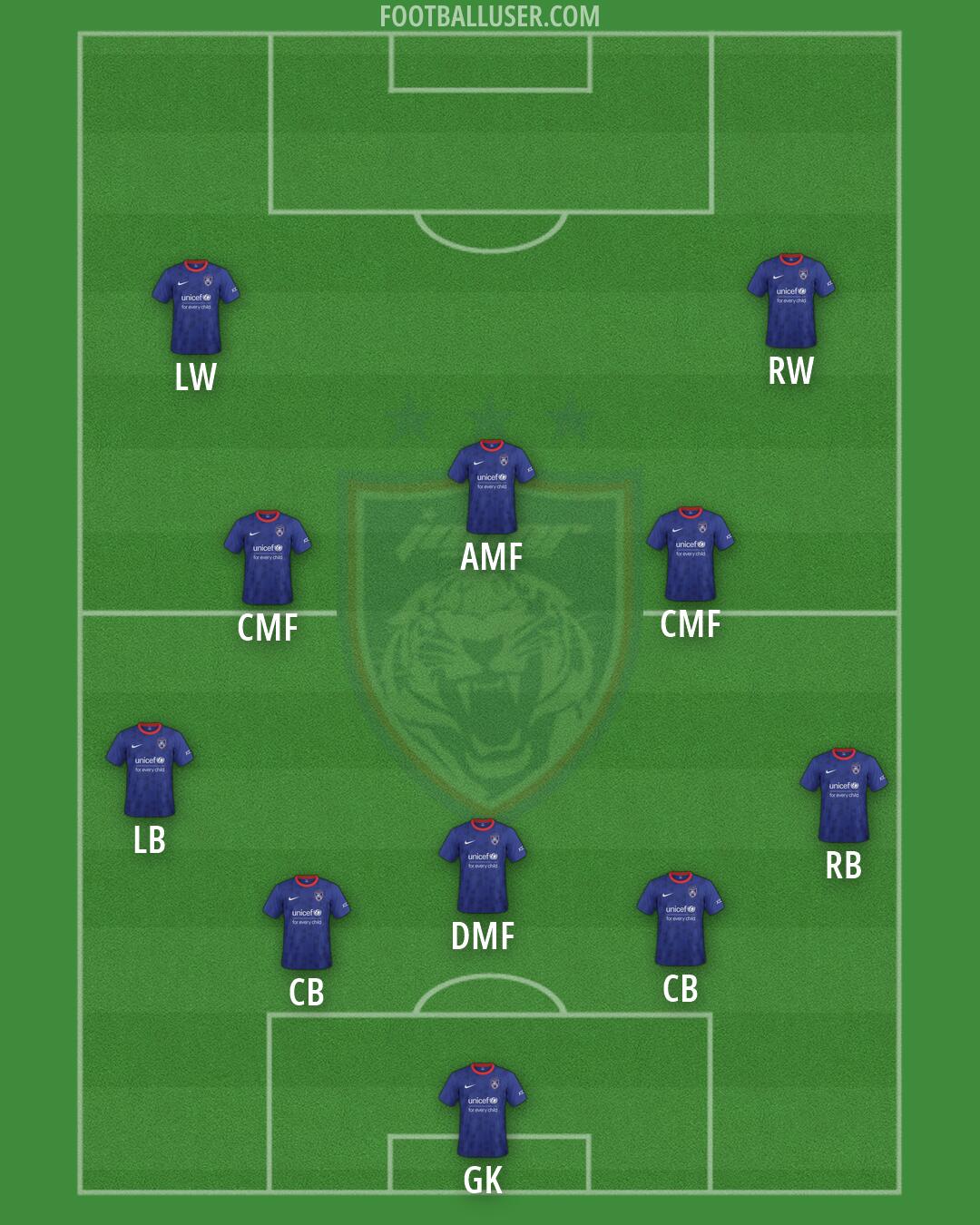

Johor DT Football Formation
 Today, August 17, 2026


Starting Lineup
GK · LB · CB · CB · RB · DMF · CMF · AMF · CMF · LW · RWJohor DT focuses on a strong defensive presence and quick transitions using a 5-3-2. This formation is built to sit deep and absorb pressure before hitting the opposition in behind. The lineup relies on a compact defensive block to deny space in the middle and force the play wide.
In goal, GK acts as the last line of defense. The defensive unit consists of a back five with CB, CB, and DMF occupying the central roles. CB and CB work to win the header and clear the lines, while DMF provides extra cover to shield the defense. The wide defenders, LB and RB, act as attacking wing backs to provide width during the buildup. This unit functions to maintain a narrow defensive block when the team sits deep, ensuring no easy gaps appear between the players.
The midfield operates with a three-man midfield with a carrier. AMF sits centrally to connect the defensive and attacking lines, while CMF and CMF occupy the left and right central midfield positions. These midfielders must work hard to press in a mid-block and win the second ball. When in possession, AMF looks to find the feet of the striker or play through the lines to transition the play. The midfielders must also track back to support the back five when the team loses possession.
The attack utilizes two forwards in a partnership with LW and RW playing as strikers. Instead of hugging the touchline, LW and RW look to cut inside to exploit the central areas. They work to press the opposition back line and move in combinations to create chances. The goal is to use the width provided by LB and RB to allow the two strikers to run in behind or receive the ball in tight spaces. Johor DT uses these two forwards to pin the last defender and create room for late runs from the midfield.
Johor DT gains a clear tactical advantage through the width provided by the wing backs, which creates wide overloads when LB and RB push up. The formation also offers great compactness when defending, making it very hard for opponents to play through the middle. This allows the team to stay solid and then break quickly with the speed of transition once the ball is won back.
This formation is a defensive powerhouse designed to soak up pressure and strike on the break. It is best suited for matches against teams that dominate possession and leave space behind their high line.