Arsenal Football Formation
 August 19, 2026


Starting Lineup
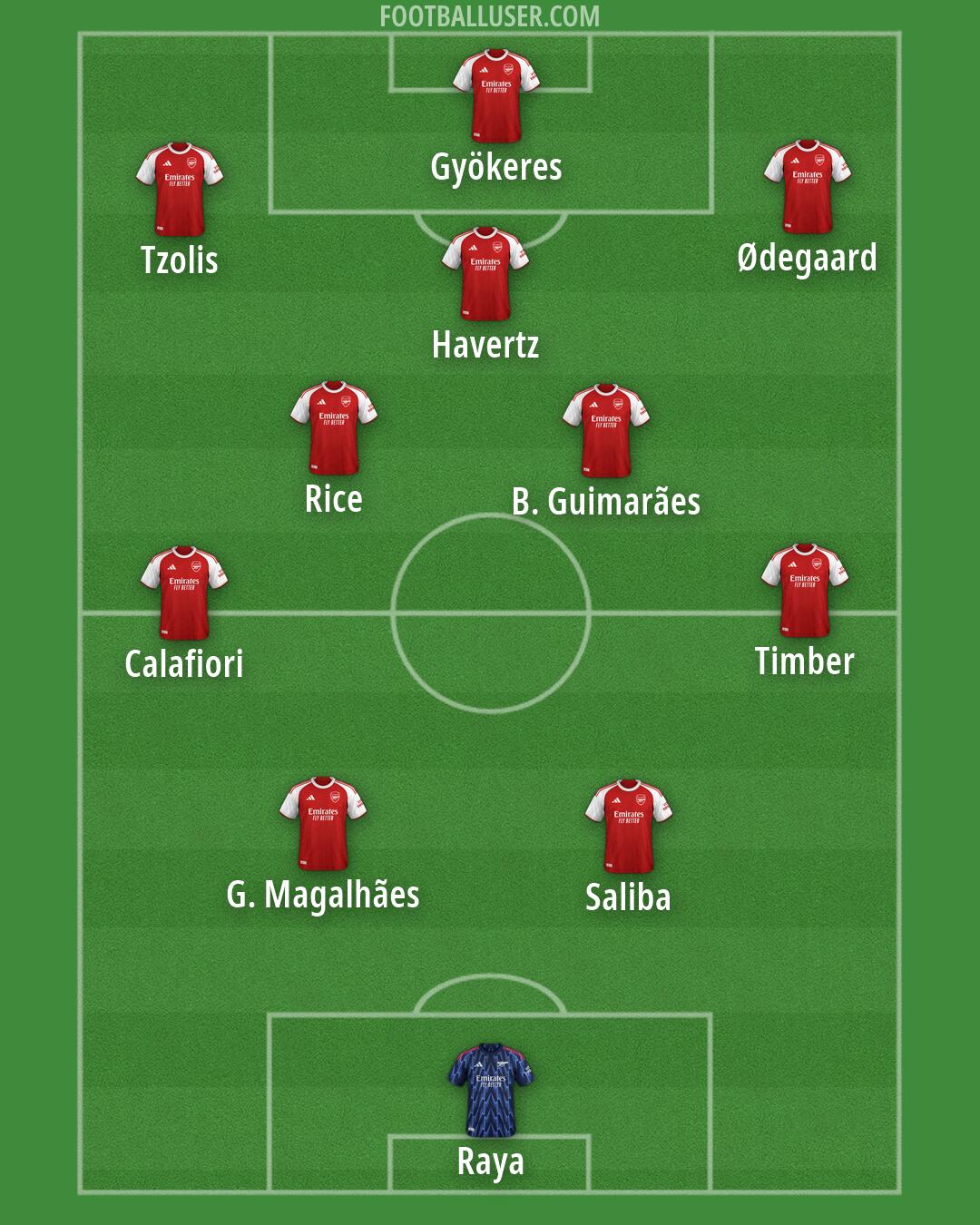
Calafiori · Timber · G. Magalhães · Saliba · Gyökeres · Havertz · Tzolis · Rice · B. Guimarães · Ødegaard · RayaArsenal focuses on heavy pressing and high control through a 2-5-3 formation. This lineup seeks to dominate the ball and squeeze the pitch to win it back high up the pitch. By pushing the wide players and midfielders forward, Arsenal aims to create constant pressure on the opposition back line and dictate the tempo of the game.
Raya acts as the goalkeeper in a setup that relies on playing short from the back. The defensive unit operates with a back two consisting of Saliba and G. Magalhães. Saliba provides great aerial strength and recovery pace to cover the space behind, while G. Magalhães defends zonally to manage the central area. This high line requires the two central defenders to step up to set the offside trap and prevent long balls from bypassing the press.
The midfield is a massive engine room that connects the defense to the attack. Calafiori operates as a left defensive midfielder to provide stability, while Timber acts as the right defensive midfielder to cover the flank. In the center, Rice works to win the second ball and drive forward with the ball, complemented by B. Guimarães who helps to recycle possession and connect the lines. Havertz plays as an attacking ten behind the striker, looking to arrive late into the box and find space between the lines.
The front line uses three attackers to stretch the defence. Tzolis stays wide as an inverted winger on the left to cut inside, while Ødegaard operates on the right wing to create chances and pick up runners. Gyökeres serves as the main striker and works as a pressing centre-forward to force a long ball from the opposition. These three forwards combine in tight spaces to split the defence with a through ball or find the feet of the striker to build quick attacks.
One major advantage for Arsenal is the ability to press high in coordinated waves. The midfield and forward lines work together to squeeze the space, making it hard for opponents to play out from the back. Another strength is the numerical superiority in the middle of the pitch. With five players in the midfield line, the team can easily win the second ball and control the rhythm of the match.
This formation is built for teams that want to dominate possession and suffocate the opponent in their own half. It is best suited for matches against sides that struggle to play under intense pressure.