
Belgium National Football Team Formation
 August 19, 2026


Starting Lineup
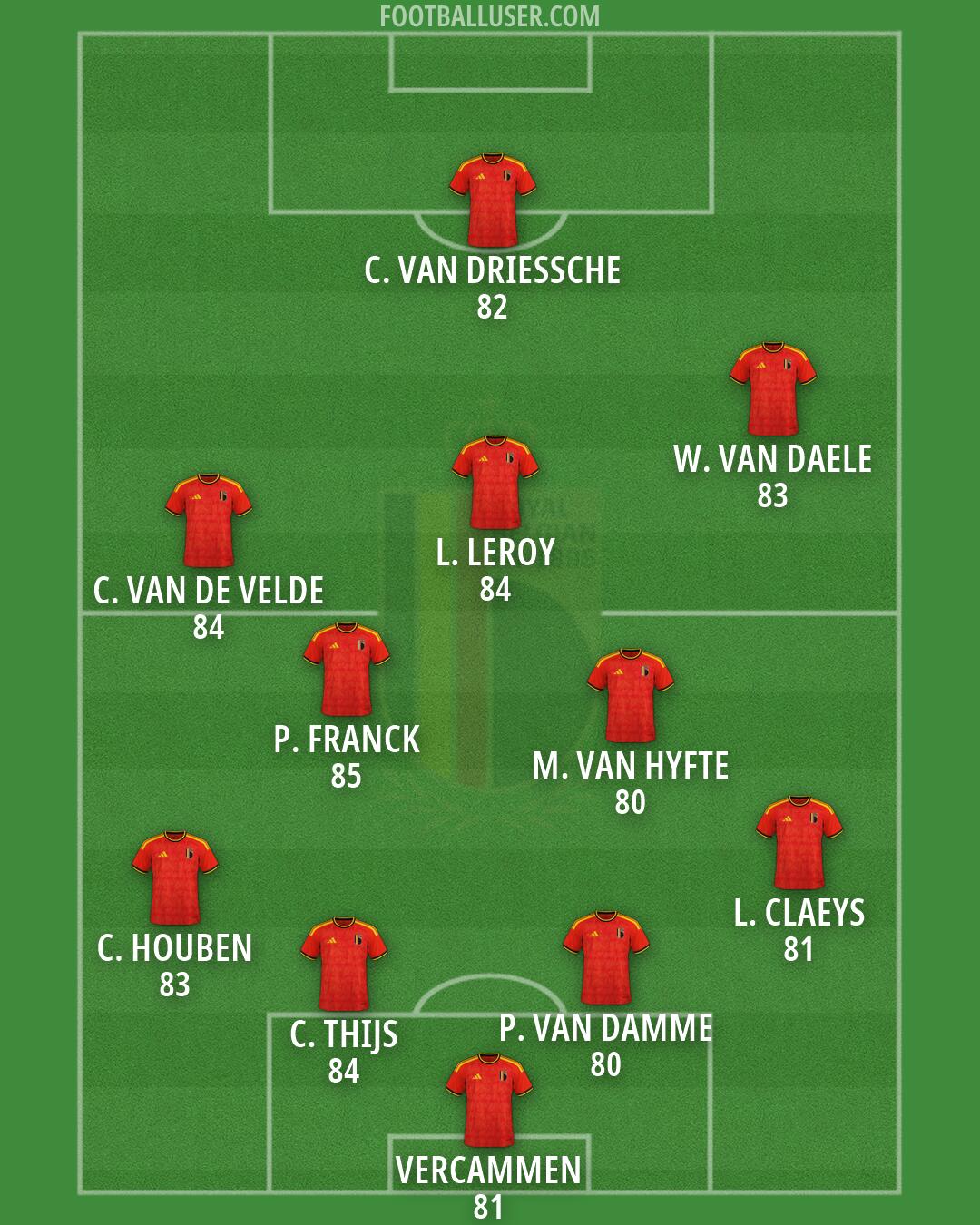
VERCAMMEN (81) · P. VAN DAMME (80) · C. THIJS (84) · C. HOUBEN (83) · L. CLAEYS (81) · C. VAN DE VELDE (84) · P. FRANCK (85) · M. VAN HYFTE (80) · L. LEROY (84) · W. VAN DAELE (83) · C. VAN DRIESSCHE (82)Belgium seeks to control the center of the pitch and control games through a compact midfield, utilizing a 4-5-1 formation. This lineup relies on winning the second ball and breaking quickly once possession is regained. The team aims to sit in a mid-block to squeeze the space between the lines, making it difficult for opponents to find passing lanes.
VERCAMMEN operates between the posts to organize the back line. A flat back four forms the defensive unit, with L. CLAEYS acting as a defensive wing back to protect the flank while C. HOUBEN provides width on the left. In the center, P. VAN DAMME and C. THIJS work together to defend zonally, with P. VAN DAMME focusing on winning the header during set pieces and C. THIJS ready to cover space if the line is breached. The unit moves together to keep a compact shape when defending deep.
The midfield is the engine of the Belgium side, utilizing a five man unit that can shift into different roles. P. FRANCK and M. VAN HYFTE form a double pivot to shield the defense and deny the turn to opposing attackers. Ahead of them, C. VAN DE VELDE and L. LEROY operate as two tens in the half spaces to connect the defensive and attacking lines. W. VAN DAELE plays as an attacking ten behind the striker, looking to find the feet of the target man or arrive late into the box to score. This midfield group works to compress the midfield and force a long ball from the opposition.
In the attacking phase, the team uses a lone striker in C. VAN DRIESSCHE to hold up the ball and pin the last defender. W. VAN DAELE supports him from a deeper position to create combinations in tight spaces. While C. VAN DRIESSCHE works to find the feet of the striker and win the second ball, the wide midfielders look to spread wide to stretch the defence. The plan is to use the movement of the central midfielders to pull wide and create space for cutbacks from the byline or runs in behind the defensive line.
One main strength of this formation is the ability to press in a mid-block with coordinated waves of players. By having five midfielders, Belgium can ensure numerical superiority in the center of the pitch to intercept passes. Another advantage is the compactness when defending, which makes it very hard for the opposition to play through the lines. This allows the team to stay solid and then counter at pace when the ball is won back high up the pitch.
Belgium uses this 4-5-1 formation to frustrate dominant sides that rely on heavy possession. It is a setup best suited for games where the team needs to sit deep and hit the opponent on the transition.