
Vasco da Gama Football Formation
 August 24, 2026


Starting Lineup
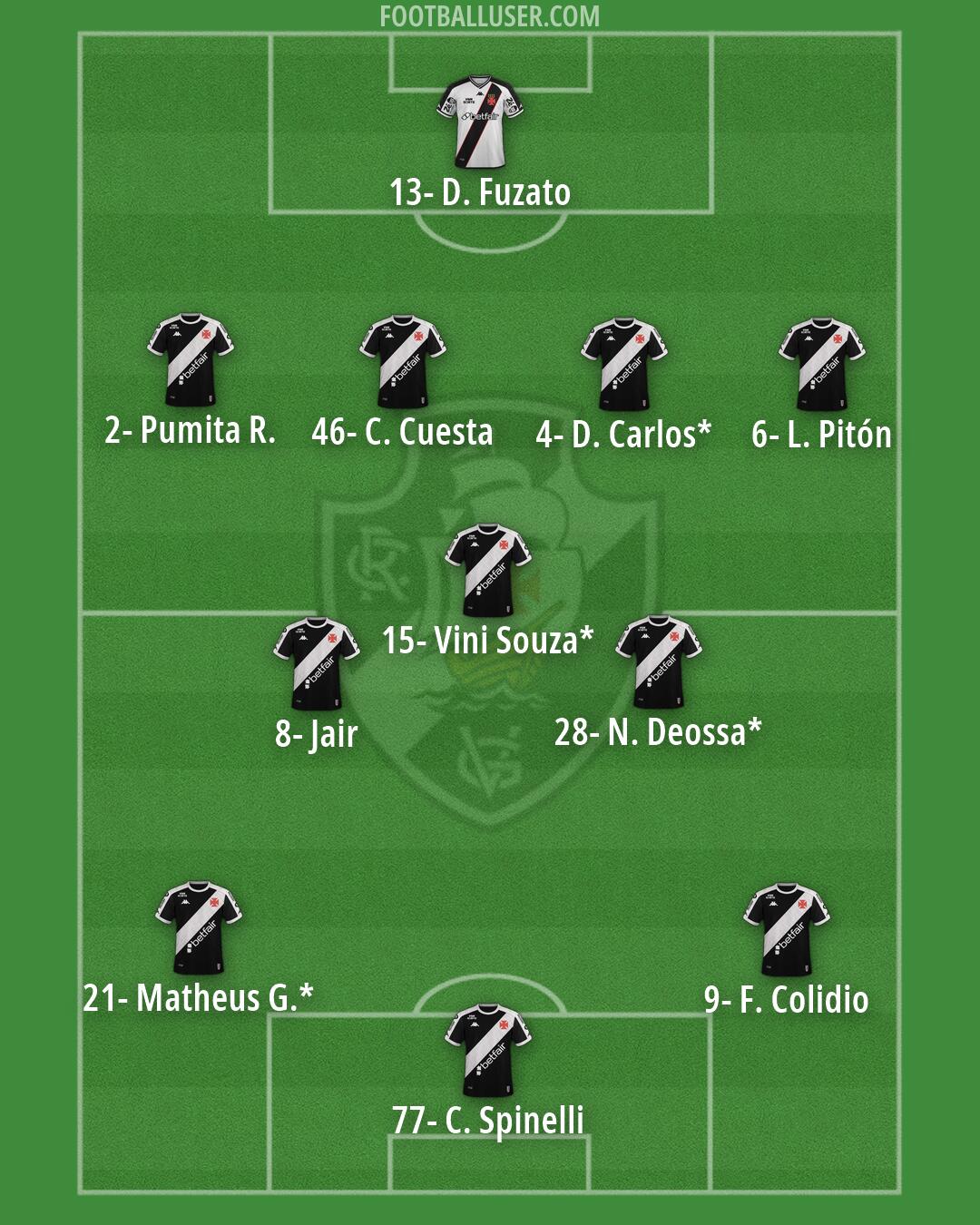
13- D. Fuzato2- Pumita R.
4- D. Carlos*
6- L. Pitón
15- Vini Souza*
8- Jair
9- F. Colidio
21- Matheus G.*
77- C. Spinelli
46- C. Cuesta
28- N. Deossa*
Vasco da Gama focuses on a high press and verticality through a 4-3-3 formation. This lineup aims to win the ball high up the pitch and transition quickly to catch the opponent out of position. The team looks to spread wide to stretch the defence while maintaining enough central presence to play through the lines.
D. Fuzato guards the goal and organizes the back line. The defensive unit operates as a flat back four with C. Cuesta acting as a ball playing defender to help play out from the back. D. Carlos works alongside him to cover the space and win headers. L. Pitón operates as an attacking full back to provide width, while Pumita R. can overlap to support the attack or tuck in to help defend the flank. The whole defensive unit moves together to maintain a high line and squeeze the space.
The midfield operates as a three man midfield with a carrier and a sitting player. Vini Souza acts as the single pivot to shield the defence and win the second ball. N. Deossa connects the defensive and attacking lines by receiving the ball from the centre backs and driving forward. Jair plays as an inverted eight who makes late runs into the box to add goal threat. This trio works to compress the midfield and ensure the team can recycle possession or break quickly once the ball is recovered.
Vasco da Gama utilizes three attackers across the front. C. Spinelli acts as a pressing centre forward to pin the last defender and fight for long balls. F. Colidio plays as an inverted winger who cuts inside to create chances, while Matheus G. stays wide to hug the touchline and deliver crosses. This attacking group works to isolate a one on one wide or use link up play between the lines to find gaps. They press from the front to force a long ball and regain control in the final third.
One main advantage for Vasco da Gama is the ability to press high in coordinated waves to win the ball in dangerous areas. The team also benefits from wide overloads when the full backs push up to support the wingers. This creates numerical superiority in wide areas, allowing the players to combine in tight spaces and deliver early balls into the box.
This 4-3-3 formation relies on intensity and quick transitions to unsettle the opposition. It is best suited for matches against teams that play a high line or struggle to manage pressure in their own half.