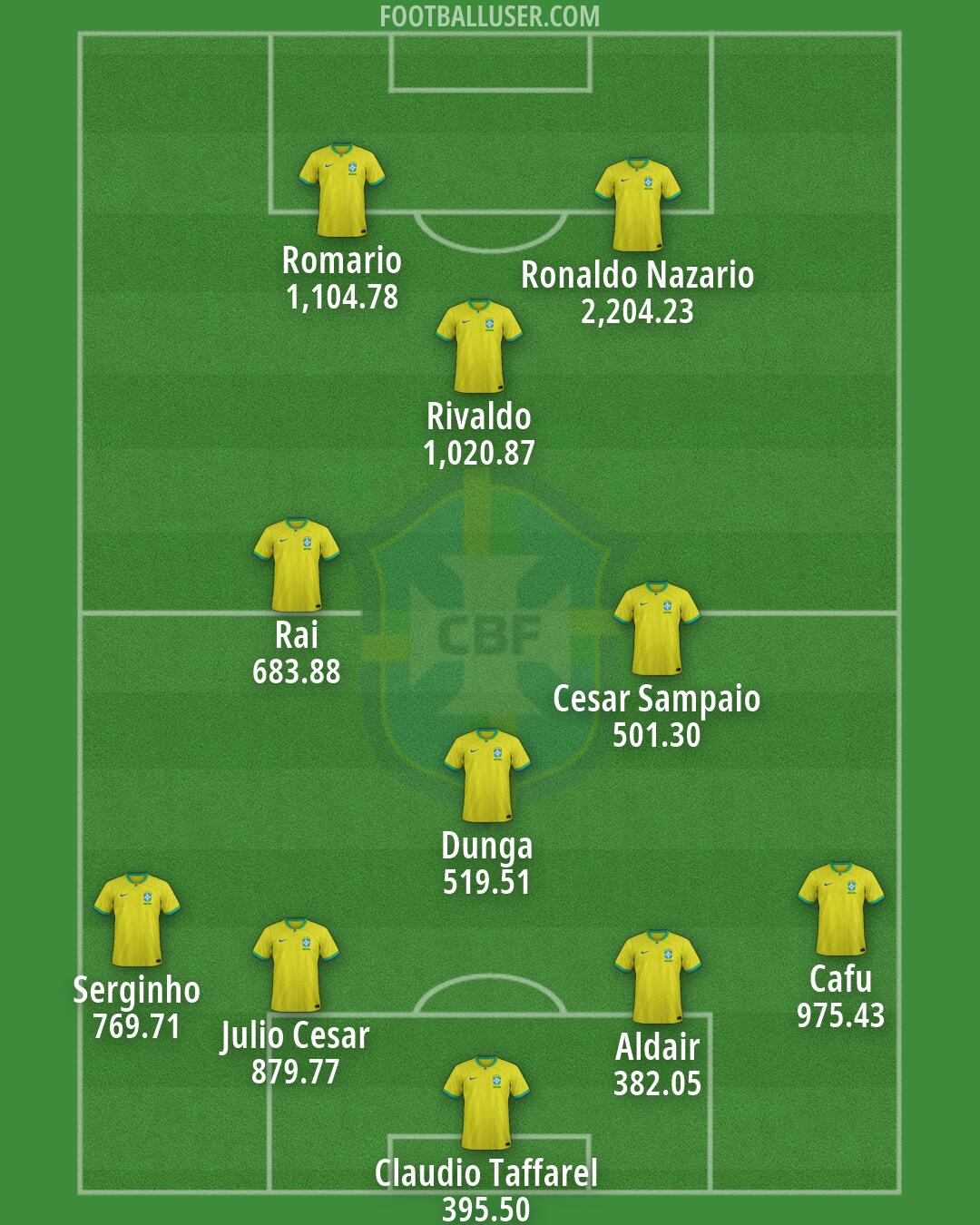

Brazil National Football Team Formation
 August 26, 2026


Starting Lineup
Romario (1,104.78) · Ronaldo Nazario (2,204.23) · Rivaldo (1,020.87) · Claudio Taffarel (395.50) · Dunga (519.51) · Julio Cesar (879.77) · Aldair (382.05) · Cafu (975.43) · Serginho (769.71) · Rai (683.88) · Cesar Sampaio (501.30)Brazil focuses on high energy transitions and lethal finishing using a 5-3-2 formation. This lineup is built to absorb pressure and then strike with immense speed through heavy verticality. The team looks to win the ball in central areas before launching direct attacks to exploit the space behind the opposition back line.
Claudio Taffarel guards the goal as the final line of defense. A back five provides a sturdy base where Dunga sits as the central leader to anchor the unit. Aldair operates as the right centre back to cover wide spaces, while Julio Cesar acts as the left centre back to manage the defensive line. The width comes from the wing backs, with Cafu pushing high on the right to provide constant service and Serginho overlapping on the left to stretch the opposition. This combination allows the central three to remain compact when the team sits deep to deny space between the lines.
The midfield relies on a three man midfield with a carrier to maintain balance. Dunga holds the position in front of the defense to shield the back line, while Cesar Sampaio works to win the second ball and recycle possession. Rai operates in the left half space to connect the defense to the attack and press aggressively to win the ball high. Rivaldo plays in the hole behind the two strikers, acting as the creative engine to find the feet of the forwards or carry the ball forward into dangerous areas.
Brazil utilizes two forwards in a partnership to terrorize defenders. Romario and Ronaldo Nazario operate as a devastating duo, combining to find space in the box. Romario uses his clinical finishing and clever movement to find pockets of space, while Ronaldo Nazario uses his explosive dribbling and power to drive through the defense. The attack is built on quick combinations and runs in behind, often using the wide service from Cafu and Serginho to deliver crosses into the box. This front line presses the opposition back line to force mistakes and trigger a quick break.
This formation offers the advantage of extreme width through the wing backs, which creates overloads on the flanks. Brazil also benefits from a massive presence in the central attacking areas, allowing for rapid transitions once the ball is won. The ability to switch from a compact back five to an aggressive attacking force makes them hard to track during a transition.
The Brazil lineup is a powerhouse designed for rapid counter attacking football. It is best suited for matches against teams that push a high line and leave space behind their defenders.