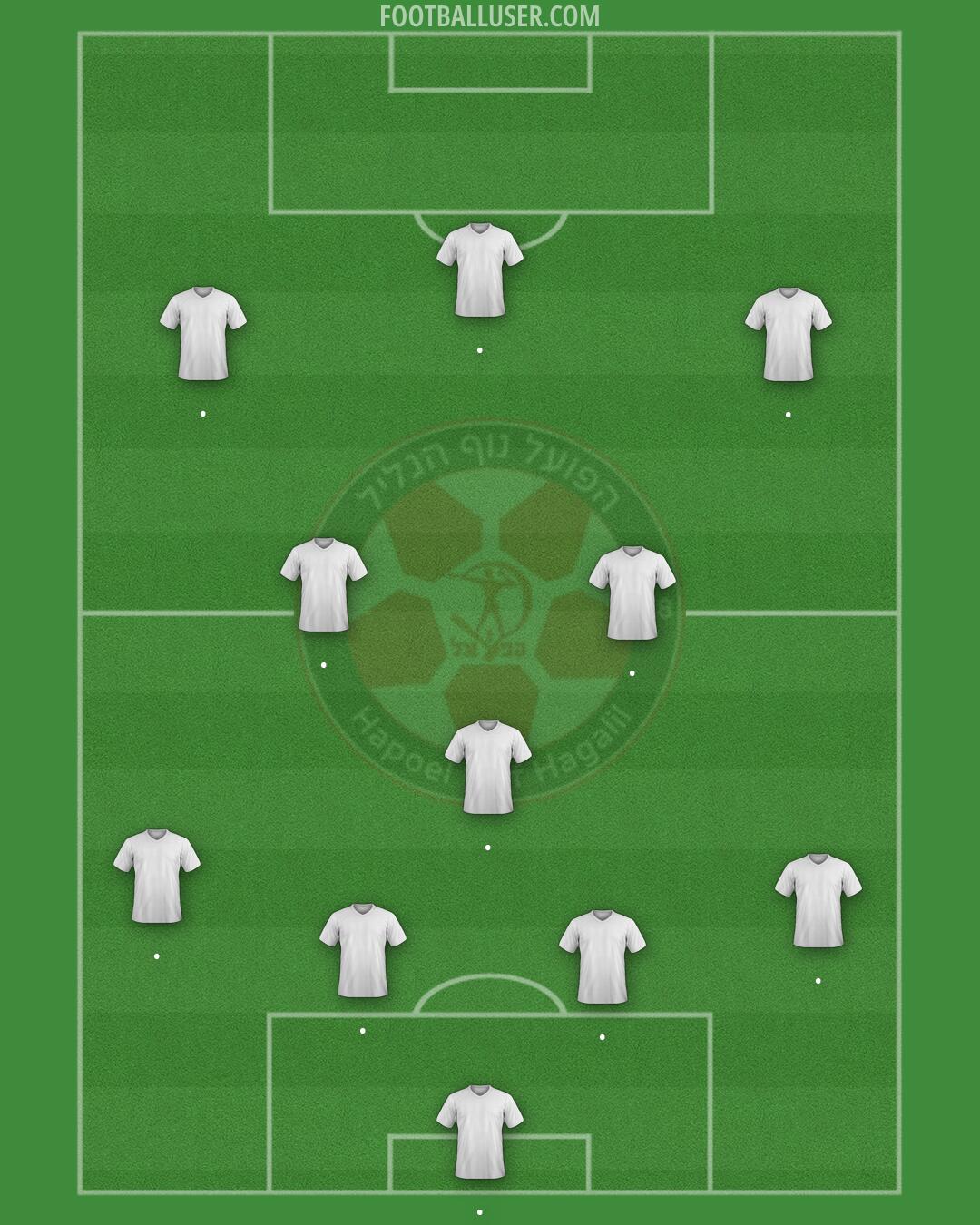

Hapoel Nof HaGalil Football Formation
 August 26, 2026


Starting Lineup
. · . · . · . · . · . · . · . · . · . · .Hapoel Nof HaGalil relies on a high press and rapid transitions through a 5-2-3 formation. This lineup is built to win the ball back high up the pitch and hit the opposition in behind quickly. The team uses the extra defenders to stay compact while looking to stretch the defence through wide areas when they win possession.
The defensive unit begins with the goalkeeper acting as the first line of distribution. In front of him, the team employs a back five that can shift based on where the ball is located. The central defender sits deep to sweep behind the line, while the right and left centre backs provide cover and dominance in the air. The right and left wing backs are tasked with providing width, often pushing up to support the attack but must track back quickly to form a narrow defensive block when the team sits deep.
A two man midfield operates as a double pivot to control the central areas. This unit focuses on winning the second ball and recycling possession to keep the team organized. One midfielder acts as a carrier to drive forward with the ball, while the other stays more central to shield the defence and deny the pivot of the opposition. They work together to connect the defensive line to the front three, often dropping into space to receive the ball and play through the lines.
The attack features three attackers across the front to pin the last defender. The left and right wingers act as inverted wingers who cut inside to create central overloads, while the striker works as a pressing centre forward to trigger a press from the front. This frontline movement is designed to create runs in behind and allow the wing backs to overlap the winger. When the team breaks quickly, the forwards look to combine in tight spaces or spread wide to exploit the flanks.
Hapoel Nof HaGalil offers significant tactical advantages through their ability to press high in coordinated waves. The formation allows for wide overloads when the wing backs push up, creating numerical superiority in the attacking third. Additionally, the back five provides compactness when defending, making it difficult for opponents to find space between the lines or play through the middle.
This formation is a heavy pressing system designed to disrupt the rhythm of ball playing teams. It is best suited for matches where the team can exploit space on the transition against a high defensive line.