Arsenal Football Formation
 August 27, 2026


Starting Lineup
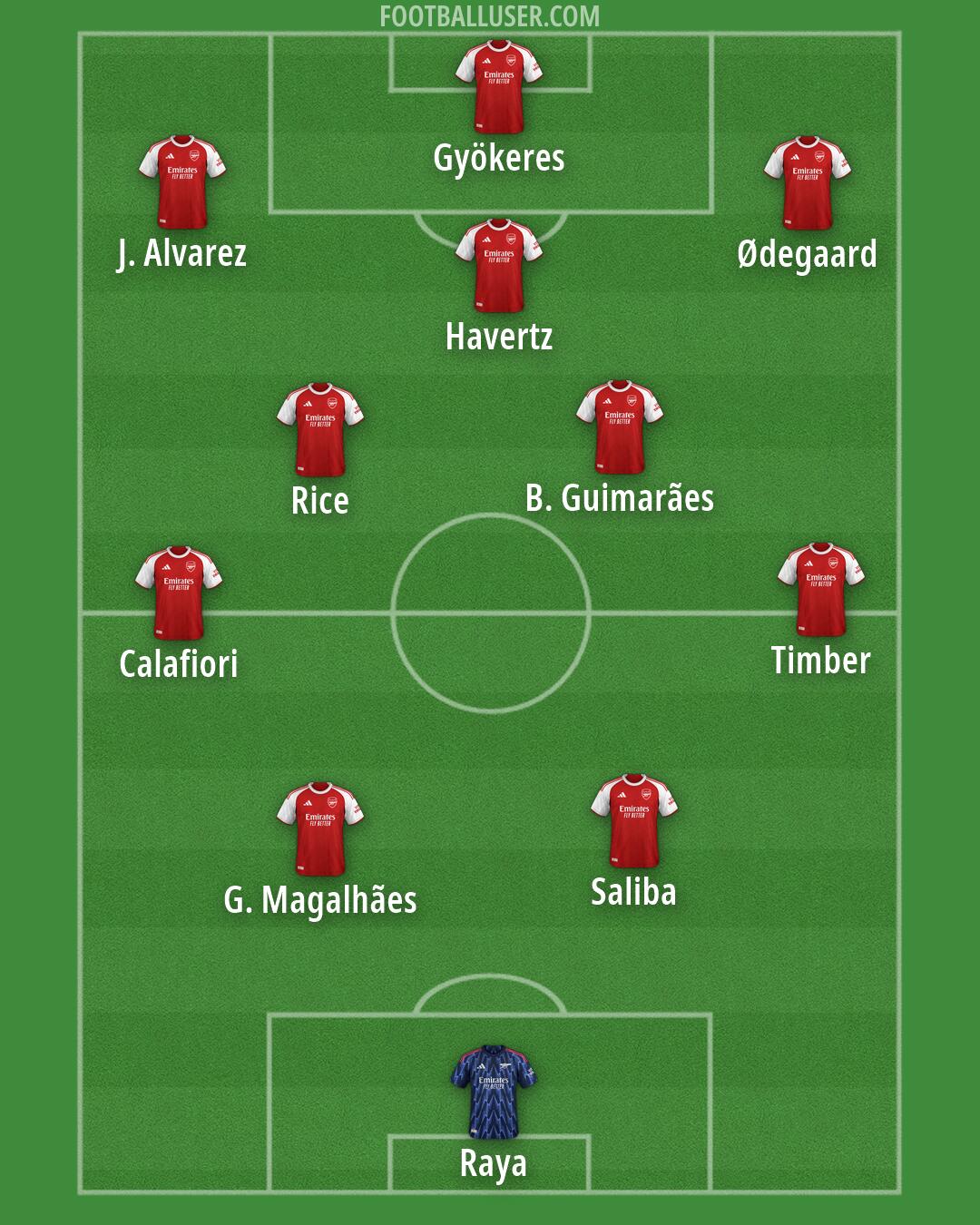
Calafiori · Timber · G. Magalhães · Saliba · Gyökeres · Havertz · Ødegaard · J. Alvarez · Rice · B. Guimarães · RayaArsenal focuses on a high press and heavy verticality through a 2-5-3 formation. This lineup aims to control the center of the pitch and squeeze the opposition in their own half to win the ball back high up the pitch. The goal is to create constant pressure and use central dominance to break the lines through quick passing and direct runs.
Raya sits between the posts to act as a sweeper behind a high line. The back line consists of a two man unit with Gabriel Magalhães and Saliba operating as central defenders. Saliba uses his recovery pace to cover the space behind while Gabriel Magalhães provides aerial strength. This pair must defend zonally and step up to trigger a press, leaving space behind them that Raya must sweep.
The midfield functions as a massive five man block designed to dominate the center. Calafiori and Timber act as the defensive base in a double pivot to shield the two defenders. Rice works as a carrier to drive forward with the ball while B. Guimarães connects the defensive and attacking lines. Havertz plays as an attacking ten behind the striker, finding space between the lines to receive on the half-turn and arrive late into the box.
The attack utilizes three players across the front to stretch the defence. Gyökeres acts as a pressing centre-forward who holds up the ball and pins the last defender. Ødegaard plays as an inverted winger on the right to cut inside and create, while J. Alvarez stays wide on the left to provide width. This front three works to press from the front and create runs in behind or deliver cutbacks from the byline when they get to the end line.
Arsenal gains a massive advantage by creating numerical superiority in midfield through the five players occupying the central corridor. This setup allows the team to squeeze the space in the middle of the park and force a long ball from the opponent. The ability to use wide overloads when the wingers move inside allows the team to isolate defenders in one on one situations during transitions.
This formation is built to dominate possession and suffocate opponents in their own defensive third. It is best suited for matches against teams that play a low block and struggle to handle intense pressure.