
OB Football Formation
 Today, August 28, 2026


Starting Lineup
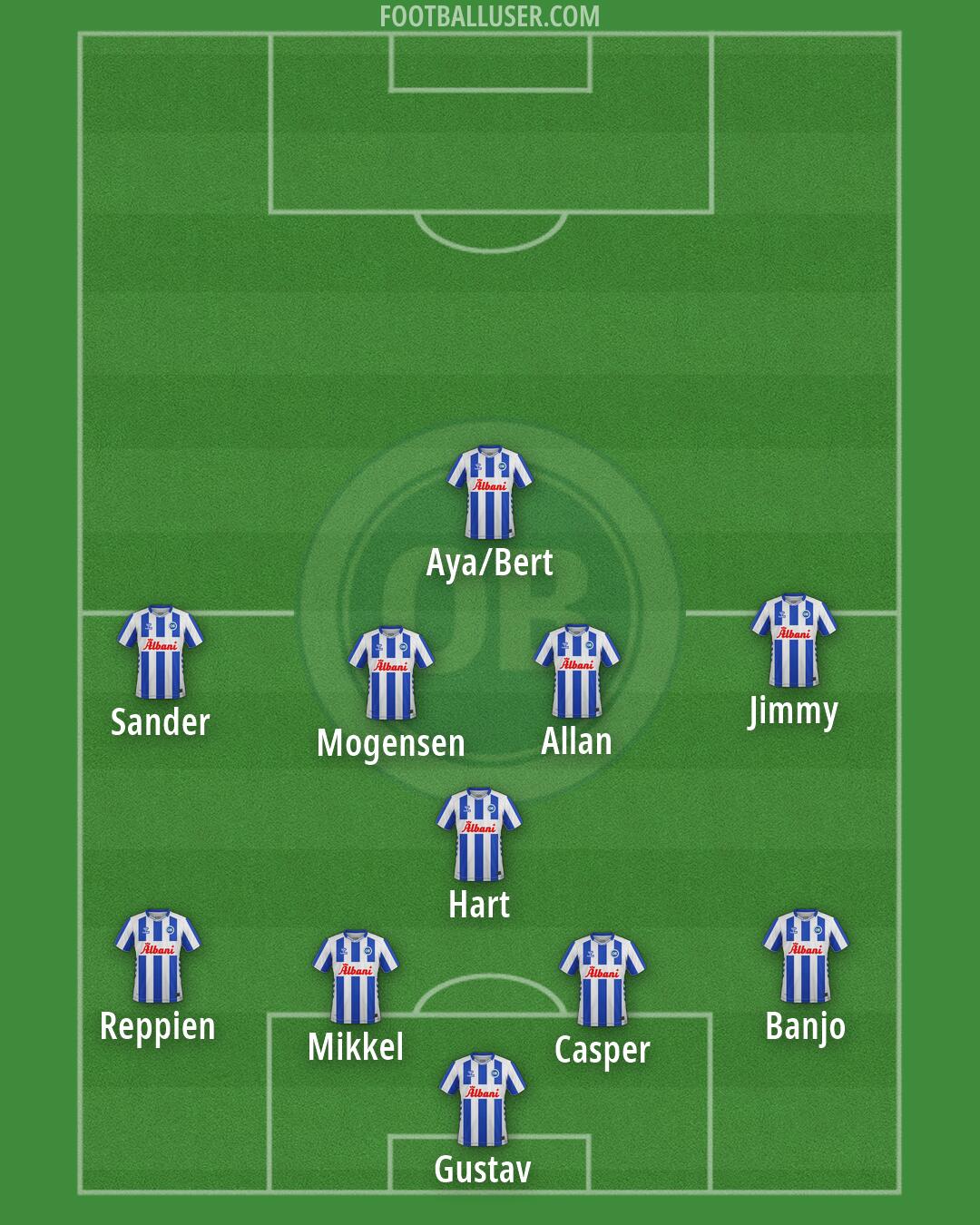
Gustav · Casper · Mikkel · Banjo · Reppien · Hart · Allan · Jimmy · Aya/Bert · Sander · MogensenOB prioritizes defensive solidity and looking to hit teams on the break using a 5-4-1. This formation is built to sit deep and protect the central areas while waiting for the right moment to transition. The team focuses on staying compact to deny space for the opposition to play through the middle.
Gustav stays between the posts to organize the back line. Hart acts as the central anchor in a back three, while Casper and Mikkel sit on either side to provide coverage. The team uses a narrow defensive block where Banjo and Reppien operate as attacking wing backs. Banjo is tasked to push forward to provide width, while Reppien must track back to help the defense when the ball is lost. The three central defenders work to win the second ball and clear the lines during heavy pressure.
The midfield works as a flat four to squeeze the space between the lines. Mogensen and Allan form a central pairing to shield the defense and win the second ball. Allan focuses on breaking up play, while Mogensen looks to connect the defensive and attacking lines by recycling possession. On the flanks, Sander and Jimmy stay wide to help the wing backs and press the opposition wide players. This midfield unit works to deny the turn and force a long ball from the opponent.
OB uses a lone striker in Aya/Bert to lead the line. Aya/Bert must hold up the ball and act as a target man to bring the midfielders into the play. When the team wins the ball high up the pitch, the wide players Sander and Jimmy look to carry the ball forward to support the attack. The goal is to use the width provided by the wing backs to deliver early crosses or to find the feet of the striker in the box.
One major strength of this lineup is the compactness when defending in a low block. The side is very difficult to break down through the middle because the central unit stays tight. Another advantage for OB is the ability to use the wing backs to create wide overloads in transition. This allows the team to quickly switch play and catch the opposition out of position.
This formation relies on a disciplined defensive unit and quick transitions to be effective. It is best suited for games against teams that dominate possession and want to play through the middle.