
Japan National Football Team Formation
 August 29, 2026


Starting Lineup
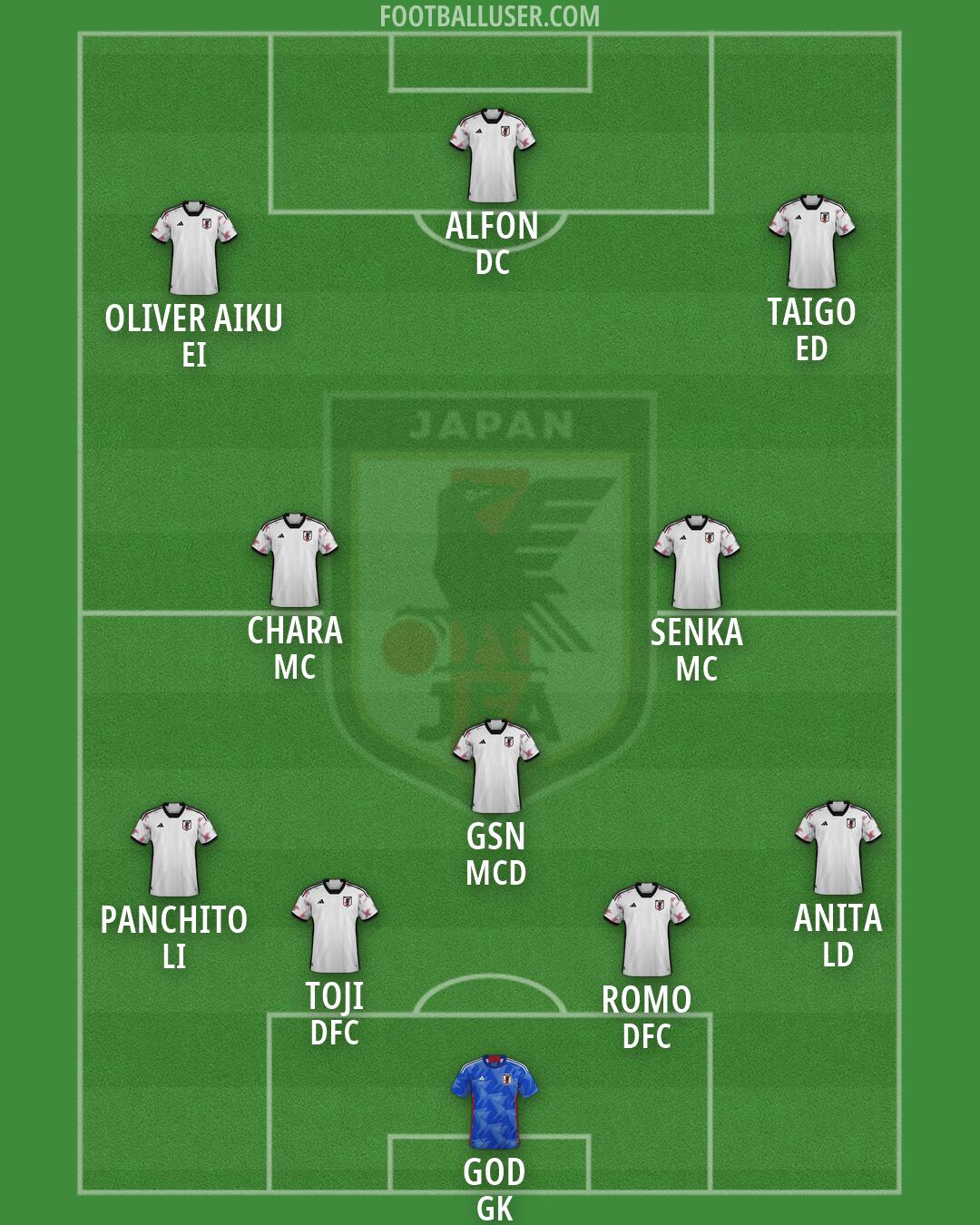
ALFON (DC) · TAIGO (ED) · OLIVER AIKU (EI) · GSN (MCD) · CHARA (MC) · SENKA (MC) · TOJI (DFC) · ROMO (DFC) · ANITA (LD) · PANCHITO (LI) · GOD (GK)Japan focuses on a strong defensive base and rapid transitions through a 5-2-3 formation. This lineup is built to absorb pressure and strike quickly once the ball is won. The tactical identity relies on a compact defensive block and using wide players to stretch the opposition.
GOD operates between the posts to command the area and organize the defensive line. The back five consists of GSN acting as the central anchor, while ROMO and TOJI sit on either side as the wider centre-backs to cover the spaces left by the wing backs. ANITA and PANCHITO act as attacking wing backs, pushing high up the pitch to provide width in the final third. When defending, they drop back to form a narrow defensive block that makes it difficult for opponents to play through the middle.
The midfield functions as a double pivot, where SENKA and CHARA sit in front of the back five. Their main job is to shield the defence and win the second ball to restart attacks. SENKA often acts as the carrier to drive forward with the ball, while CHARA works to intercept passes and recycle possession. These two must stay close together to prevent the opposition from playing through the lines and to ensure the team maintains its central compactness.
In the attacking phase, Japan uses three attackers to exploit the spaces behind the opponent. ALFON leads the line as a pressing centre-forward to force the opposition back. TAIGO and OLIVER AIKU act as wide wingers who cut inside to create central threats. This movement creates space for ANITA and PANCHITO to overlap the wingers and deliver crosses. The team relies on quick combinations and runs in behind to catch the opposition out of position during a transition.
One major strength for Japan is the ability to create wide overloads when the wing backs push forward. This forces the opposition to defend more space and creates one on one situations for the attackers. Another advantage is the compactness of the unit when sitting deep, which makes it very hard for teams to find gaps between the lines. The team is also well equipped to counter at pace using the speed of the front three.
The 5-2-3 formation provides a reliable way to defend deep while remaining dangerous on the break. It is a setup best suited for facing teams that dominate possession and leave space behind their high defensive line.