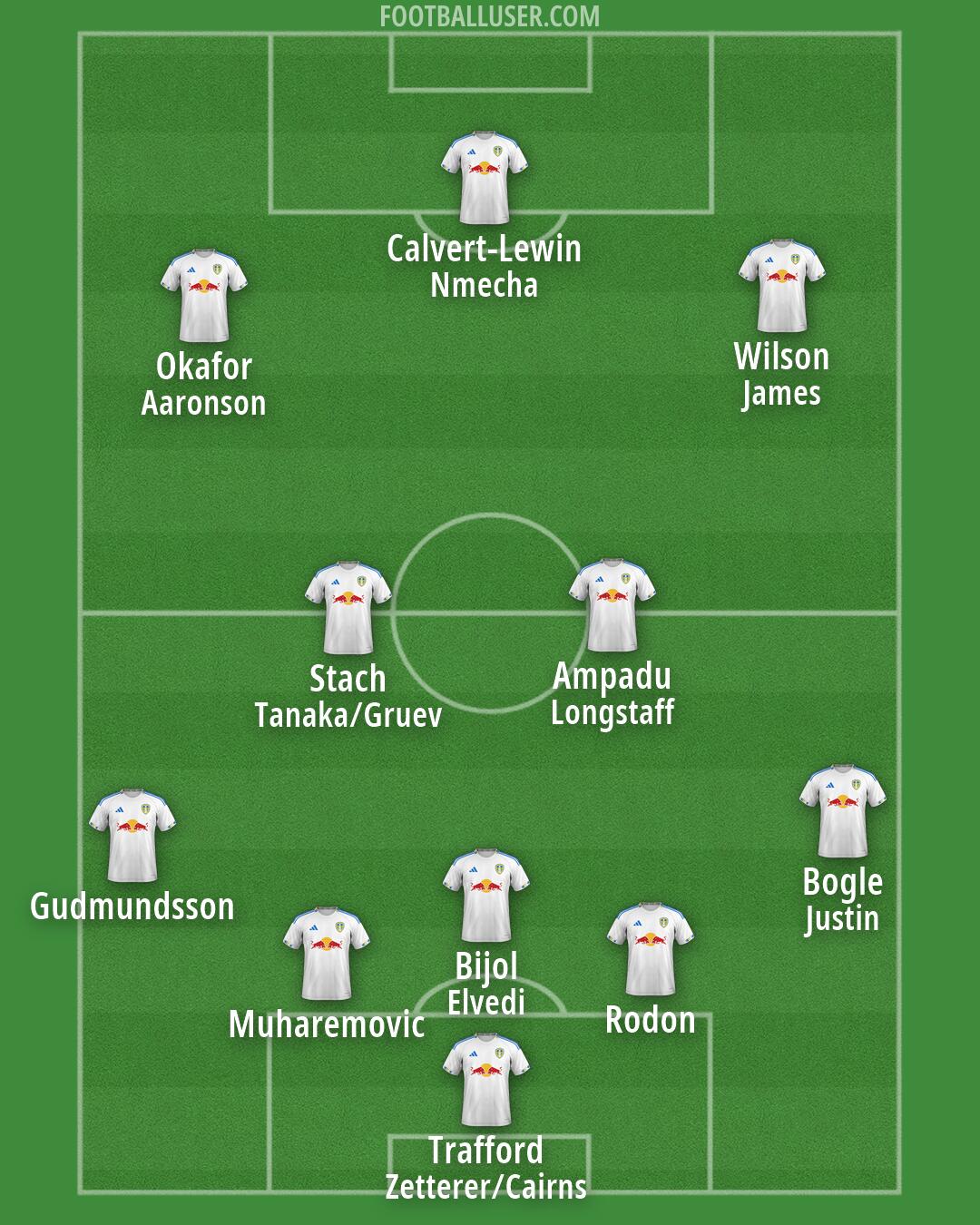
Leeds Football Formation
 August 31, 2026


Starting Lineup
Trafford (Zetterer/Cairns) · Bogle (Justin) · Rodon · Bijol (Elvedi) · Muharemovic · Gudmundsson · Ampadu (Longstaff) · Stach (Tanaka/Gruev) · Wilson (James) · Okafor (Aaronson) · Calvert-Lewin (Nmecha)Leeds focuses on a heavy counter attacking style using a 5-2-3 formation. This lineup aims to sit deep and wait for the opposition to commit players forward before hitting them in behind. The team looks to use the width of the pitch and the physical presence of the striker to transition quickly from a defensive block to an attacking threat.
Trafford plays behind a back five that maintains a narrow defensive block to deny central access. Bijol sits as the central defender to command the area and win the header, while Rodon and Muharemovic act as the wide centre backs to cover the channels. Bogle and Gudmundsson operate as attacking wing backs, tasked to provide width and push high when the team wins the ball. This defensive unit works to squeeze the space in the middle and force the opposition to play wide.
The midfield consists of a double pivot with Stach and Ampadu working to protect the back line. Ampadu sits closer to the defenders to shield the zone, while Stach looks to carry the ball forward and connect the defensive unit to the attackers. They must be ready to intercept passes and win the second ball to prevent the opposition from sustaining pressure. This pair works to compress the midfield and prevent the opponent from playing through the lines.
Leeds employs three attackers across the front to stretch the defence. Calvert-Lewin acts as a target man to hold up the ball and win aerial duels, providing a focal point for long passes. Okafor and Wilson play as wide attackers who cut inside to create goalscoring chances. The wingers are expected to press from the front to force a long ball and then break quickly into space. The movement of the front three is designed to isolate wide players and create runs in behind the opposition defence.
This formation offers the advantage of being extremely difficult to break down through the middle due to the number of players in the central zones. Leeds can create wide overloads when Bogle and Gudmundsson join the attack, forcing the opposition to track back deep into their own half. The speed of transition allows the team to punish opponents who leave gaps during their attacking phases.
The 5-2-3 formation provides Leeds with a compact defensive block and lethal counter attacking potential. It is best suited for matches against teams that dominate possession and play with a high line.