Custom Team Football Formation
 Today, August 31, 2026


Starting Lineup
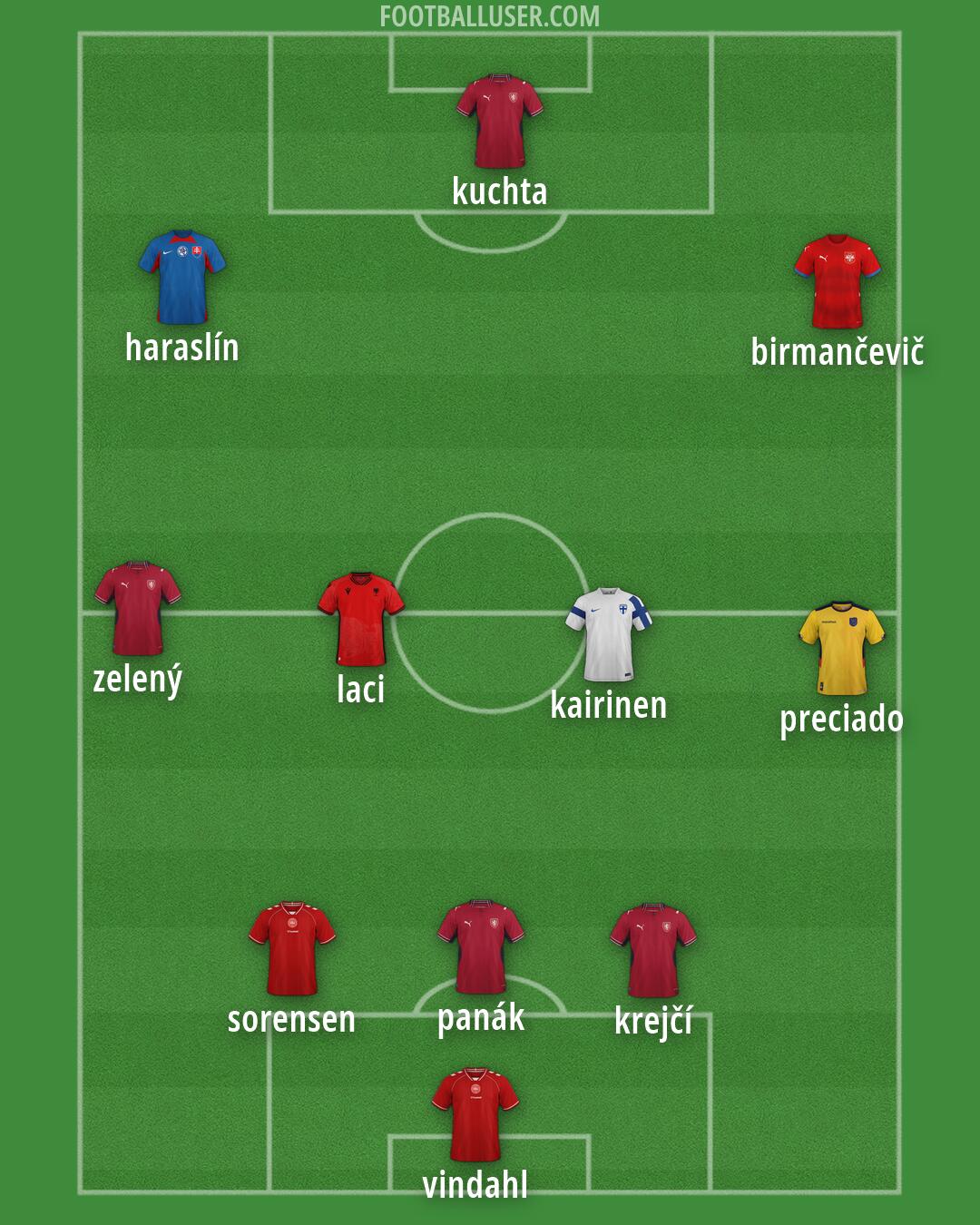
haraslín (Slovakia) · birmančevič (Serbia) · kuchta (Czechia) · zelený (Czechia) · krejčí (Czechia) · panák (Czechia) · sorensen (Denmark) · vindahl (Denmark) · laci (Albania) · kairinen (Finland) · preciado (Ecuador)A high pressing and vertical style of play defines this lineup using a 2-4-4 formation. The team looks to win the ball high up the pitch and quickly hit the opposition back line before they can get organized. This formation is built to overwhelm opponents with sheer numbers in the final third, often sacrificing defensive numbers to ensure constant pressure on the ball.
Kuchta acts as the lone goalkeeper behind a very shallow back line. Haraslín and Birmančevič form a two man central defensive unit that must remain extremely alert to long balls. Because there are only two defenders, Haraslín and Birmančevič often have to step up to press the striker or cover wide areas when the midfield is bypassed. They must hold the line carefully to avoid being caught in a footrace against fast attackers.
The midfield operates as a flat four to bridge the gap between the defense and the heavy attack. Laci and Kairinen occupy the central spaces to provide a shield for the two center backs, while Zelený and Preciado occupy the wide channels to drive the ball forward. Laci and Kairinen need to win the second ball and recycle possession quickly to keep the pressure on. Zelený and Preciado must track back to help the defenders when the team loses possession, otherwise, the two center backs will be left isolated against multiple runners.
Up front, the team uses a heavy attacking front four to pin the last defender. Panák and Vindahl act as the central strike partnership, with one often acting as a target man to hold up the ball while the other looks to run in behind. Krejčí and Sorensen operate as wide attackers, looking to cut inside and create goal scoring chances. This attacking group is designed to stretch the defense wide and then strike through the middle using quick combinations.
The main advantage of this formation is the ability to press high in coordinated waves. By having four attackers and four midfielders, the team can squeeze the space and force a long ball from the opposition. This creates many opportunities to win the ball high up the pitch and launch immediate attacks. The heavy presence in the final third also makes it difficult for the opposition to defend against constant runs into the box.
This 2-4-4 formation relies on intense pressing and rapid transitions to catch opponents off guard. It is best suited for games where the team needs to chase a result against a side that struggles to play out from the back.