
Pisa Football Formation
 September 1, 2026


Starting Lineup
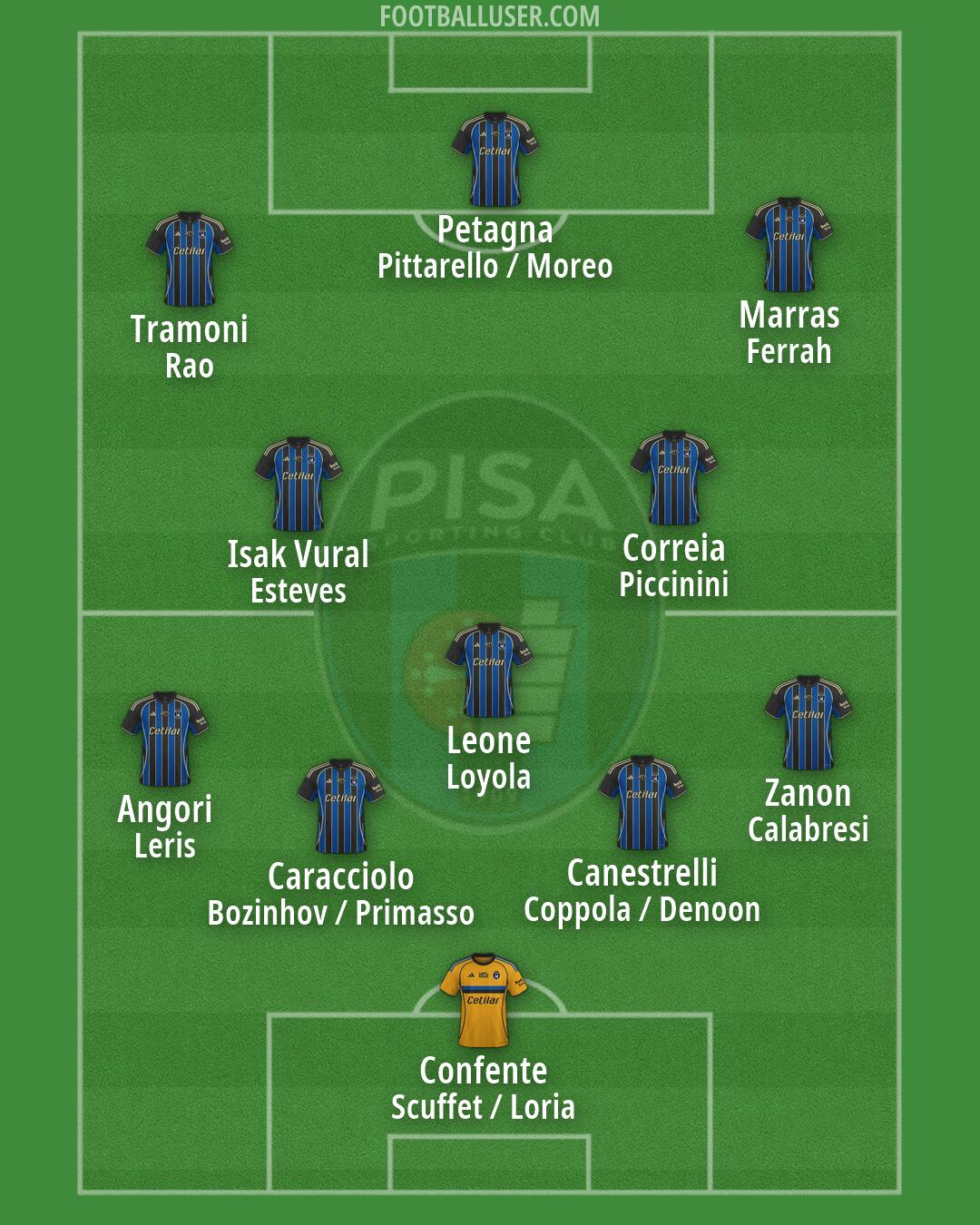
Confente (Scuffet / Loria) · Zanon (Calabresi) · Angori (Leris) · Canestrelli (Coppola / Denoon) · Caracciolo (Bozinhov / Primasso) · Leone (Loyola) · Correia (Piccinini) · Isak Vural (Esteves) · Tramoni (Rao) · Marras (Ferrah) · Petagna (Pittarello / Moreo)Pisa relies on a direct and heavy presence in the attacking third through a 5-2-3 formation. This lineup is built to play with verticality and width, looking to exploit spaces quickly once the ball is recovered. The team aims to use the wings to stretch the opposition and provide service into a central striker, making them dangerous in transition.
Confente plays between the posts to organize the defensive line. Pisa uses a back five that can shift into a more compact block when out of possession. Leone acts as the central anchor in the middle of the three, while Caracciolo and Canestrelli operate as the wide centre-backs to cover the channels. Angori and Zanon act as attacking wing backs, tasked to push high up the pitch to provide width and deliver crosses into the box. This defensive unit focuses on staying narrow to deny central entries and using the wing backs to squeeze the space on the flanks.
The midfield operates as a double pivot where Isak Vural and Correia work to control the center of the pitch. Isak Vural and Correia must work hard to cover the ground between the defensive line and the front three. They are responsible for winning the second ball and then carrying the ball forward to link the play. This pair acts as the engine, shielding the back five while looking to break the line with vertical passes to the attackers.
Pisa employs three attackers across the front to pin the opposition defense. Petagna acts as the focal point, using his physical presence to hold up the ball and fight for headers. On the flanks, Tramoni and Marras act as wide wingers who stay close to the touchline to create width. Tramoni and Marras can also cut inside to create overloads in the half spaces, allowing the wing backs to overlap. The front three press from the front to force long balls and disrupt the opponent as they try to play out from the back.
One major tactical advantage for Pisa is the ability to create wide overloads through the movement of Angori and Zanon. Another strength lies in the speed of transition when the double pivot wins the ball and immediately finds the front three. This setup allows the team to maintain compactness when defending in a low block while remaining a threat to hit in behind on the transition.
This 5-2-3 formation provides Pisa with a solid defensive base and high potential for wide attacks. It is best suited for matches against teams that dominate possession, allowing Pisa to sit deep and strike on the break.