
Ajax Football Formation
 Today, September 2, 2026


Starting Lineup
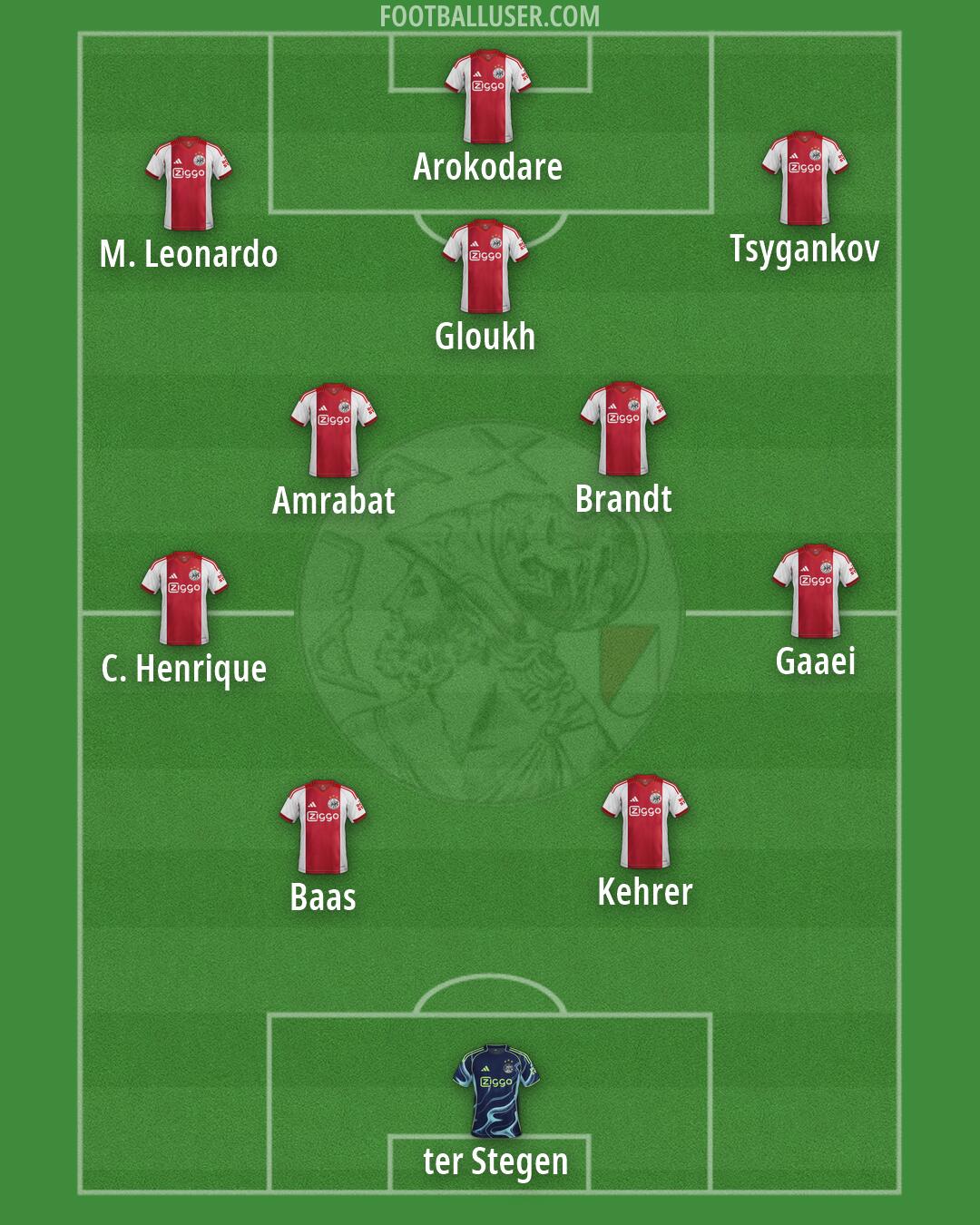
C. Henrique · Baas · Kehrer · Gaaei · M. Leonardo · Gloukh · Tsygankov · Arokodare · Brandt · Amrabat · ter StegenAjax aims to dominate through a heavy high press and verticality in a 2-5-3 formation. This lineup is built to squeeze the pitch and win the ball high up the pitch to catch opponents in transition. The team seeks to bypass the midfield with direct verticality whenever they can find space between the lines.
The defensive unit starts with ter Stegen acting as a sweeper behind a high line to collect long balls. Baas and Kehrer form a narrow defensive block as the only two central defenders. They must step up to maintain the high line and manage the space behind them, while ter Stegen works to cover the distance when the opposition attempts to hit in behind on the transition.
In the middle of the pitch, the team uses a five man midfield to control the game. C. Henrique and Gaaei form a double pivot to shield the two defenders and deny the pivot of the opposition. Amrabat operates as a carrier to drive forward with the ball, while Brandt provides connections between the defensive and attacking lines. Gloukh plays as an attacking ten behind the striker to find the feet of the striker and create chances in the half spaces. This central density allows Ajax to win the second ball and recycle possession quickly.
The attack utilizes three attackers to pin the last defender and stretch the defence. Arokodare acts as a pressing centre-forward to lead the hunt from the front. M. Leonardo and Tsygankov operate as wide wingers who spread wide to provide maximum width. This movement creates space for Gloukh to operate in the hole and allows the wingers to cut inside or deliver early crosses. The front three work together to trigger a press and force a long ball from the opposition.
This formation offers significant numerical superiority in the central areas of the pitch. The heavy presence of Amrabat, Brandt, and Gloukh makes it difficult for opponents to progress through the thirds. Ajax also benefits from the ability to press in coordinated waves, using the front three to drive the opposition back toward their own goal.
Ajax relies on high intensity and central control to overwhelm the opponent. This formation is best suited for matches where the team needs to dominate possession and exploit a high defensive line.