Rangers Football Formation
 September 5, 2026


Starting Lineup
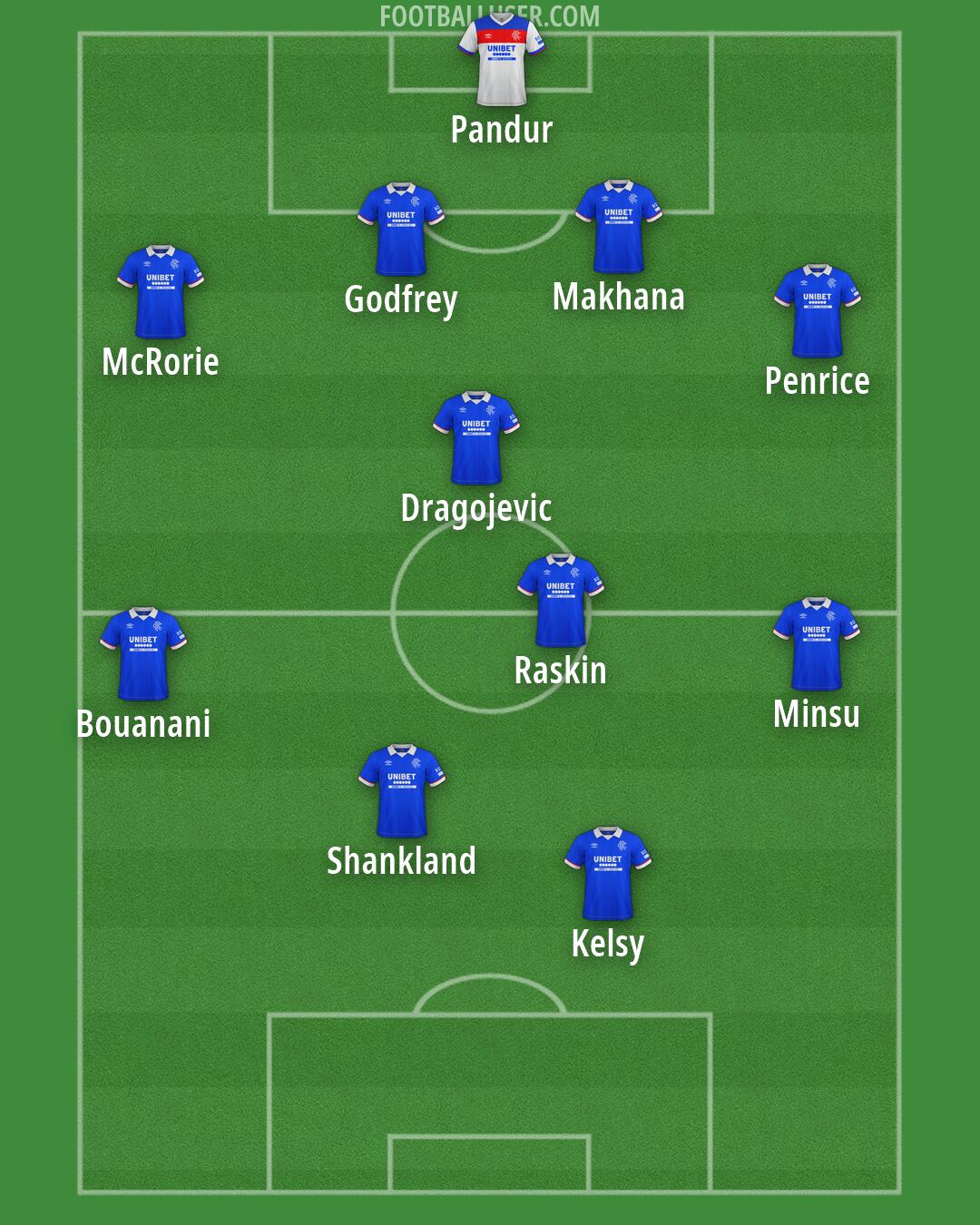
Makhana · Godfrey · McRorie · Penrice · Raskin · Dragojevic · Minsu · Shankland · Bouanani · Kelsy · PandurRangers aim to play a defensively solid game built on a low block and quick transitions using a 5-4-1. This formation focuses on being hard to break down by staying compact and waiting for the opposition to commit players forward before hitting them on the break.
Pandur stays between the posts to manage the defensive line. The back five consists of Dragojevic as the central leader with Makhana and Godfrey acting as the wide centre-backs to cover the space when the wing backs push up. McRorie and Penrice operate as attacking wing backs to provide the width, while Dragojevic and Godfrey focus on winning the header and clearing the lines. The defensive unit works together to squeeze the space and force the opponent into wide areas.
The midfield operates as a flat four that connects the defense to the lone striker. Raskin and Minsu sit deep to shield the defense and win the second ball, while Bouanani works to drive forward with the ball to progress through the thirds. Shankland plays as an attacking ten behind the striker to find the feet of the striker or arrive late into the box. This group must stay narrow to prevent the opponent from playing through the lines.
Rangers use a lone striker in Kelsy to lead the line. Kelsy acts as a pressing centre-forward to harass the opposition back line and hold up the ball for the midfielders. The attacking plan relies on McRorie and Penrice to overlap the winger and deliver crosses into the box. When the team wins the ball high up the pitch, the goal is to find Kelsy quickly or use Shankland to link up play between the lines and play through the lines.
This lineup offers great compactness when defending and is hard to play through. The use of McRorie and Penrice creates wide overloads from overlapping full backs, allowing the team to transition from a low block to an attacking threat very quickly. By keeping the midfield and defensive lines close, Rangers can effectively deny the turn and force a long ball.
Rangers rely on a heavy defensive block and rapid transitions to frustrate opponents. This formation is best suited for facing teams that dominate possession and leave space behind their high line.