Burnley Football Formation
 September 6, 2026


Starting Lineup
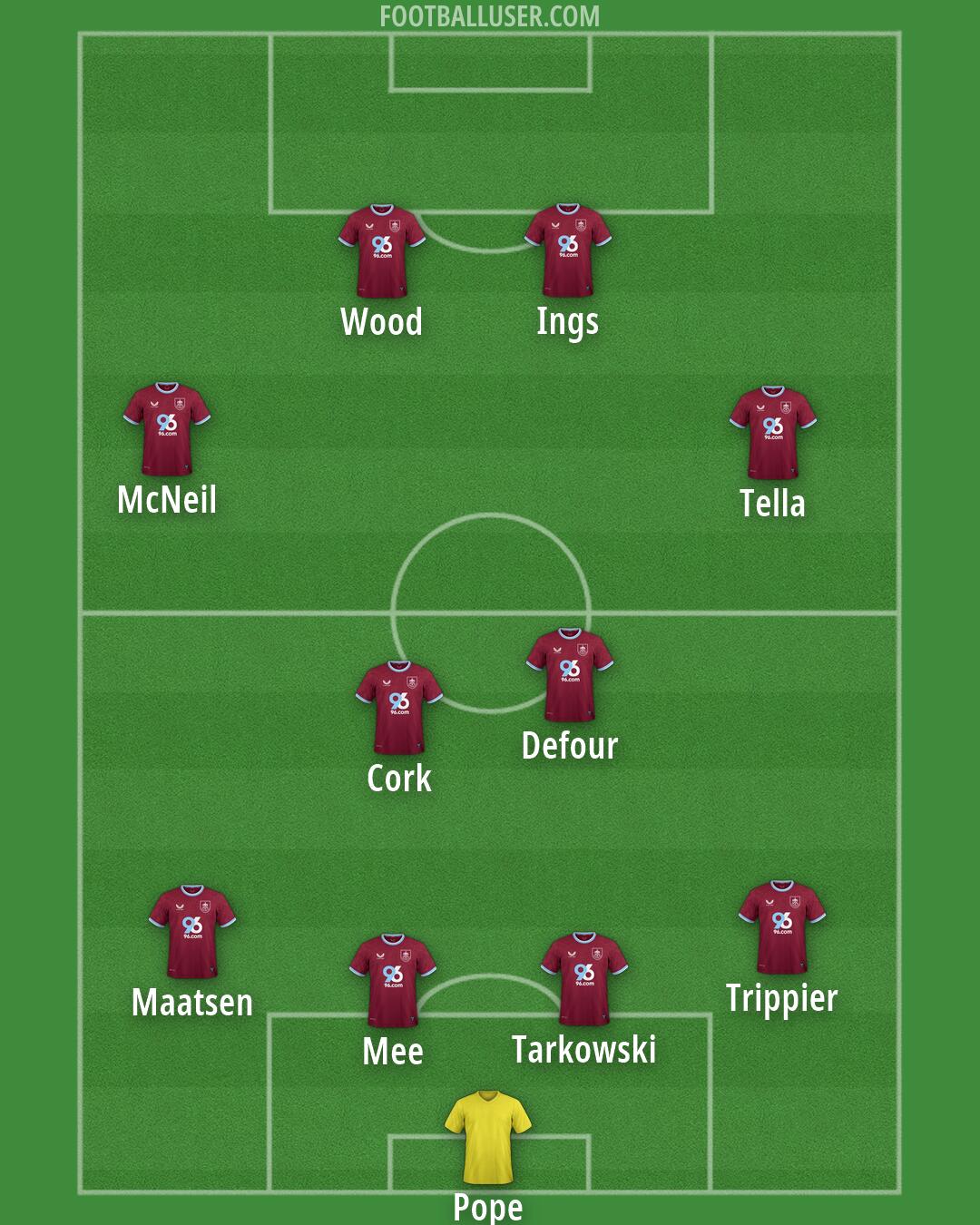
Pope · Tarkowski · Trippier · Mee · Maatsen · Defour · McNeil · Ings · Wood · Cork · TellaBurnley focuses on being a vertical team that looks to strike quickly, utilizing a 4-2-4 formation. This lineup is built to bypass the midfield and reach the opposition goals as fast as possible through direct play. The aim is to stretch the pitch and exploit large spaces left by teams playing with high lines.
In goal, Pope acts as the last line of defense, using his massive presence to claim crosses and command the box. The back line operates as a flat back four, with Tarkowski and Mee acting as the central defenders. Tarkowski is known for his aerial strength and aggressive tackling, while Mee provides covering and organizes the defensive line. On the flanks, Trippier and Maatsen act as wide defenders who can push up to provide width, though their primary duty is to hold the line and protect the wings. The defensive unit works to stay compact when the ball is on the opposite side to deny the turn of any incoming attackers.
The midfield consists of a double pivot made up of Cork and Defour. These two players sit deep to shield the defense and recycle possession when needed. Cork works to win the second ball and disrupt the opponent, while Defour aims to connect the defensive unit to the attacking lines with more direct passes. They do not push too far forward, instead choosing to sit in front of the back four to prevent counter attacks and ensure the team stays solid when the opponent has the ball.
The attack is heavy with four players pushing the opposition back line. Burnley uses two central forwards in a partnership, with Wood and Ings leading the line. Wood acts as a target man to hold up the ball and win headers, while Ings looks to make runs in behind. On the wings, Tella and McNeil act as wide wingers. Tella looks to get to the byline and deliver crosses, while McNeil often cuts inside to create chances or hit shots from distance. This front four is designed to press from the front and force a long ball from the opponent.
This formation offers Burnley several tactical advantages. The main strength is the ability to hit in behind on the transition, catching defenders out of position with the speed of Wood and Ings. By having four attackers, the team can create wide overloads when Trippier or Maatsen overlap the winger. This setup also forces the opposition to defend in a very deep block to manage the threat of the four forwards.
Burnley relies on this high-risk, high-reward formation to punish teams that leave space behind their defense. It is a lineup best suited for games where the opponent dominates possession but struggles to defend against direct vertical attacks.