Man City Football Formation
 Today, September 6, 2026


Starting Lineup
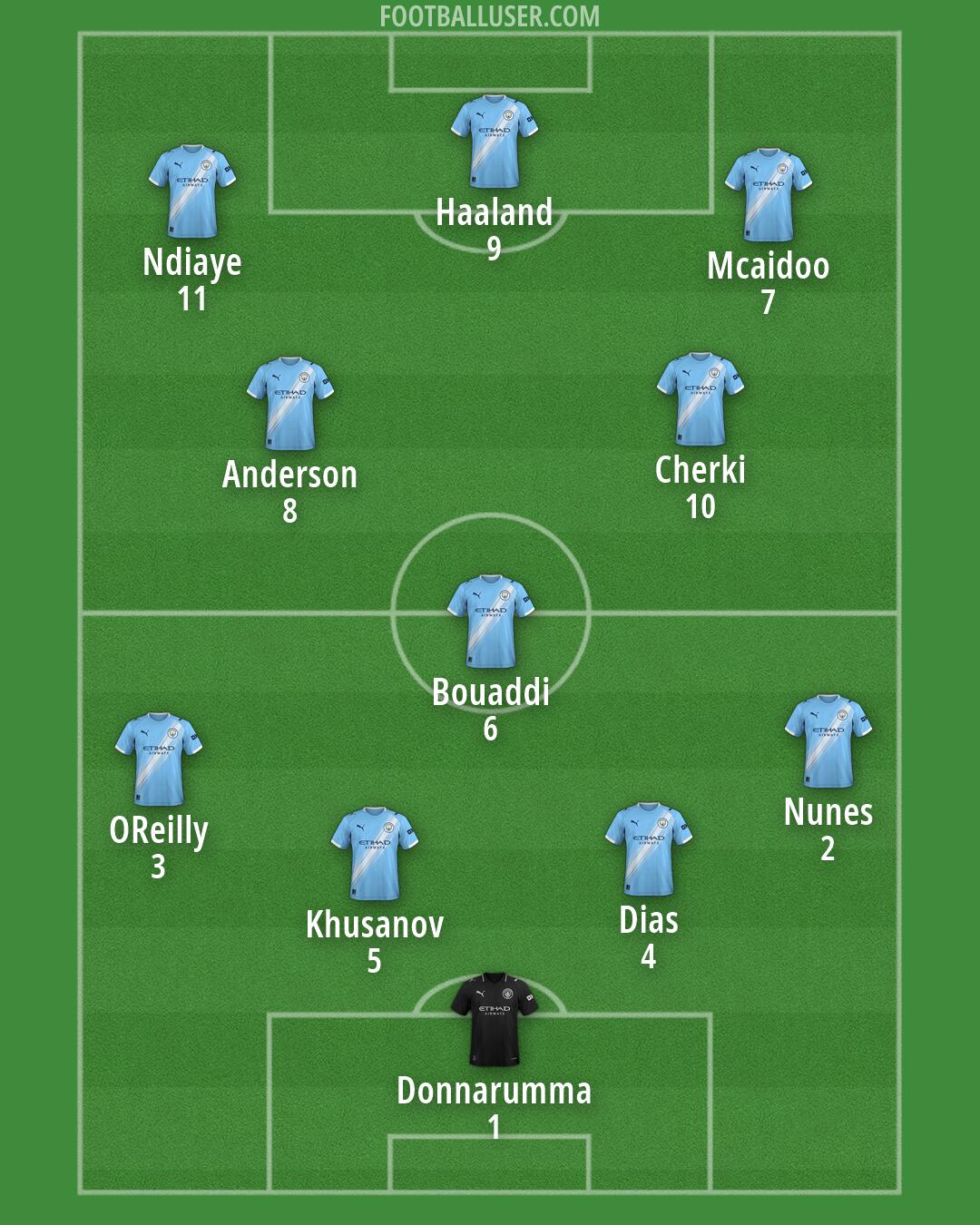
Donnarumma (1) · Nunes (2) · Dias (4) · Khusanov (5) · OReilly (3) · Bouaddi (6) · Cherki (10) · Anderson (8) · Mcaidoo (7) · Haaland (9) · Ndiaye (11)Man City focuses on high pressing and rapid verticality through a 5-2-3 formation. This lineup aims to win the ball high up the pitch and use overwhelming numbers in the final third to break the opposition. The team seeks to control games by squeezing the space in the middle and forcing errors close to the opponent goal.
Donnarumma operates between the posts to sweep behind the defensive line when the team plays a high line. The back five consists of Bouaddi and Dias as the central defenders, with Khusanov acting as the left-sided center back to cover the space behind the wing back. Dias provides aerial strength and leadership in the heart of the defense. Nunes and OReilly act as attacking wing backs, tasked with providing width and pushing high to overlap the attackers. This defensive unit works to stay compact and shift together to deny passing lanes.
The midfield relies on a double pivot consisting of Anderson and Cherki to connect the defense to the front three. Anderson works to shield the defense and recycle possession, while Cherki carries the ball forward to create chances. They are tasked with winning the second ball and ensuring the team can progress through the thirds quickly. The connection between this pair and the defensive line is vital to prevent counter attacks when the wing backs are pushed up.
In the attacking phase, Man City uses three attackers across the front line. Ndiaye and Mcaidoo act as wide wingers who stretch the defense by hugging the touchline, creating space for the central players. Haaland serves as a powerful lone striker, looking to pin the last defender and make runs in behind. The forwards press from the front to force long balls, while the wingers look to cut inside and deliver crosses or play one-twos with Haaland to penetrate the box.
Man City finds success by using wide overloads from the wing backs to create numerical superiority on the flanks. The ability to press in coordinated waves allows the team to win the ball back high up the pitch and strike before the opponent can settle. This formation also offers great speed of transition once the ball is recovered in the middle third.
This 5-2-3 formation is built for teams that want to dominate through intense pressure and wide attacking play. It is best suited for matches against opponents who struggle to play out from the back under heavy duress.