
SL Benfica Football Formation
 September 10, 2026


Starting Lineup
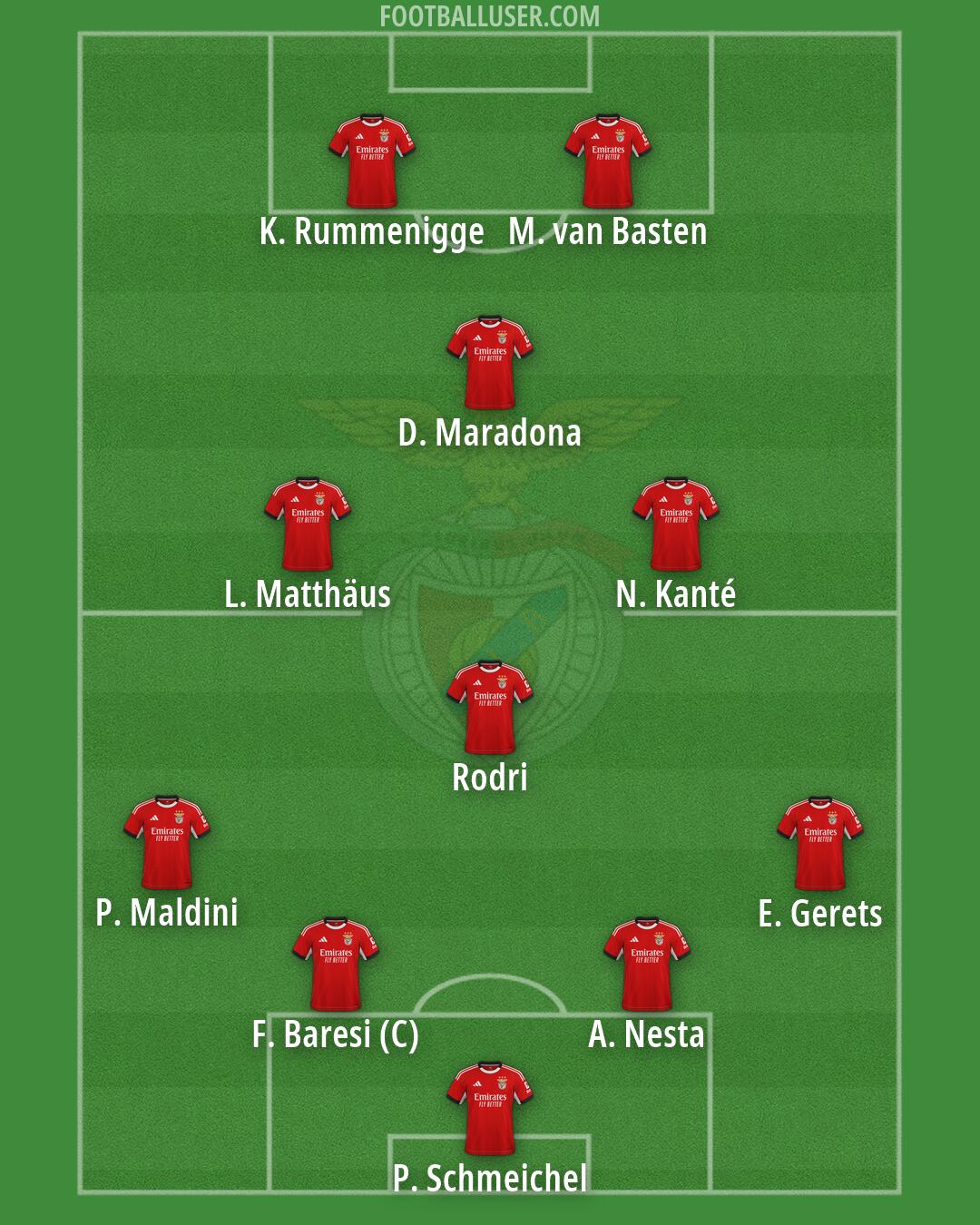
P. Schmeichel · A. Nesta · F. Baresi (C) · E. Gerets · P. Maldini · Rodri · N. Kanté · L. Matthäus · D. Maradona · K. Rummenigge · M. van BastenSL Benfica plays with a heavy emphasis on defensive stability and direct counter attacks using a 5-3-2 formation. This lineup is built to sit deep, soak up pressure, and then break quickly when the opposition loses control. The tactical identity focuses on being extremely difficult to break down while relying on the individual brilliance of key players to win games in transition.
P. Schmeichel guards the goal within a compact defensive unit that operates as a five man line. F. Baresi (C) leads the back three as a commanding presence, organizing the zonal line and sweeping behind the high line when needed. He is joined by A. Nesta and Rodri, who act as ball playing defenders capable of stepping into midfield to help build play. The wing backs, E. Gerets and P. Maldini, provide the necessary width, with Maldini using his incredible positioning to cover the flank and Gerets pushing high to overlap the winger during attacking phases.
The midfield functions as a three man midfield with a carrier and a creative hub. N. Kanté operates in the central area to press aggressively and win the ball high up the pitch, while L. Matthäus provides engine room energy to drive forward with the ball and connect the defensive and attacking lines. D. Maradona plays as an attacking ten behind the striker, looking to find pockets of space to receive on the half-turn and split the defence with a through ball. This trio works to compress the midfield and deny the turn of opposing players.
In the final third, SL Benfica uses two forwards in a partnership to stretch the opposition. K. Rummenigge acts as a pressing centre-forward, using his intensity to force a long ball from the defenders, while M. van Basten plays as a target man to hold up the ball and link up play between the lines. The attack is designed to create runs in behind and isolate wide players in one on one situations once the midfield wins possession. The forwards often combine in tight spaces to move the ball toward the goal quickly.
This formation offers significant tactical advantages, particularly the ability to remain compact when defending and to create numerical superiority in midfield during specific transition moments. The presence of elite defenders allows the team to hold a high line or drop into a low block effectively. Furthermore, the speed of transition from the midfield to the two strikers allows the team to hit in behind on the transition before the opponent can regroup.
The 5-3-2 formation provides a rock solid foundation for teams that want to control the game through defensive strength. It is best suited for facing high pressing opponents where the team can exploit the space left behind their high line.