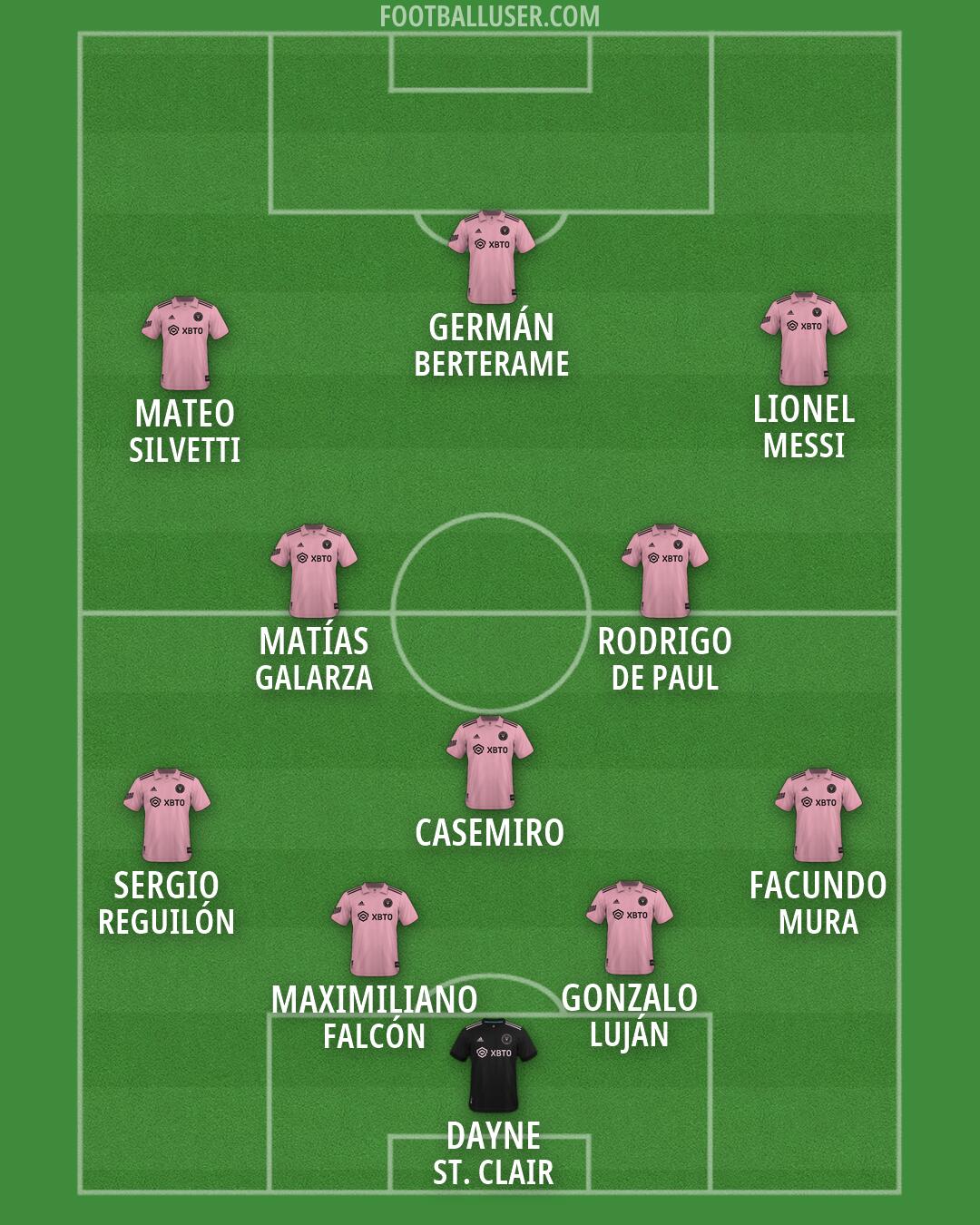
Inter Miami Soccer Formation
 Today, September 19, 2026
 lucaosantos85


Starting Lineup
DAYNE (ST. CLAIR) · FACUNDO (MURA) · GONZALO (LUJÁN) · MAXIMILIANO (FALCÓN) · SERGIO (REGUILÓN) · CASEMIRO · MATÍAS (GALARZA) · RODRIGO (DE PAUL) · LIONEL (MESSI) · MATEO (SILVETTI) · GERMÁN (BERTERAME)Inter Miami prioritizes a direct and vertical style of play using a 5-2-3 formation. This lineup aims to catch opponents out of position by using quick transitions and wide attacking threats. The team looks to win the ball and move it forward rapidly to exploit gaps in the opposition defense.
In goal, DAYNE sits behind a heavy defensive block. The back line features a three man central unit with CASEMIRO acting as the central pillar. GONZALO plays as the right center back and MAXIMILIANO occupies the left center back position. To provide width, FACUNDO operates as the right wing back while SERGIO serves as the left wing back. The defensive unit can drop into a low block to deny space or step up to squeeze the space when the team wins the ball.
The midfield relies on a double pivot to control the central area. MATÍAS and RODRIGO work together to connect the defense to the attack. MATÍAS often acts as a carrier to drive forward with the ball, while RODRIGO focuses on shielding the defense and recycling possession. This pairing must be disciplined to prevent the opposition from playing through the lines during defensive transitions.
The attacking unit uses three players across the front to stretch the defense. GERMÁN operates as a lone striker who focuses on hold up the ball and finding the feet of his teammates. MATEO plays as a wide winger on the left to provide width, while LIONEL acts as an inverted winger on the right who likes to cut inside. These attackers press from the front to force a long ball from the opposition, creating opportunities for Inter Miami to win the second ball and counter at pace.
One major advantage for Inter Miami is the ability to create wide overloads when FACUNDO and SERGIO push forward to overlap the wingers. The formation also offers great compactness when defending in a mid-block, making it hard for opponents to find gaps. The speed of transition between the midfield duo and the front three allows the team to hit in behind on the transition very effectively.
This 5-2-3 formation is built for teams that want to remain solid defensively before exploding forward. It is best suited for matches against opponents that play a high line and can be punished by quick, direct movements.