Bristol Rovers Football Formation
 Today, September 19, 2026


Starting Lineup
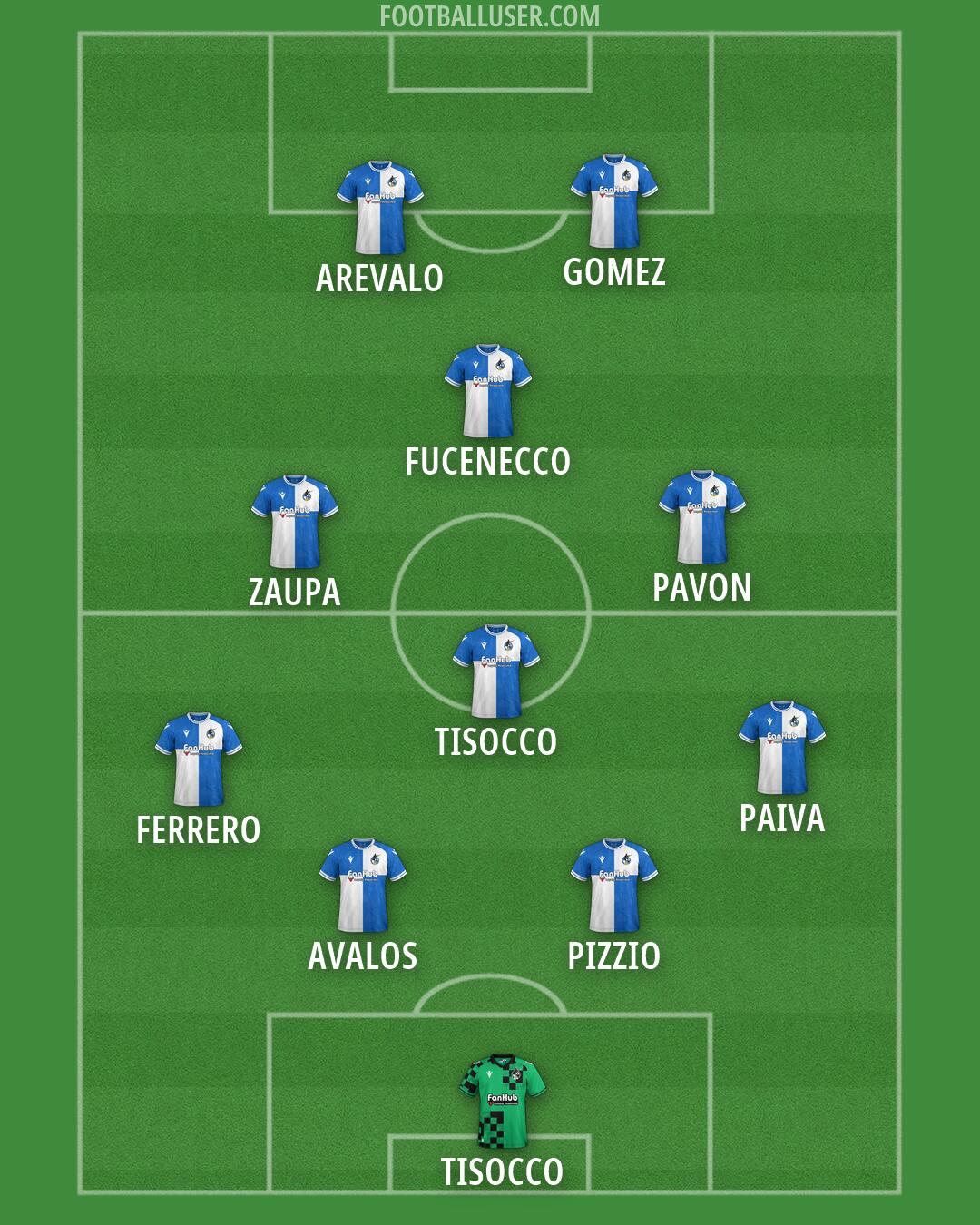
TISOCCO · PAIVA · PIZZIO · AVALOS · FERRERO · PAVON · TISOCCO · ZAUPA · FUCENECCO · AREVALO · GOMEZBristol Rovers prioritize a heavy counter attacking identity built around a 5-3-2 formation. This lineup seeks to absorb pressure before hitting the opposition with speed in transition. The team aims to stay compact and rely on direct vertical play to bypass the midfield when the opportunity arises.
TISOCCO operates between the posts to organize the defensive unit. The back line consists of a back five featuring PIZZIO and TISOCCO as central defenders with AVALOS acting as the left centre back. PIZZIO and TISOCCO provide stability while AVALOS covers the space behind. On the flanks, PAIVA and FERRERO act as attacking wing backs who provide the width for Bristol Rovers. They must track back to help the central three, but they are also tasked to push high to support the break.
The midfield functions with a three man midfield with a carrier. ZAUPA and PAVON sit in the central areas to shield the defense and win the second ball. ZAUPA looks to recycle possession, while PAVON drives forward with the ball to connect the lines. FUCENECCO plays as an attacking ten behind the strikers. He finds the pockets of space between the lines to create chances. This group works to compress the midfield and deny the turn of the opponent's playmakers.
In the final third, the team uses a two forwards in a partnership. AREVALO and GOMEZ lead the line, often working in combinations to trouble the defense. GOMEZ can act as a target man to hold up the ball, allowing AREVALO to make runs in behind. The attack relies on the movement of the wing backs, PAIVA and FERRERO, who look to deliver crosses from the byline. They aim to exploit the space left by advancing opponents to isolate one on one situations for the forwards.
A primary strength of this formation is the compactness when defending in a low block. The back five and the three midfielders make it difficult for opponents to play through the lines. Another advantage is the ability to hit in behind on the transition. When the team wins the ball, the wide areas are immediately exploited by the wing backs. This creates quick wide overloads that force the opposition to retreat.
This 5-3-2 setup is built for teams that want to sit deep and strike with pace. It is best suited for matches against dominant sides where controlling the space behind the defense is the priority.