
Austria National Football Team Formation
 Today, September 20, 2026


Starting Lineup
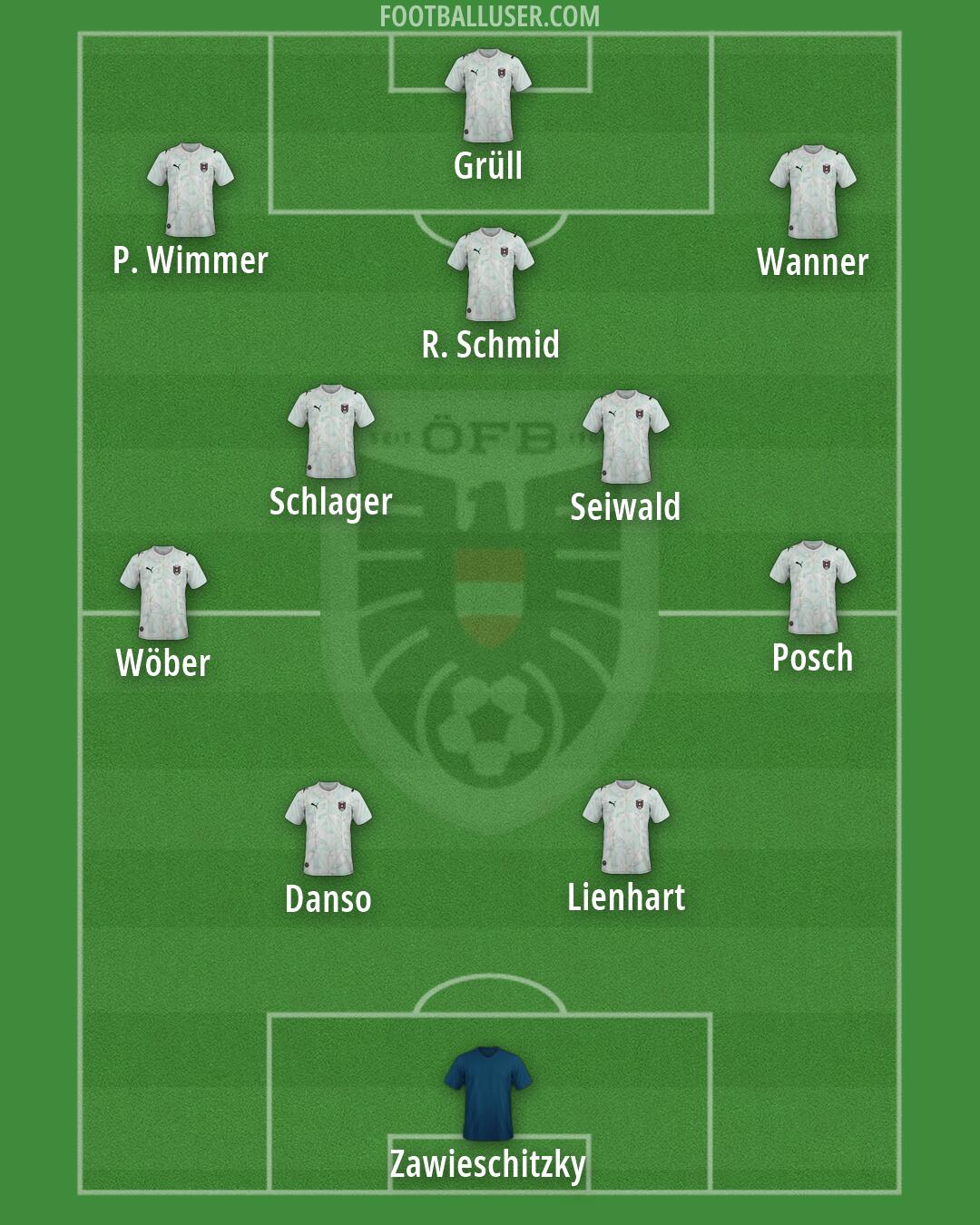
Wöber · Posch · Danso · Lienhart · Schlager · Seiwald · R. Schmid · Grüll · Wanner · P. Wimmer · ZawieschitzkyAustria focus on a high press and rapid verticality using a 2-5-3 formation. This lineup aims to squeeze the space high up the pitch and win the ball back quickly to catch the opposition off guard. By committing bodies forward, the team looks to dominate the middle of the pitch and create immediate goalscoring chances through quick transitions.
Zawieschitzky operates between the posts to sweep behind the high line. The defensive unit relies on a back two consisting of Danso and Lienhart, who must stay concentrated to manage large spaces behind them. Danso provides aerial strength and physical presence while Lienhart works to cover and intercept long balls. Because the lineup only uses two central defenders, they must step up to press and prevent the opposition from playing short from the back, often leaving them vulnerable to quick direct attacks.
A heavy presence in the middle defines the midfield with a five man unit. Wöber and Posch act as a double pivot to shield the defense and recycle possession. Seiwald and Schlager operate as central midfielders, with Seiwald looking to carry the ball forward and Schlager working to win the second ball. R. Schmid plays as an attacking ten behind the striker to link the lines. This central group works to compress the midfield and ensures that Austria can quickly progress through the thirds.
The attack uses three players across the front to stretch the defense. Grüll acts as a pressing centre forward to force the opposition into mistakes. On the flanks, P. Wimmer and Wanner act as wide wingers to provide width and isolate defenders in one on one situations. P. Wimmer often looks to cut inside while Wanner stays wide to deliver crosses. This front three works to pin the last defender and create runs in behind during fast breaks.
One major advantage of this formation is the ability to press high in coordinated waves, making it difficult for opponents to build play. The presence of five midfielders allows for numerical superiority in the center, helping Austria control the tempo. Another strength is the speed of transition, as the team can quickly move from a pressing phase to an attacking phase with players like R. Schmid and the wide attackers ready to exploit gaps.
Austria relies on an aggressive high line to suffocate opponents and win the ball in dangerous areas. This formation is best suited for games where the team can dominate possession and use high energy to overwhelm the opposition midfield.