Luton Football Formation
 Today, September 21, 2026


Starting Lineup
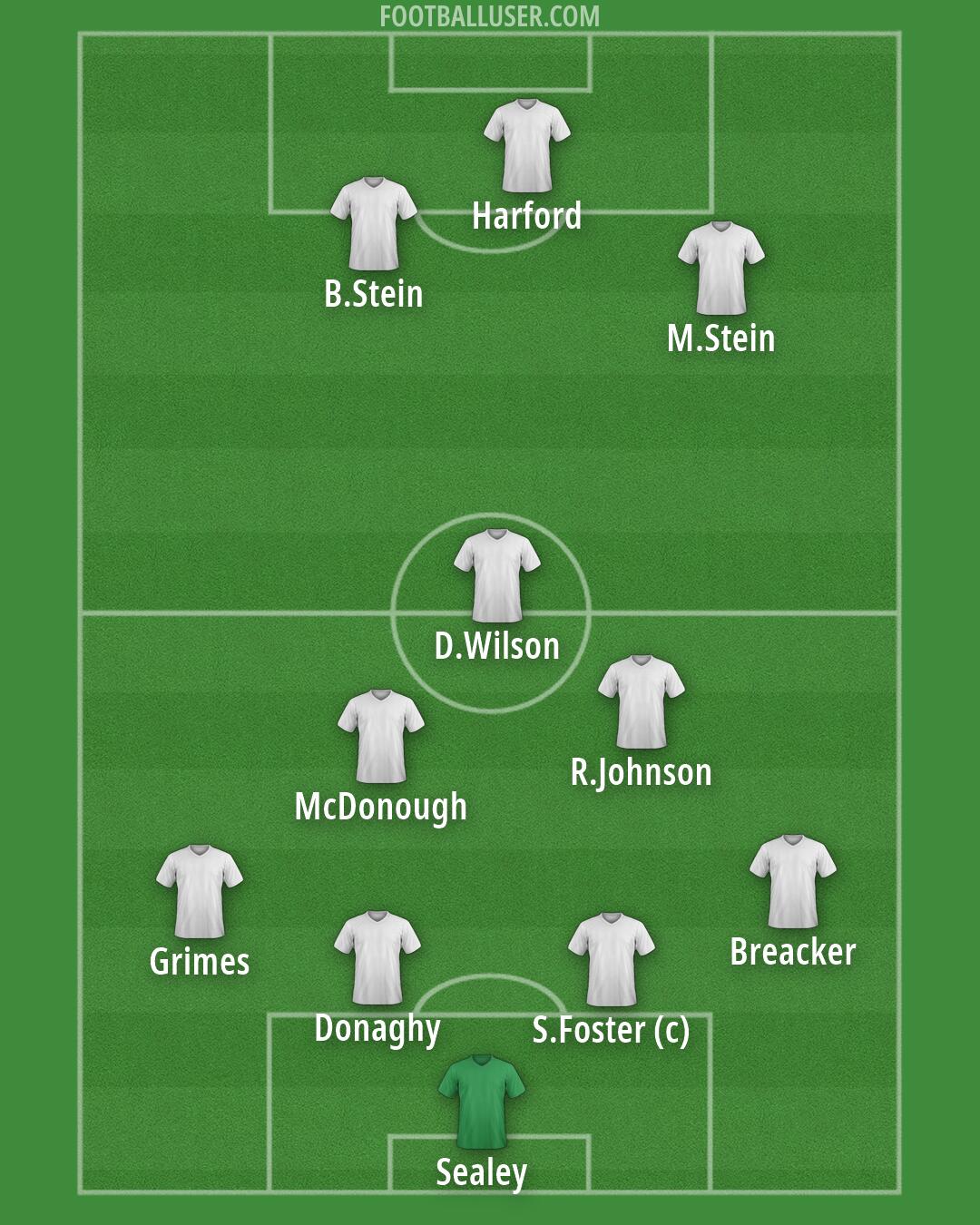
Sealey · Breacker · S.Foster (c) · Donaghy · Grimes · M.Stein · Harford · B.Stein · R.Johnson · McDonough · D.WilsonLuton aims to play a direct and vertical brand of football using a 4-3-3 formation. This lineup is built to stretch the opposition and create chances through rapid transitions. The team seeks to control the game by winning second balls and using the width of the pitch to pull defenders out of position.
Sealey operates between the posts to organize the back line. A flat back four serves as the foundation, with Breacker acting as the right back to support the wide areas. S.Foster (c) leads the defense as the right centre back, providing leadership and strength to the unit. Donaghy plays as the left centre back to provide cover, while Grimes works as the left back to help the team progress. The defensive unit functions by maintaining a compact line to deny space between the players.
The midfield operates as a three-man midfield with a carrier. McDonough works on the left to link the play, while R.Johnson operates on the right to drive the ball forward. D.Wilson plays as an attacking ten behind the striker to connect the lines and arrive late into the box. This group works to press in a mid-block to win the ball back and quickly find the attackers. The midfield links the defense to the attack by recycling possession and playing through the lines.
Luton employs three attackers across the front to pin the opposition back. Harford acts as a pressing centre-forward to lead the line and hold up the ball. On the wings, M.Stein and B.Stein play as wide wingers who hug the touchline to provide maximum width. This setup allows the team to attack in combinations, often using the wingers to isolate a one on one wide or looking to deliver a cross from the flank. The front line works to force a long ball from the opponent by pressing from the front.
A major strength for Luton is the ability to hit in behind on the transition when the opposition is caught high. The formation creates wide overloads when the full backs push up to support the wingers. Another advantage is the compactness when defending, which makes it difficult for opponents to play through the middle.
This 4-3-3 formation is designed for a team that wants to play with high intensity and verticality. It is best suited for matches against opponents who play a high defensive line and can be punished on the break.