Scotland National Football Team Formation
 September 22, 2026
 lucaosantos85


Starting Lineup
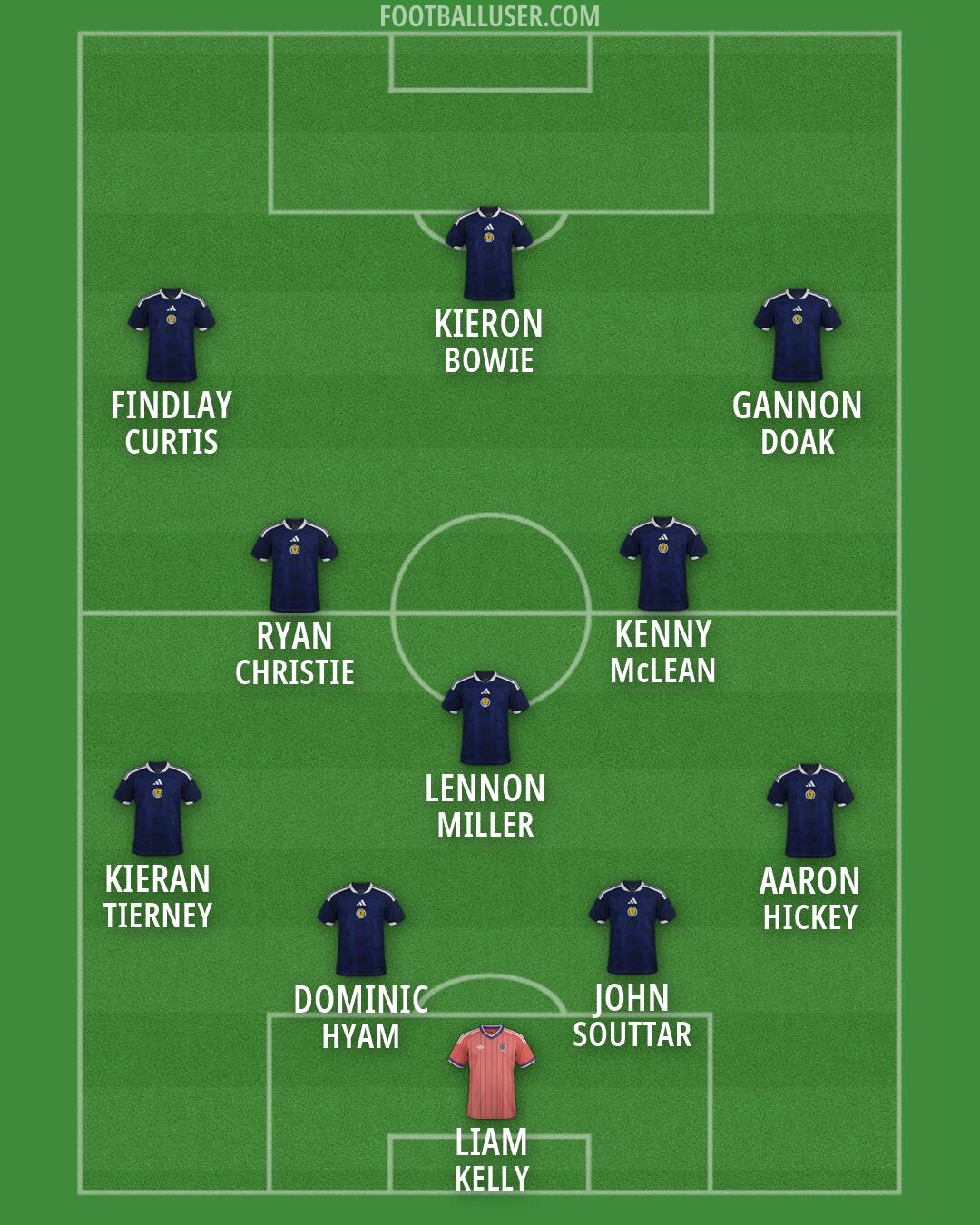
LIAM (KELLY) · AARON (HICKEY) · JOHN (SOUTTAR) · DOMINIC (HYAM) · KIERAN (TIERNEY) · LENNON (MILLER) · RYAN (CHRISTIE) · KENNY (McLEAN) · GANNON (DOAK) · FINDLAY (CURTIS) · KIERON (BOWIE)Scotland focuses on a heavy defensive block and quick transitions using a 5-2-3 formation. This lineup relies on being hard to break down while using the width of the pitch to strike on the break. The team seeks to sit deep and wait for the right moment to hit in behind the opposition.
Liam stays between the posts to organize the back line. The defensive unit functions as a back five with Lennon acting as the central anchor. Dominic and John play as the wider centre-backs, providing cover and looking to win the second ball. Aaron and Kieran play as attacking wing backs, tasked with providing width and tracking back to maintain a narrow defensive block when out of possession. The unit works to squeeze the space between the lines to prevent any easy passes through the middle.
The midfield operates as a double pivot consisting of Ryan and Kenny. These two are responsible for shielding the defence and trying to win it back high up the pitch when possible. Ryan works to connect the defensive and attacking lines, while Kenny looks to drive forward with the ball to support the transition. They must manage the space between the back five and the front three to ensure the team stays compact.
In the final third, Scotland uses three attackers to stretch the defence. Kieron acts as the lone striker, tasked to hold up the ball and find the feet of the midfielders. Findlay and Gannon operate as wide wingers who hug the touchline to pull the opposition full backs apart. This creates space for Aaron and Kieran to overlap the winger and deliver crosses into the box. The front three press from the front to force a long ball from the opposition.
The tactical advantages of this Scotland formation include the ability to create wide overloads from overlapping full backs and the compactness when defending in a low block. By sitting deep, the team can use the speed of transition to catch opponents out. This setup allows the team to defend a lead effectively or soak up pressure against dominant sides.
This formation is built for teams that want to remain defensively solid and strike through direct transitions. It is best suited for games against possession based teams where sitting deep can deny them space in the final third.