
Sweden National Football Team Formation
 Today, September 26, 2026


Starting Lineup
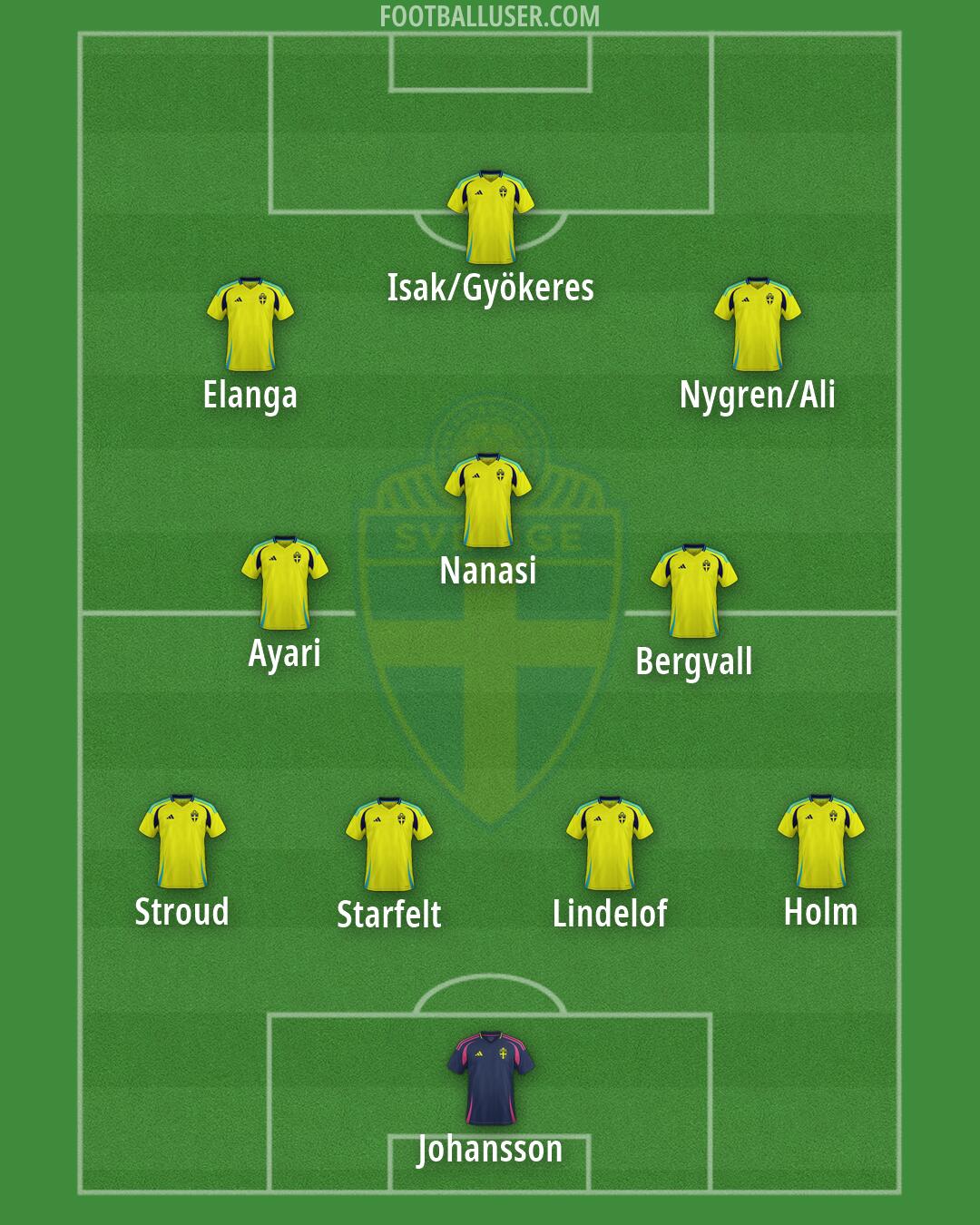
Elanga · Isak/Gyökeres · Nygren/Ali · Johansson · Stroud · Holm · Ayari · Bergvall · Lindelof · Starfelt · NanasiSweden relies on a high press and quick transitions using a 4-3-3 formation. This lineup is built to win the ball high up the pitch and strike quickly before the opposition can settle. The team looks to use verticality to stretch the play, making it difficult for opponents to maintain a stable defensive block.
Johansson sits between the posts to organize the back line. Sweden uses a flat back four where Lindelof acts as a ball playing defender to initiate play from the back. Starfelt provides cover and stays deep to protect against long balls. Holm plays as a defensive wing back to provide stability on the right, while Stroud is expected to overlap the winger to provide width. The defensive unit works to squeeze the space between the lines and maintain a high line to keep the team compact.
The midfield operates with a three man midfield with a carrier and a creative presence. Ayari acts as the pivot to shield the defense and recycle possession. Bergvall is tasked to carry the ball forward and link the defensive unit to the attack. Nanasi plays in the hole as an attacking ten, looking to find pockets of space and play through the lines. This trio works to control the tempo and ensure the team can progress through the thirds efficiently.
The attack features three attackers across the front to stretch the opposition. Elanga operates as an inverted winger on the left, looking to cut inside and attack the far post. On the right, Nygren or Ali provides width to isolate the opposition fullback. Isak or Gyökeres leads the line as a pressing centre-forward, capable of finding runs in behind or holding up the ball to bring others into play. The front three work in combination to create cutbacks from the byline and quick one-two passing sequences.
Sweden offers significant tactical advantages through their speed of transition and ability to press high in coordinated waves. By using Bergvall to drive the ball forward, they can quickly bypass the midfield. The presence of Elanga and the wide attackers allows the team to create wide overloads, forcing the opposition to shift and leave gaps in the center.
This formation is designed to dominate teams that struggle with high pressure and quick ball movement. Sweden is best suited for matches where they can exploit space behind an advanced defensive line.