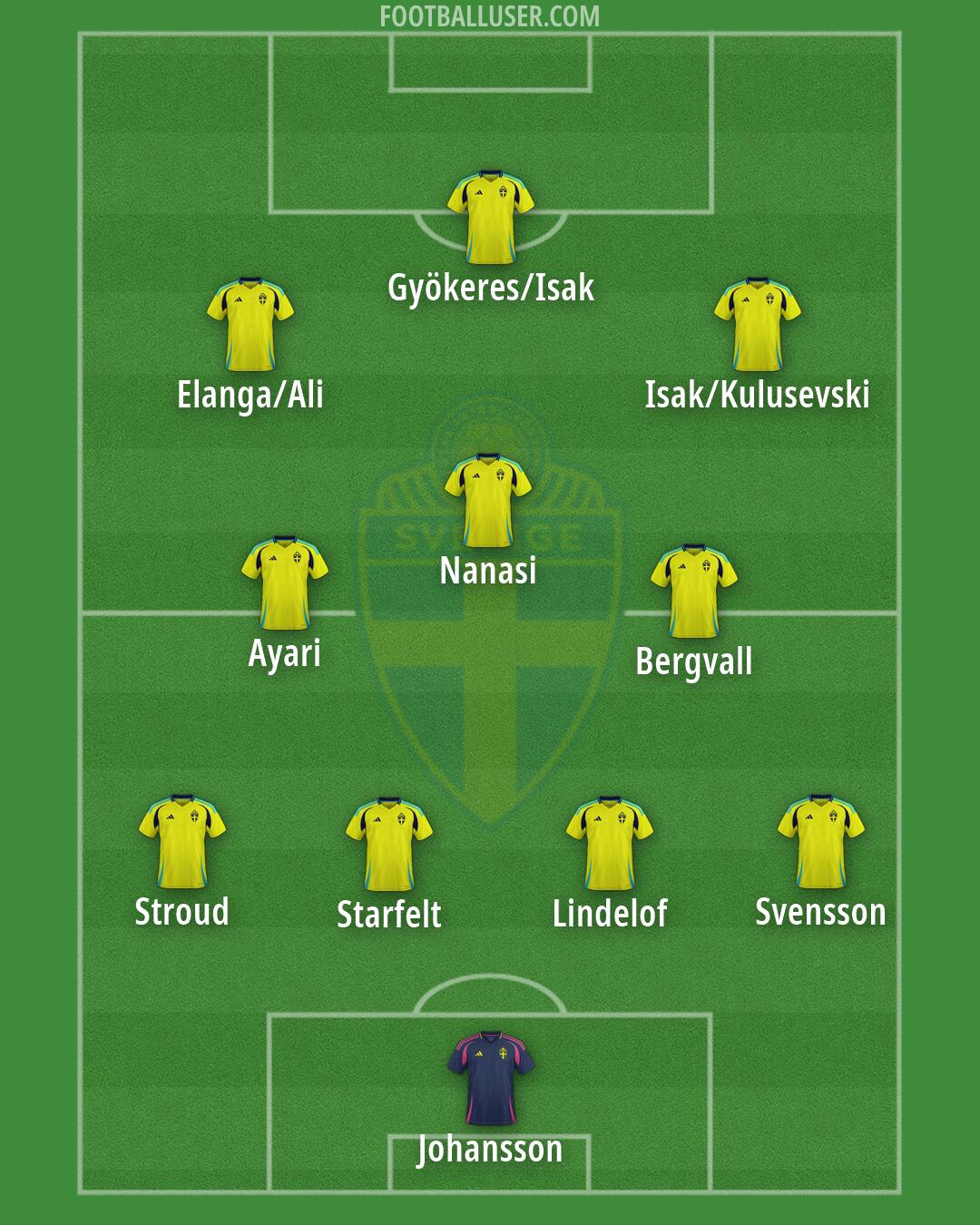

Sweden National Football Team Formation
 Today, September 26, 2026


Starting Lineup
Elanga/Ali · Gyökeres/Isak · Isak/Kulusevski · Johansson · Stroud · Svensson · Ayari · Bergvall · Lindelof · Starfelt · NanasiSweden focuses on a high press and quick transitions using a 4-3-3 formation. This lineup aims to win the ball high up the pitch and use vertical passing to catch the opposition out of position. The team looks to control the tempo through aggressive pressing and rapid movement in the final third.
Johansson operates between the posts to command his area. A flat back four provides the base for the defensive unit. Lindelof acts as a ball playing defender, while Starfelt provides cover and reads the game to intercept passes. Svensson and Stroud act as full backs, looking to provide width when the team moves forward. The back line stays compact to squeeze the space and prevent through balls.
The midfield operates as a three-man midfield with a carrier and an attacking ten behind the striker. Ayari and Bergvall work to control the central areas, with Bergvall often driving forward with the ball to break the line. Nanasi plays in the hole, looking to find the feet of the striker or play through the lines. This group links the defence and attack by recycling possession and finding pockets of space between the opposition lines.
The attacking front line uses three attackers across the front. Elanga or Ali can play as wide wingers who cut inside to create goalscoring chances. On the opposite side, Isak or Kulusevski provides threat from the right wing. Gyökeres or Isak leads the line as a pressing centre-forward, using physical strength to hold up the ball and lay it off to oncoming runners. The attackers work in combinations to isolate wide players in one on one situations or hit in behind on the transition.
Sweden offers several tactical advantages with this setup. The team can create wide overloads from the full backs pushing up to overlap the wingers. There is a high capacity to press in coordinated waves, forcing the opposition to play long. This ability to win the second ball allows the team to break quickly and exploit gaps in a high defensive line.
The Swedish formation is built for aggressive, high intensity football. This lineup is best suited for matches against teams that try to play out from the back and leave space behind their defenders.