Liverpool Football Formation
 September 28, 2026


Starting Lineup
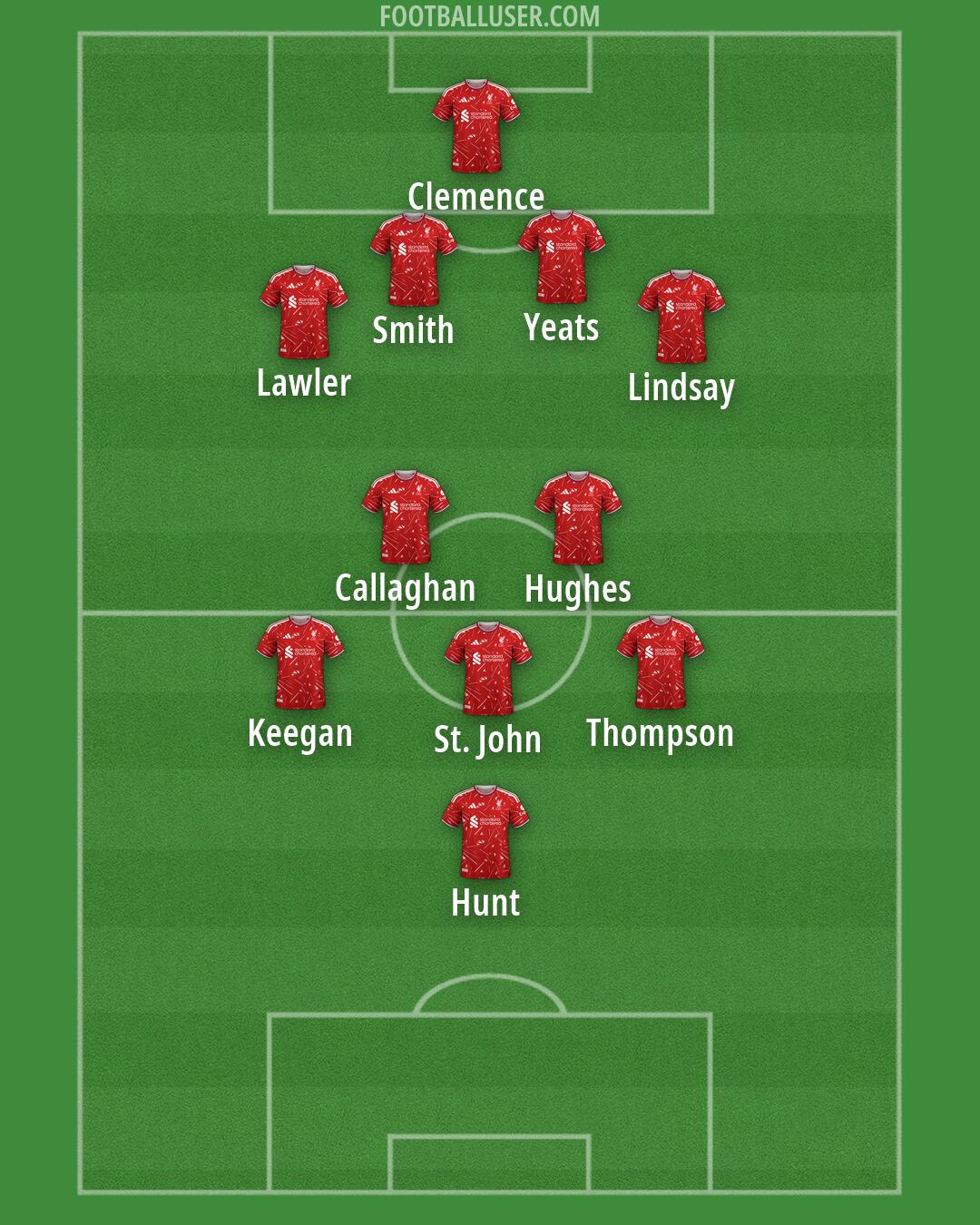
Lindsay · Yeats · Smith · Lawler · Hughes · Callaghan · Thompson · Keegan · Hunt · St. John · ClemenceLiverpool seeks to control the game through a heavy mid-block and quick transitions in a 4-5-1. This formation relies on a crowded midfield to squeeze the space between the lines and force the opposition into wide areas. The team works to sit deep when out of possession and then hits in behind on the transition once the ball is won.
Clemence stays between the posts to manage the defensive line. The back four consists of Lawler on the right and Lindsay on the left, acting as full backs to provide width during build up. Smith and Yeats occupy the central roles, with Smith playing as a ball playing defender to help play out from the back. Yeats acts as a covering defender to sweep behind the line when the team pushes high. This defensive unit works to stay compact and limit the space for central passes.
The midfield is a dense five man unit designed to congest the center of the pitch. Callaghan and Hughes act as a double pivot to shield the defence and protect the center backs. Thompson and Keegan operate as inverted eights, occupying the half spaces to link the defensive and attacking lines. St. John plays as a central connector to help recycle possession and ensure the team can move the ball from the deep areas to the front line. This group is tasked to press in a mid-block and deny the turn to the opposition midfielders.
Liverpool utilizes a lone striker in Hunt to lead the line. Hunt acts as a pressing centre-forward to force the opposition back line into mistakes. When the team moves forward, the midfielders like Keegan and Thompson make late runs into the box to support the attack. The wide players and full backs aim to spread wide to stretch the defence, creating lanes for through balls. The goal is to use the five man midfield to win the second ball and quickly find Hunt to hold up the ball.
A primary strength of this Liverpool lineup is the ability to create numerical superiority in the central areas. By packing the middle, the team can easily win the second ball and transition quickly. The formation also allows for great compactness when defending, making it very difficult for opponents to play through the center. This ability to shift between a compact block and a rapid counter at pace makes them hard to break down.
This 4-5-1 setup is built to congest the central zones and strike on the break. It is best suited for matches against teams that dominate possession and require a disciplined defensive unit to frustrate them.